This title refers to our attempt to use science communication to make a difference in the world. We really do aim to make a global impact with our science communication applications. An indicator of how science communication is applied globally is that the free IAN symbol libraries have been utilized extensively. Over fifty-five thousand people [...]
Continue Reading »July 19, 2010
July 16, 2010
Applying old wisdoms to new environmental challenges: cultural knowledge and modern management
Stepping out between two patches of naupaka—a Hawaiian coastal shrub with a blossom that looks like it has been cut in half—we see the sharp angles of black lava rock breaking the surface of turquoise water and the regal posts of a heiau (place for ceremonial rituals) climbing into the sky. Our quest to explore [...]
Continue Reading »July 14, 2010
How maps can lie: Chesapeake watershed stream health
In order to create a map of stream health in the Chesapeake watershed, Katie Foreman, Scott Phillips, Claire Buchanan and colleagues in the Non Tidal Workgroup of the Chesapeake Bay Program generated a data set of benthic macroinvertebrate condition using data collected by state agencies in the Chesapeake watershed. The original map created by Katie [...]
Continue Reading »July 12, 2010
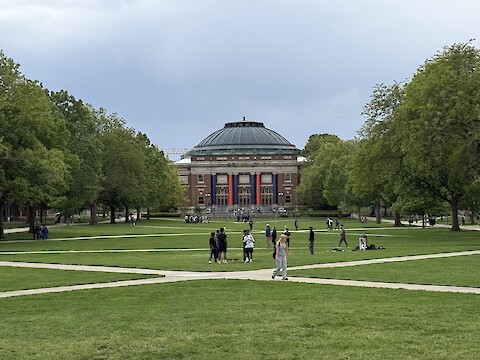
Council for Environmental Deans & Directors summer conference; Boulder, Colorado
The National Council for Science and the Environment (NCSE), based in Washington, D.C., supports a group of university administrators called the Council for Environmental Deans & Directors (CEDD). This group has two annual meetings; a winter meeting in Washington, D.C. and a summer conference in different locations around the country. The 2010 summer conference was [...]
Continue Reading »July 9, 2010
The Integration and Application Network ‘tribe’
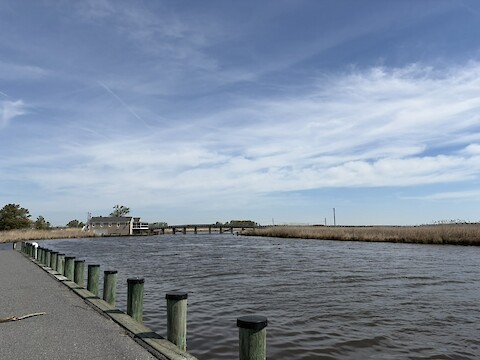
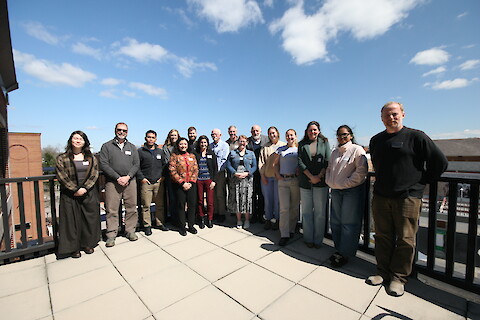
We recently held our annual Integration and Application Network retreat, titled “Creating synergies and leveraging impacts”. It was conducted at the Harry R. Hughes Center for Agro-Ecology, on the Wye River, a tributary of Chesapeake Bay. Attending this retreat were the Science Integrators and Science Communicators from a) the ‘bathhouse’ on the Horn Point Laboratory [...]
Continue Reading »Learning through inquiry and observation
How do we learn about the world around us? How do we tap into the natural curiosity kids possess? How do you create a sense of place in a virtual world? Such hefty questions require expert knowledge from a variety of fields. Thus, IAN and the National Park Service Pacific Island Network Inventory and Monitoring [...]
Continue Reading »July 7, 2010
Ben Fertig’s dissertation defense; 6 July 2010
Ben Fertig, graduate student, became Dr. Ben Fertig following his successful dissertation defense at Horn Point Laboratory on 6 July 2010. His thesis is titled “Stable nitrogen isotopes (δ15N) in the eastern oyster (Crassostrea virginica) as an indicator of nitrogen source”. Ben gave a powerpoint thesis summary (5 years compressed into 45 minute talk) to [...]
Continue Reading »July 2, 2010
Coastal Bays report card release
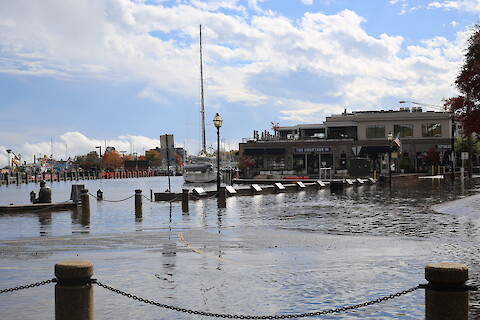
The Maryland Coastal Bays Program report card was released at an interesting venue in Ocean City in late afternoon, June 30. Macky’s Barside & Grill on 54th Street in Ocean City provided a bayside venue for the release with perfect weather. Jet skis and motorboats were buzzing in and out of the canal, a roosting [...]
Continue Reading »July 1, 2010
Discussion following Howard Townsend’s seminar on Communicating complex scientific results for ecosystem-based management using cgi (computer generated image) animation
This blog post discusses the seminar given by Howard Townsend, of the NOAA Chesapeake Bay Office, at the IAN Seminar Series on June 24, 2010. Following Howard’s seminar, two short videos were aired. The first one depicted some of Howard’s hidden talents on the dance floor, and the second one was a 6 minute Computer [...]
Continue Reading »