

Save the Date! 2026 Chesapeake Bay & Watershed Report Card Release Event
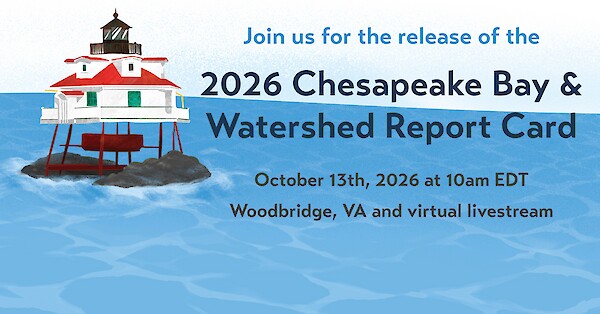
Come celebrate the 20th anniversary of the Chesapeake Bay Report Card with us!
The 2026 Chesapeake Bay and Watershed Report Card will be released on Tuesday, October 13th at 10am EDT. Please join us in person at the Multipurpose Room in the GMU Potomac Science Center in Woodbridge, VA or virtually via livestream to learn about the latest health status of the Bay and its watershed!
This year we are also excited to unveil a short documentary we created to celebrate the 20-year anniversary of the Chesapeake Bay Report Card. Please RSVP at the following link to stay updated: https://forms.gle/emusZuWU49jbgk8B8.
Welcome, Mallory!
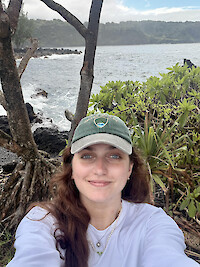
Mallory Lentz has joined UMCES as the new Restoration Coordinator for the Whole Watershed Program and the Bays Watershed Workgroup, based at the Maryland Department of Natural Resources. In this role, she will advance the goals of restoring Maryland’s waterways and bays by integrating environmental restoration and resilience into the state’s implementation programs and incorporating co-benefits into the development of new policies, partnerships and strategies. A Maryland native who grew up on the Severn River, Mallory is returning home after recently completing a NOAA Coastal Management Fellowship in Connecticut. She holds a bachelor's in wildlife and conservation biology, a master's in environmental communication, and graduate certificates in science writing and GIS/remote sensing from the University of Rhode Island.
Welcome, Suman!
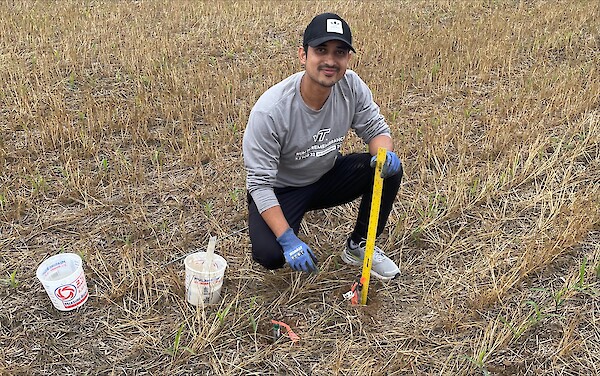
Suman Budhathoki recently joined the UMCES Integration and Application Network, where he supports the Chesapeake Bay Program’s agricultural and watershed modeling efforts. He earned his Ph.D. in Biological Systems Engineering from Virginia Tech and has a background in agricultural water management, hydrologic and watershed modeling, nutrient management, and climate change. Before joining UMCES, he worked as a postdoctoral researcher at Texas A&M AgriLife Research. Outside of work, Suman enjoys running, playing soccer, singing, and spending time with his family.
Welcome, Khushi!
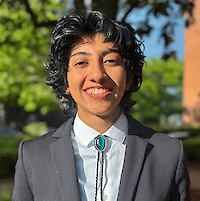
Khushi Desai is a junior at the University of Maryland College Park and a project assistant with UMCES and MDEM. They are pursuing a bachelor’s degree in environmental science and policy and a minor in geographic information systems, with plans to complete a PhD within the emergency management field. They are co-president of 17 for Peace and Justice, a student-organization dedicated to advancing environmental justice at university, community, and state levels. They have completed internships at the University of Maryland’s Environmental Finance Center, contributing towards community-engagement, climate resilience, and policy research projects. They have recently been awarded the Ernest F. Hollings Undergraduate Scholarship from NOAA, giving them an opportunity to complete an internship focused on policy issues in coastal regions of the U.S. during Summer 2027. As a project assistant with UMCES and MDEM, Khushi will work on completing research on natural hazards to inform work on resilience baseline implementation, as well as creating a database to compile information on resilience funding sources in the state of MD.
Check out our latest publication!
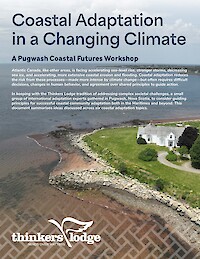
We’re pleased to announce that the report from our July 2026 meeting on coastal adaptation is now available! The report, Coastal Adaptation in a Changing Climate, reflects on key principals of coastal adaptation discussed during the meeting. The document captures discussions on inclusive knowledge and how effective knowledge-sharing can enhance trust-building, fill gaps in thinking, and generate creative approaches to coastal adaptation. It emphasizes that each person has a role to play in the adaptation process and mentions some helpful resources to get involved. We hope this document serves as a useful resource for those working towards coastal adaptation and resilience. To learn more about the 2026 meeting, please read this recent blog post.
Project Highlight: Katahdin Woods and Waters National Monument
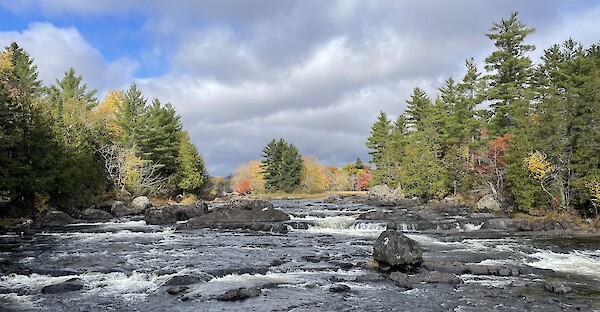
Nearly two years after the initial scoping meeting in Patten, ME, the Natural Resource Condition Assessment for Katahdin Woods and Waters National Monument is almost done. This assessment uses existing data, literature, and expert input to provide a snapshot of conditions for priority resources, including birds, forest vegetation, mammal communities, stream conditions, and threatened and endangered species. Some highlights include finding that the monument has vast core forests and potential old growth stands that shelter priority bird species and iconic mammals like moose and black bear. Additionally, the monument’s rivers and streams provide vital spawning and nursery habitat for the federally endangered Atlantic salmon and support rare wood turtles and wild brook trout. We also found that while the monument generally supports high biodiversity and good natural resource conditions, managers face growing environmental pressures and significant data gaps for most priority resources. The results of this assessment will be used to guide future research and the development of conservation management plans. To find out more about the project and read the final assessment when it is published, please visit the project website.