The Central Role of Dispersal in the Maintenance and Persistence of Seagrass Populations
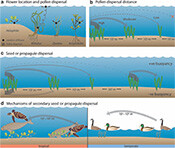
Global seagrass losses parallel significant declines in corals and mangroves over the past 50 years. These combined declines have resulted in accelerated global losses to ecosystem services in coastal waters. Seagrass meadows can be extensive and long-lived. This article explores the role that sexual reproduction, pollen, and seed dispersal play in maintaining species distributions, genetic diversity, and connectivity among populations. It also addresses the relationship between long-distance dispersal, genetic connectivity, and the maintenance of genetic diversity that may enhance resilience to stresses associated with seagrass loss. This re-evaluation of seagrass dispersal and recruitment has altered the perception of the importance of long-distance dispersal and has revealed extensive dispersal at scales much larger than was previously thought possible.