

Enhancing scientific storytelling at the Chesapeake Watershed Forum
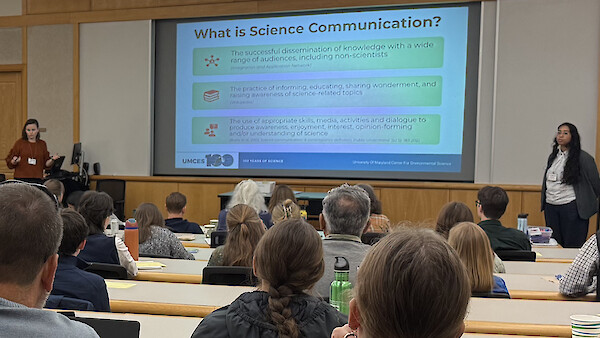
The weekend of November 7th was the 20th annual Chesapeake Watershed Forum in Shepherdstown, West Virginia. The theme of this landmark Forum was “Shaping the Future of Conservation with Human-Centered Approaches." IAN staff Alexandra Fries, Conor Keitzer, Annie Carew, and Roshni Nair-Gonzalez attended the Forum. Annie and Rosh presented IAN's popular workshop "Storytelling for Science Communication" to over 60 practitioners from across the Chesapeake Bay Watershed. Forum attendees include researchers like us, natural resource managers, community advocates, and educators. We caught up with our partners and collaborators from the Chesapeake Monitoring Cooperative, which is celebrating its 10th anniversary this year. The Forum is always a lot of fun, and we're already looking forward to next year's!
Advancing collaborative, actionable science at CERF
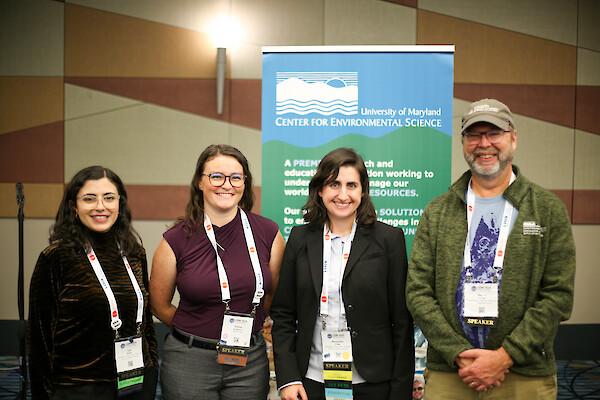
From November 9–13th, six IAN staff members attended the 28th Biennial CERF Conference in Richmond, VA. Throughout the week, we hosted a workshop on effective science communication, delivered oral presentations on our work, and joined a collaborative session on community-scale research. The conference highlighted numerous presentations on co-production approaches in coastal and estuarine research, and both plenaries emphasized solution-oriented science. Our work aligns closely with these approaches, and we value the opportunity to learn from and engage with colleagues across the field. This year brought an extra highlight: UMCES was honored with the CERF Achievement Award for Organizational Coastal Stewardship. To read more about our CERF 2025 experience, check out this blog post.
Maryland Water Monitoring Council (MWMC) Conference
The Maryland Water Monitoring Council’s 31st annual conference was held on November 20th at the Maritime Conference Center in Linthicum, MD. Nearly 475 students, professionals, and academics working to monitor and improve water quality gathered to learn about new approaches and ideas around this year’s theme of “Embracing Innovation to Protect and Restore Maryland’s Waters.” In the opening plenary, Jeremy Werdell, from NASA highlighted how satellite images are changing our understanding of phytoplankton across the planet and transforming our ability to monitor these critical species. Rich Ortt, from Maryland DNR, followed by outlining the Resource Assessment Service’s “One Water” vision, which highlights the need to monitor and restore water quality across the whole water cycle and tackle emerging issues. He also highlighted the importance of people’s creativity as our greatest resource for innovation. There were some great sessions throughout the day, and it was wonderful to see how forward-thinking Maryland is in its approach to monitoring and restoring water quality throughout the state.
Meet the Scientist: Lili Badri

Hi! My name is Lili Badri, and I’m a senior science communicator at IAN. I grew up near the Alabama Gulf Coast and have fond memories of beach vacations that nurtured my love for the coastal environment. I later pursued studies in Chemistry and Environmental Science, spending my undergraduate years split between the lab, researching method development for water-quality trace analysis, and active involvement in my university’s sustainability and chemistry clubs. Through those groups, I participated in campus cleanups, tended the campus garden, partnered with local organizations to promote environmental stewardship, and organized chemistry outreach events for K–12 students.
In graduate school, I studied organic carbon dynamics in forested wetlands, gaining both hands-on field experience and exposure to the complexities of long-term environmental datasets. These research experiences naturally converged over time and sparked my interest in a more applied path, making my transition to IAN a clear next step into impactful, inclusive science. I’m driven by the belief that my work truly makes a difference, using data to support informed decision-making while prioritizing accessibility, transparency, and trust. I’m grateful to play a role in bringing scientists and non-academics together to tackle today’s environmental challenges locally and abroad and in helping to ensure that they have the tools they need to communicate their work with clarity and impact.
If you value research like Lili’s, consider donating to IAN here.
December 2nd is Giving Tuesday!
Support our efforts to:
- Preserve critical ecosystems for future generations
- Empower communities to tackle socio-environmental challenges
- Share science-based solutions
- Mobilize people like you, who value nature and community-led action
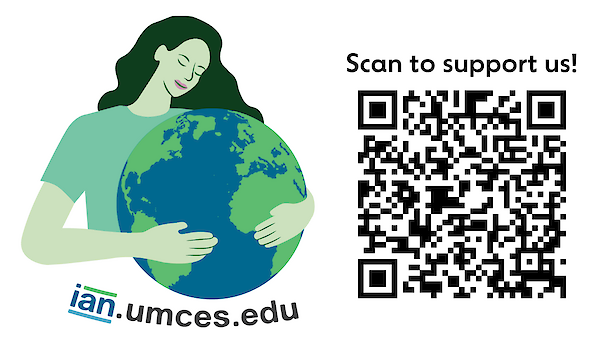
To champion these causes, donate on our website or by scanning the QR code above for Giving Tuesday. Thank you for your support!