IAN logo IAN logo
  • UMCES HOME
  • DONATE

Search form

  • Work with Us
    • Science communication services
    • Environmental report card production
    • Training and capacity building
    • Stakeholder Engagement
    • Careers
  • Media Library
    • Symbols
    • Graphics
    • Photos
    • Videos
  • Report cards
  • Education
    • Professional Certificate
    • MEES Graduate Program
    • Short Courses
    • Initiatives
  • Blog
  • Enewsletter
  • Publications
    • Books
    • Report Cards
    • Newsletters
    • Reports
    • Brochures
    • Posters
    • Papers
  • Projects
  • About
    • Who we are
    • What we do
    • Our Mission
    • History
    • Partnerships
    • Contact
    • Land Acknowledgment Statement
    • Project Videos
  • Home
  • Media Library
Clear Filters

Lightbox (0)

Symbol Package
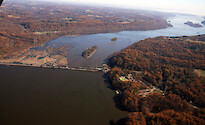
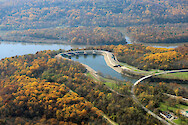
Conowingo Dam is the last Dam on the Susquehanna River before it empties into the Upper Chesapeake Bay. This is a series of photos taken on an overflight of the Dam and surrounding sites during mid-November, 2015. Susquehanna outflow into the Chesapeake Bay.
Conowingo Dam in Autumn
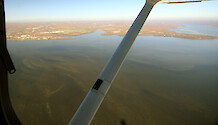
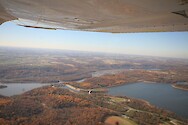
Conowingo Dam is the last Dam on the Susquehanna River before it empties into the Upper Chesapeake Bay. This is a series of photos taken on an overflight of the Dam and surrounding sites during mid-November, 2015. SAV at Susquehanna Flats
Conowingo Flats in Autumn
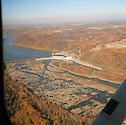
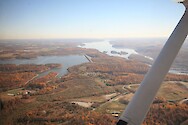
Conowingo Dam is the last Dam on the Susquehanna River before it empties into the Upper Chesapeake Bay. This is a series of photos taken on an overflight of the Dam and surrounding sites during mid-November, 2015.
Holtwood Dam in Autumn
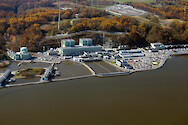
Conowingo Dam is the last Dam on the Susquehanna River before it empties into the Upper Chesapeake Bay. This is a series of photos taken on an overflight of the Dam and surrounding sites during mid-November, 2015.
Peach Blossom Power Plant in Autumn
Conowingo Dam is the last Dam on the Susquehanna River before it empties into the Upper Chesapeake Bay. This is a series of photos taken on an overflight of the Dam and surrounding sites during mid-November, 2015.
Still Pond in Autumn
Conowingo Dam is the last Dam on the Susquehanna River before it empties into the Upper Chesapeake Bay. This is a series of photos taken on an overflight of the Dam and surrounding sites during mid-November, 2015.
The Susquehanna in Autumn
Conowingo Dam is the last Dam on the Susquehanna River before it empties into the Upper Chesapeake Bay. This is a series of photos taken on an overflight of the Dam and surrounding sites during mid-November, 2015.
The Susquehanna in Autumn
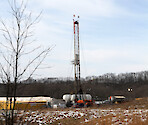
A small well located in Scio, Ohio used for hydraulic fracturing. The tower is the drill used to make the hole which will later be used to shoot liquid down to fracture the rock and extract the petroleum products. Sometime these areas are called Well Pads.
Well Pad
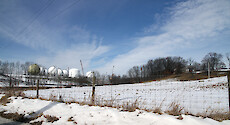
View of a fractionation plant in Cadiz, OH. A home can be seen on the right side of the image to give prospective of how close the facility is to a neighborhood.
Fractionation Plant
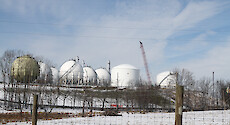
View of part of a fractionation plant used for hydraulic fracturing located in Cadiz, Ohio. These are likely storage tanks prior to transport.
Fractionation Plant
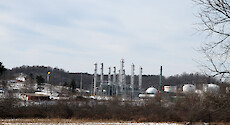
View of part of a fractionation plant in Cadiz, OH. A home can be seen on the right side of the image to give prospective of how close the facility is to a neighborhood.
Fractionation Plant
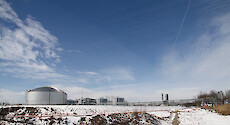
Midstream Processing Plant used in hydraulic fracturing. Scio, OH
Processing Plant
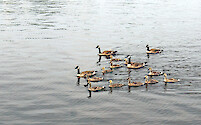
Adult geese and juvenile goslings paddle around a river cove off Lake Michigan.
Canada geese (Branta canadensis) with goslings
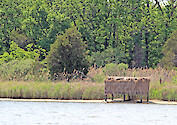
Goose and duck hunters build these blinds on the calm waterways of Chesapeake Bay tributaries.
Duck blind
Tree roots are underminded by wave action and eventually succumb while the shoreline is eroded.
Eroded shoreline with tree snags
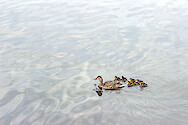
Mother duck and ducklings paddle around a river cove off Lake Michigan.
Female mallard (Anas platyrhynchos) and ducklings
Stone rip-rap installed by the property owners in an attempt to prevent shoreline erosion. Hardened edges along the Chesapeake Bay and its rivers reduces natural shoreline habitat that fish and other marine animals depend on for food and shelter.
Hardened shoreline prevents erosion
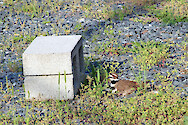
Found on golf courses or vacant gravell parking lots, this noisy plover is best known for its
Killdeer (Charadrius vociferus) nest in busy…
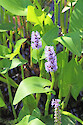
This emergent aquatic, with its leaves and flowers above water and portions of the stem under water, is found typically in shallow, quiet water. The seeds can be eaten like nuts and the young leaf-stalks cooked as greens. Deer also feed on these plants. The common name suggests that this plant, as well as the fish known as pickerel, occupy the same habitat.
Pickeral rush (Pontederia cordata)
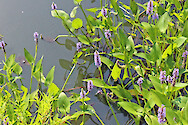
This emergent aquatic, with its leaves and flowers above water and portions of the stem under water, is found typically in shallow, quiet water. The seeds can be eaten like nuts and the young leaf-stalks cooked as greens. Deer also feed on these plants. The common name suggests that this plant, as well as the fish known as pickerel, occupy the same habitat.
Pickeral rush (Pontederia cordata) occupies…
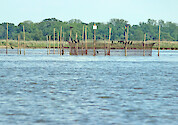
The oldest type of net used by the Chesapeake Bay watermen is called a pound net. Wooden stakes are pushed into the bottom of the Bay, spaced apart in a line that runs across the tide. Nets are strung between the stakes and along the bottom of the river, making a fish trap. In late February the pound netter starts to put in the stakes. By the middle of March he will set his nets and start fishing. Each day the waterman goes out to the pound net and scoops the fish out with a hand net. He will not remove the pound net, except for many repairs, until November.
Pound net
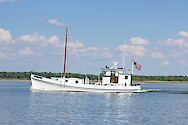
These traditional boats tended to the oyster fleets working the beds in the Bay, buying harvested oysters from the oystermen in the afternoon, and running those oysters to faraway markets and rail centers in Norfolk, Crisfield, Baltimore, and Washington DC, and to local shucking houses and canneries around the Bay.
Restored Chesapeake Bay oyster buy boat
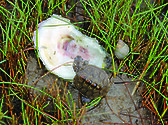
A baby terrapin makes its way to the water.
Baby diamondback terrapin (Malaclemys terrapin
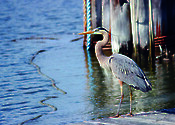
A blue heron scans the water for its fish dinner. On a Tred Avon River dockside at Easton Point, Easton, MD.
Great Blue Heron (Ardea herodias)
  • Prev
  • 1
  • …
  • 4
  • 5
  • 6
  • 7
  • 8
  • 9
  • 10
  • 11
  • 12
  • 13
  • …
  • 171
  • Next

UMCES Links

  • Home
  • About
  • Campuses
  • News & Events
  • Directory
  • Employment
  • Research
  • Press Room

Contact Info

115 West Street, Annapolis, MD 21401

410-221-2048

Contact

Enewsletter

Subscribe to our enewsletter

Copyright 2026 UMCES | Privacy/Terms of Use | An Institution of the University System of Maryland