Projects located in Maryland
2023-11-01 — 2025-12-31
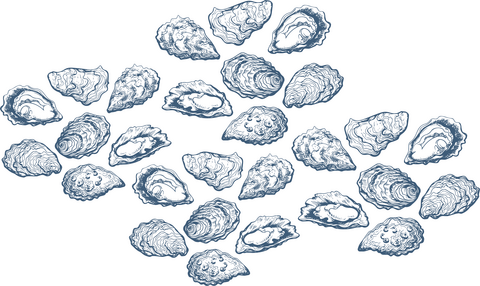
Chesapeake Bay is home to one of the largest oyster restoration efforts in North America and supports a thriving oyster fishery. However, a shortage of fresh oyster shells threatens these activities. The overall objective of this work is to provide science-based guidance to the Maryland state legislature about the potential to use alternative substrates to oyster shells for oyster habitat and the viability of retrofitting existing structures for oyster restoration and fisheries.
2020-07-01 — 2021-01-01
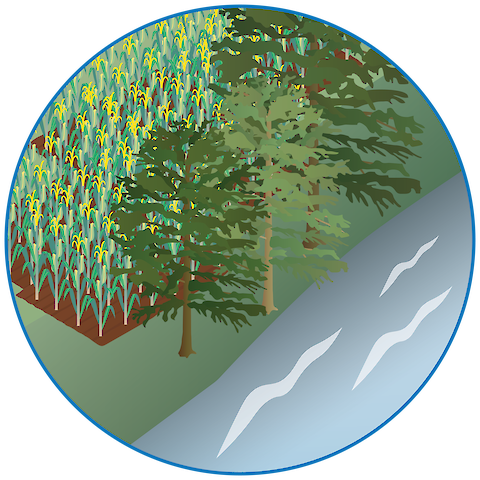
Between July 2020 to January 2021, the Integration and Application Network collaborated with the Maryland Department of Environment to develop communication products that promote the state's Water Quality Trading Program. Maryland’s Water Quality Trading Program creates a public market for nitrogen, phosphorus and sediment reductions.
2020-03-01 — 2022-02-01
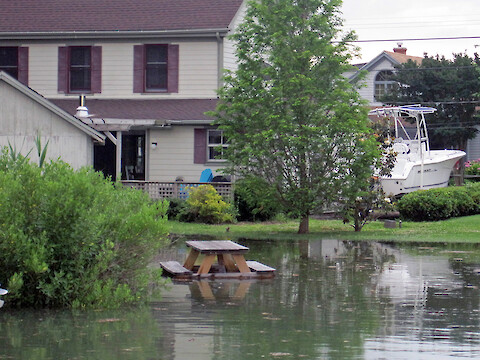
Through increased funding, planning, regulation, and restoration, Maryland has become a leader in coastal and climate adaptation. There is, however, a need to clarify adaptation goals to measure progress and hold the state accountable.
2018-06-04 — 2019-12-31
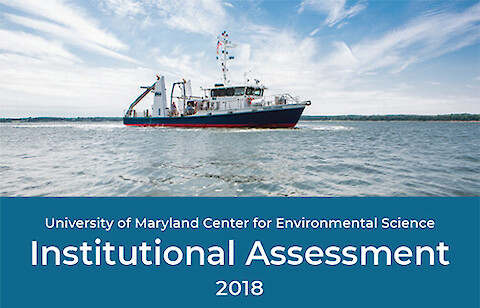
UMCES received accreditation from the Middle States Commission on Higher Education. As part of the accreditation process, UMCES needs to assess and communicate its goals better. The Institutional Assessment evaluates how successful UMCES is at meeting its goals of scientific research, public service, and education. We will do this by working through the 5-step report card process and producing a report card-like assessment for public consumption.
2018-01-01 — 2019-03-31
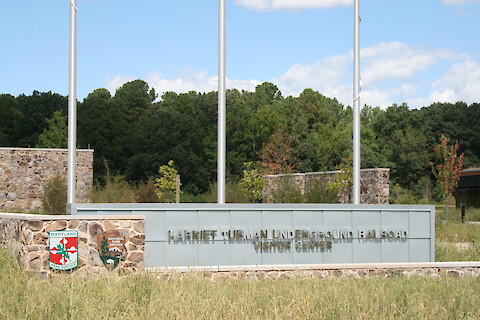
The National Park Service is carrying out assessments of the natural resource condition (NRCA) for nearly 300 of the National Parks throughout the country deemed to have significant natural resources. This project, to assess condition of Harriet Tubman Underground Railroad National Historic Park in Maryland, is a synthesis project aimed at collating and synthesizing all available data to assess current status and trend for each metric, combining these into an overall framework.
2017-07-01 — 2019-06-30
Ecosystem based management (EBM) is a holistic and adaptive approach to developing effective policies for ensuring ecosystem sustainability, food and water security, and improved human health outcomes for future generations. Informed by science, it incorporates the entire ecosystem, including humans, into resource management decisions. Importantly, EBM explicitly considers tradeoffs in resource uses while protecting and sustaining diverse and productive ecosystems and the services they provide.
2013-08-26 — 2013-11-30
In 2009, Governor Martin O’Malley and Maryland’s General Assembly charged the State with developing a Greenhouse Gas Reduction Plan that will reduce greenhouse gases 25 percent below a 2006 baseline level by the year 2020. This report provides a detailed overview of Maryland’s Plan, describing Maryland’s vulnerability to climate change and detailing Maryland’s 150-plus Greenhouse Gas Reduction programs and initiatives and their associated benefits.
2012-10-01 — 2013-09-30
In 2009, Governor Martin O’Malley and Maryland’s General Assembly charged the State with developing a Greenhouse Gas Reduction Plan that will reduce greenhouse gases 25 percent by the year 2020. Working closely with staff at Maryland Department of the Environment (MDE), IAN's first task was to produce a 14-page executive summary to provide an overview of Maryland’s Plan…
2011-06-01 — 2015-12-31
The CoastSmart Communities Initiative (CCI), a program within the Maryland Department of Natural Resource’s Chesapeake and Coastal Service and staffed by IAN, is helping local communities identify and implement strategies to protect life, property, and natural resources vulnerable to coastal hazards such as storm surge, shoreline erosion, coastal flooding, and climate change.
2010-12-01 — 2013-12-31
University of Maryland Center for Environmental Science (UMCES) is currently working in partnership with the Maryland Department of Natural Resources (DNR) to enhance the ability of agencies and local governments to enact new laws, policies, and outreach programs that will assist the State of Maryland and her citizens to adapt to a changing climate.