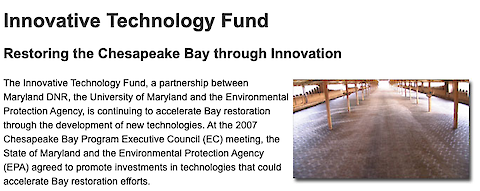
IAN staff help to lead the State’s efforts in identifying new restoration practices for water quality restoration through Maryland’s Innovative Technology Fund. Our team integrates emerging data into programs that prioritize restoration strategies and highlights how policy, regulation and legislation can enhance the implementation of cost effective best management practices.
Through increased funding, planning, regulation, and restoration, Maryland has become a leader in coastal and climate adaptation. There is, however, a need to clarify adaptation goals to measure progress and hold the state accountable.
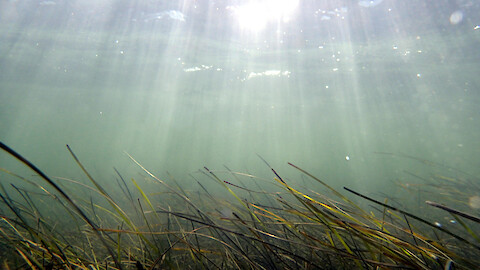
In partner with Maryland Department of Natural Resources, UMCES is sponsoring the World Seagrass Conference & International Seagrass Biology Workshop to be held in Annapolis, Maryland, 7–12 August 2022. The theme of WSC 2020 and ISBW 14, “Signs of Success: Reversing the Course of Seagrass Degradation," is inspired by recent successes in the conservation, resurgence, and restoration of seagrasses. The Chesapeake Bay, the location of this year's meeting, is a perfect example of such success.
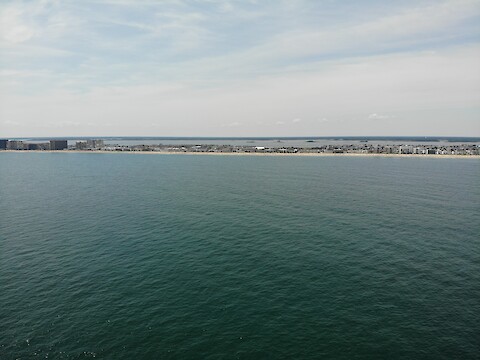
IAN has teamed up with oceanographers at our home campus of Horn Point Laboratory and at the Department of Natural Resources in order to revisit a growing concern of algal blooms off Assateague Island National Seashore on the Southern Eastern Shore. IAN's role in this project involves synthesizing data collected offshore and helping to establish relevant thresholds for offshore nutrient data, as well as aiding in communication of the studies data and findings.
The Chesapeake Bay Program and the U.S. Geologic Survey are compiling tributary basin summaries for 12 major tributaries or tributary groups in the Chesapeake Bay Watershed. These summaries summarize the following information: (1) How tidal water quality changes over time; (2) How factors that drive those changes change over time; and (3) Current state of the science on connecting change in aquatic conditions to its drivers.
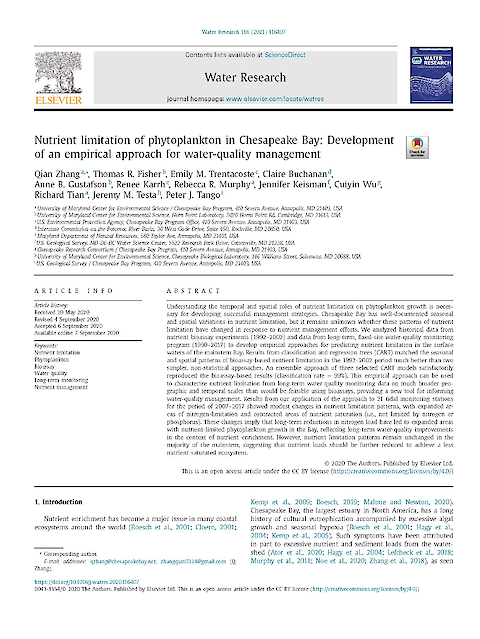
This project is aimed toward better understanding nutrient limitation of phytoplankton in Chesapeake Bay and its tidal tributaries. Leveraging novel statistical approaches and long-term monitoring data sets from the Chesapeake Bay Program Partnership, this project helps understand whether nutrient limitation patterns have changed in response to decades of nutrient reduction efforts.
University of Maryland Center for Environmental Science has been awarded a grant from Exelon Corporation through the Department of Natural Resources to study the affect that particulates from Conowingo Reservoir have on water quality in regions affected by high flow events. This is a two-year research project that began in October of 2014, the results are highly anticipated and will play a huge roll in future management of the sediment in Conowingo Reservoir.
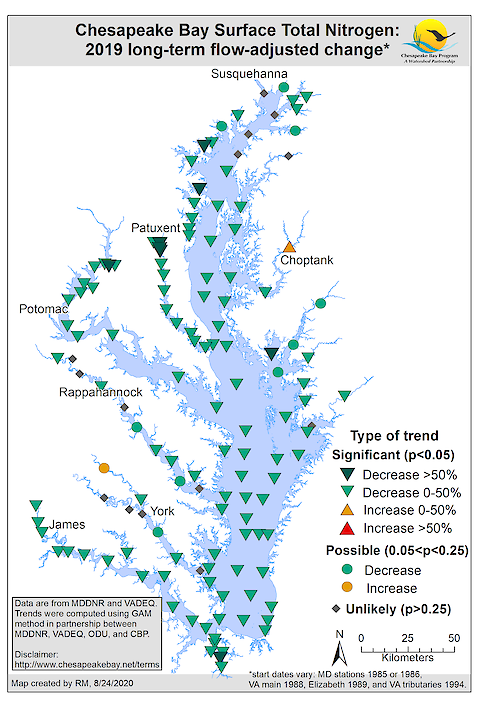
The Chesapeake Bay Program, MD Department of Natural Resources, and VA Department of Environmental Quality collaborate annually to produce bay-wide summaries of water quality trends in the tidal waters. These annual estimates at more than 150 stations for nutrients, dissolved oxygen, Secchi depth, chlorophyll a and other parameters help gauge the health of the bay and identify changes due to management actions and climate.
The National Fish and Wildlife Foundation established a Hurricane Sandy Wildlife Response Fund to conduct a rapid assessment of the ecological impacts of Hurricane Sandy from North Carolina to Rhode Island, with emphasis on habitats and associated wildlife.
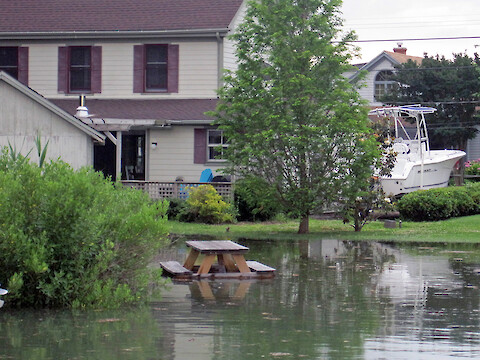
The CoastSmart Communities Initiative (CCI), a program within the Maryland Department of Natural Resource’s Chesapeake and Coastal Service and staffed by IAN, is helping local communities identify and implement strategies to protect life, property, and natural resources vulnerable to coastal hazards such as storm surge, shoreline erosion, coastal flooding, and climate change.