Publications about Worldwide

IAN is committed to producing practical, user-centered communications that foster a better understanding of science and enable readers to pursue new opportunities in research, education, and environmental problem-solving. Our publications synthesize scientific findings using effective science communication techniques.
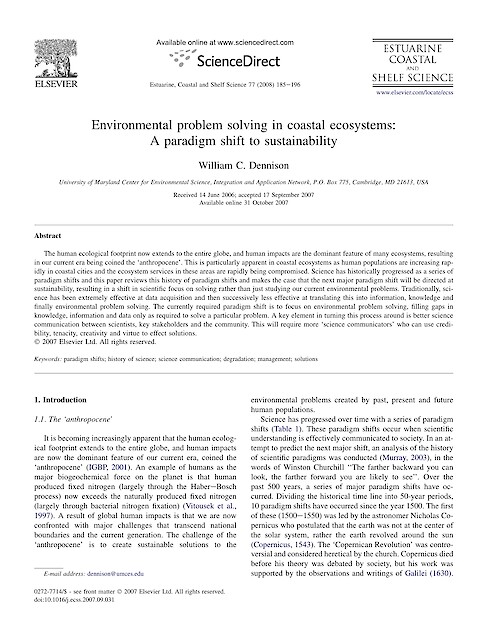
Environmental problem solving in coastal ecosystems: A paradigm shift to sustainability (Page 1)

Environmental problem solving in coastal ecosystems: A paradigm shift to sustainability

Dennison WC ·

The human ecological footprint now extends to the entire globe, and human impacts are the dominant feature of many ecosystems, resulting in our current era being coined the 'anthropocene'. This is particularly apparent in coastal ecosystems as human populations are increasing rapidly in coastal cities and the ecosystem services in these areas are rapidly being compromised.

Groundwater influences on atmospheric dust generation in deserts

Elmore AJ, Kaste JM, Okin GS, and Fantle MS ·

Groundwater resources are being overexploited in arid and semi-arid environments globally, which necessitates a deeper understanding of the roles that groundwater plays in earth system processes. Of particular importance is the elucidation of groundwater's effect on the generation of atmospheric dust.

Seagrass: A Hidden Treasure (Page 1)

Seagrass: A Hidden Treasure

Bill Dennison ·

This brochure is part of a series of images, diagrams and fun facts produced by the Global Seagrass Trajectories working group, funded by the National Science Foundation and conducted at the National Center for Ecological Analysis and Synthesis in SantaBarbara, California. It describes the temperate and tropical distributions of seagrasses globally, their role as food and habitat for a variety of organisms, as well as being effective indicators of change.

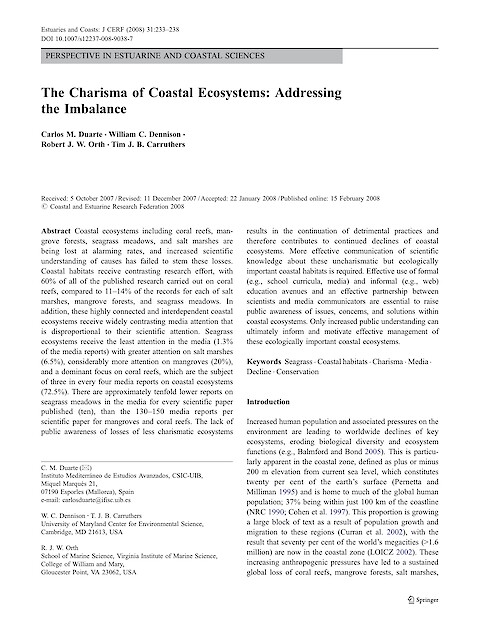
The charisma of coastal ecosystems: addressing the imbalance (Page 1)

The charisma of coastal ecosystems: addressing the imbalance

Duarte CM, Dennison WC, Orth RJ, and Carruthers TJB ·

Coastal ecosystems including coral reefs, mangrove forests, seagrass meadows, and salt marshes are being lost at alarming rates, and increased scientific understanding of causes has failed to stem these losses. Coastal habitats receive contrasting research effort, with 60% of all of the published research carried out on coral reefs, compared to 11–14% of the records for each of salt marshes, mangrove forests, and seagrass meadows.

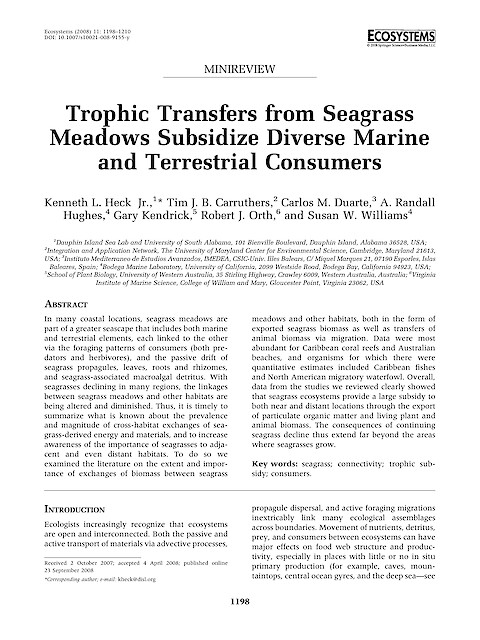
Trophic Transfers from Seagrass Meadows Subsidize Diverse Marine and Terrestrial Consumers (Page 1)

Trophic Transfers from Seagrass Meadows Subsidize Diverse Marine and Terrestrial Consumers

Heck KL, Carruthers TJB, Duarte CM, Hughes AR, Kendrick G, Orth RJ, and Williams SW ·

In many coastal locations, seagrass meadows are part of a greater seascape that includes both marine and terrestrial elements, each linked to the other via the foraging patterns of consumers (both predators and herbivores), and the passive drift of seagrass propagules, leaves, roots and rhizomes, and seagrass-associated macroalgal detritus. With seagrasses declining in many regions, the linkages between seagrass meadows and other habitats are being altered and diminished.

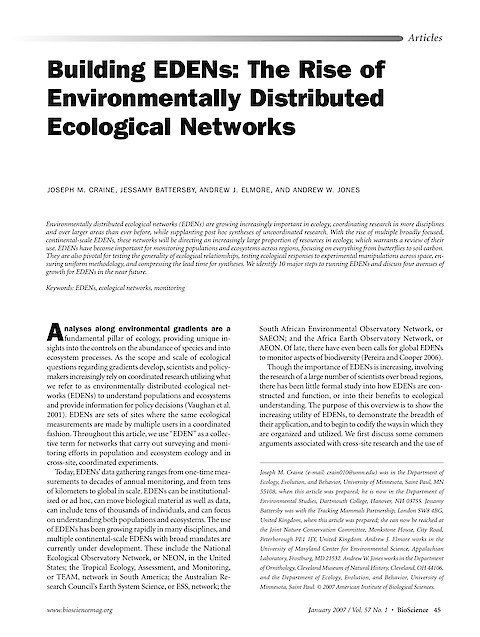
Building EDENs: The rise of environmentally distributed ecological networks (Page 1)

Building EDENs: The rise of environmentally distributed ecological networks

Craine JM, Battersby J, Elmore AJ, and Jones AW ·

Environmentally distributed ecological networks (EDENs) are growing increasingly important in ecology, coordinating research in more disciplines and over larger areas than ever before, while supplanting post hoc syntheses of uncoordinated research. With the rise of multiple broadly focused, continental-scale EDENs, these networks will be directing an increasingly large proportion of resources in ecology, which warrants a review of their use.

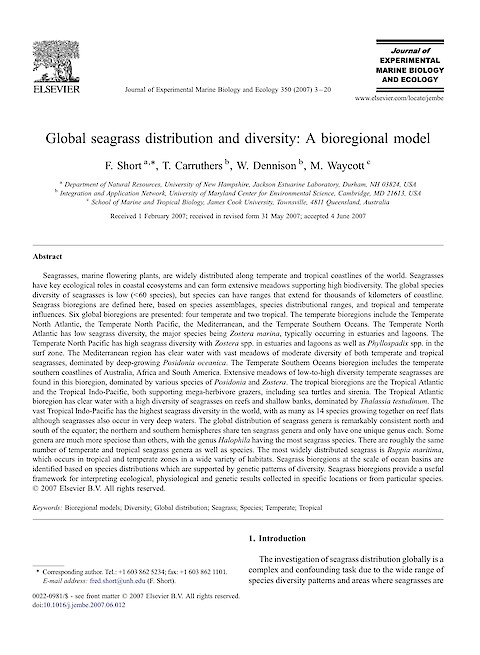
Global seagrass distribution and diversity: A bioregional model (Page 1)

Global seagrass distribution and diversity: A bioregional model

Short F, Carruthers TJB, Dennison WC, and Waycott M ·

Seagrasses, marine flowering plants, are widely distributed along temperate and tropical coastlines of the world. Seagrasses have key ecological roles in coastal ecosystems and can form extensive meadows supporting high biodiversity. The global species diversity of seagrasses is low (b60 species), but species can have ranges that extend for thousands of kilometers of coastline.

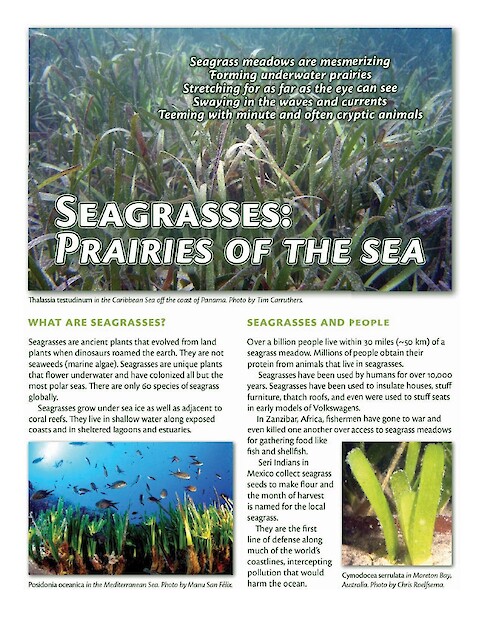
Seagrasses: Prairies of the Sea (Page 1)

Seagrasses: Prairies of the Sea

Bill Dennison ·

This brochure summarizes what are seagrasses, their role in the productivity of ecosystems, their importance to humans as well as a collection of fun facts.

The role of the coastal ocean in the disturbed and undisturbed nutrient and carbon cycles: A management perspective (Page 1)

The role of the coastal ocean in the disturbed and undisturbed nutrient and carbon cycles: A management perspective

Le Tissier MDA, Buddemeier R, Parslow J, Swaney DP, Crossland CJ, Smith SV, Whyte HAY, Dennison WC, Hills JM and Kremer HH (eds) ·

This report was published by the Land-Ocean Interactions in the Coastal Zone (LOICZ) project with the support of the United Nations Environmental Programme (UNEP) and the Global Environmental Facility (GEF). It provides new assessment tools for coastal management programs and discusses the key science outputs of the project. Science communicators at IAN worked with authors and designers to create nine figures for the 40-page report.

Communicating Science Effectively: A Practical Handbook for Integrating Visual Elements

Thomas JE, Saxby TA, Jones AB, Carruthers TJB, Abal EG and Dennison WC ·

This is a practical handbook on how to communicate science effectively. The first part is an introduction to the principles of science communication – what effective science communication is, why it is important, and how to do it. The principles in these chapters include how effective science communication can change societal paradigms and make one a better scientist.