By: Morgan Ross … "All models are wrong, but some are useful." -George E. P. Box … In today's day and age, the term "social network" usually refers to social networking websites like Facebook or Twitter. However, in the realm of studying coupled human and natural systems, "social networks" mean something else entirely.
By: Tan Zou … Solving an environmental problem without creating new problems is not always as simple as unlocking a door with a key. Even if it is, scientists cannot always do it all by themselves. As Erle C. Ellis points out in his New York Times article, everyone is struggling for a better life defined by themselves, and sometimes there is no single optimal solution to satisfy all.
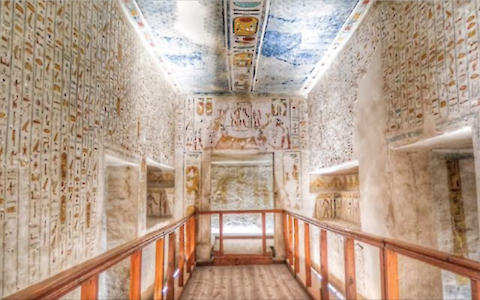
By: Brian Scott … When Herodotus, the world's first historian, visited Egypt in the fifth century BC, he asked its priests what was the key to Egypt's greatness. "Egypt is the gift of the Nile", they said.1 … This summer I vacationed in Egypt. I have seen few things as jaw-dropping and awe-inspiring as the Valley of the Kings. Put it on your bucket list. Valley of the Kings in Aswan, Egypt. (Photo by author) Before you go, be sure you adopt a Cultural Model of the Egyptian tourism industry.
By: Emily Nastase … The US National Park Service (NPS) is a perfect example of a coupled human and natural system. Realized by Woodrow Wilson in 1916, NPS is housed under the Department of the Interior and cares for the 400+ national parks within America and its territories. NPS, which was originally created to protect the natural spaces within America (beginning with Yellowstone National Park), quickly began to encompass sites of historic, cultural, and recreational value1.
By: Matthew Wilfong … "We are drowning in information, while starving for wisdom. The world henceforth will be run by synthesizers, people able to put together the right information at the right time, think critically about it, and make important choices wisely."1 … This quote was written on the whiteboard in the UMCES Annapolis office and could not have been more applicable to our class presentations and discussions this week.
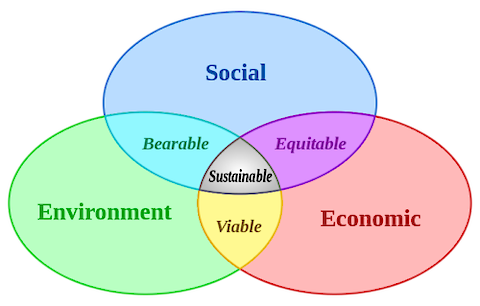
By: Srishti Vishwakarma … What is Ecological Economics? According to United States Society for Ecological Economics, ecological economics is "a venue for intellectual exchange and collaboration on issues related to the theory, policy, and implementation of sustainable development." When studying sustainability, economic, social, and environmental domains must all be considered.
By: Jessie Todd … Countless students will encounter sociology classes this year as they tackle their degrees and learn about society and human interactions, but some students may delve deeper into the sub-discipline of environmental sociology to better understand human relations and the natural environment. In our class, we dove deeper into environmental sociology with Dr. Dana Fisher from the University of Maryland.
By: Natalie Peyronnin Snider … Many of us are familiar with Political Science--"the social science discipline that deals with systems of government and the analysis of political activity and political behavior,"1--but have you heard of a discipline called Political Ecology?
What's nature but a second-hand construction? By: Alana Todd-Rodriguez … Walk outside the nearest door and look around. What do you see? Does your front lawn, campus grounds, or nearby cityscape count as a place of nature? Your answer to this question is a product of your upbringing and cultural influences. The Oxford Dictionary defines nature as:
By: Alex Sahi … This week marked the beginning of discussion-based classes for the students in MEES620 Environment and Society . We all took a few extra minutes to settle into our seats and understand the Zoom internet calling system, a new innovative web seminar forum that allows students from College Park, Horn Point, Appalachian Lab, and beyond to interact with each other.