

More Chesapeake Bay Indicators Coming Soon
Lili Badri ·Since the inception of the Chesapeake Bay & Watershed Report Card back in 2006, our suite of tidal bay indicators has been limited to water quality indicators (total phosphorus, total nitrogen, chlorophyll a, dissolved oxygen, and water clarity) and biotic indicators (benthic community and aquatic grasses). While blue crab, bay anchovy, and striped bass were considered for several years, a lack of sufficient thresholds/goals prevented their continued inclusion in the report card. With the release of the latest Comprehensive Evaluation of System Response (CESR) report and the Chesapeake Bay Watershed Agreement, there are clear updated goals for the Bay that should be prioritized and opportunities for alignment with our report card.
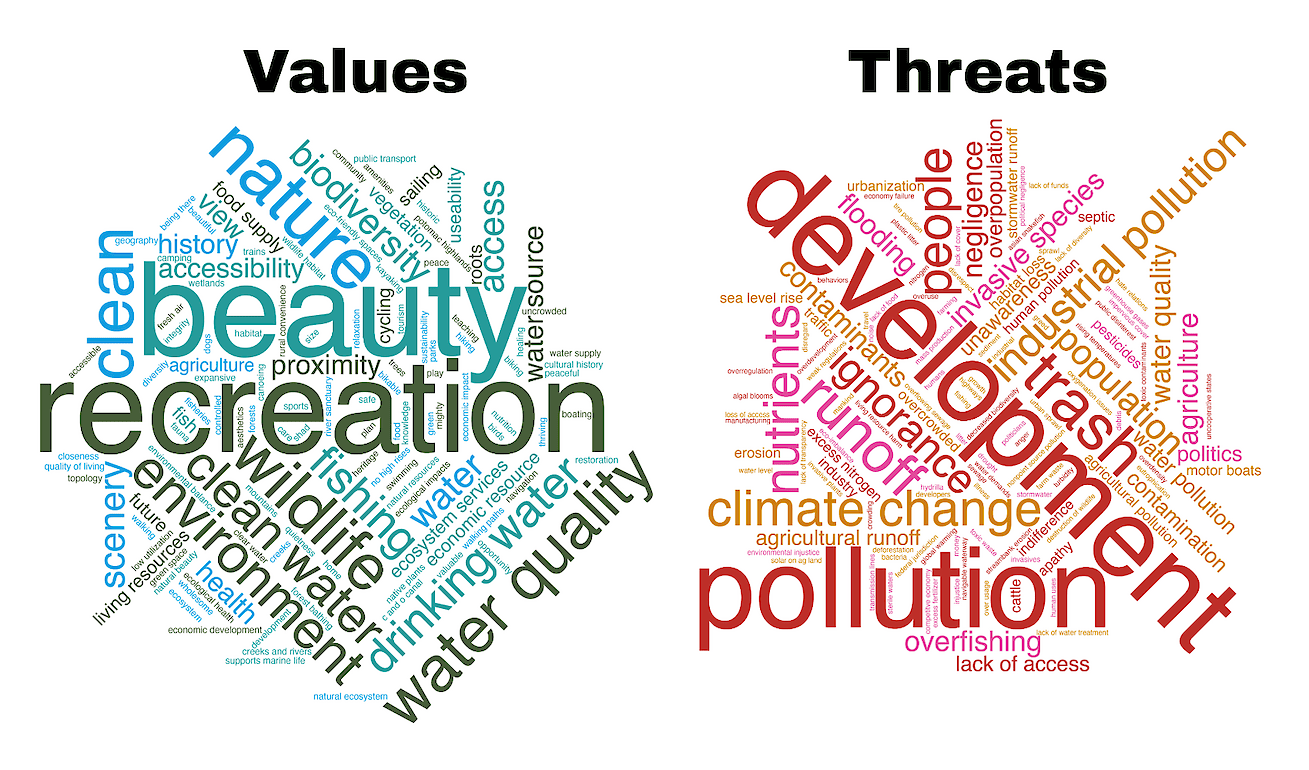
Over the last few years, we’ve been committed to engagement with different communities and interested parties, and these efforts have provided us with prospective indicators to further explore. From our concentrated efforts in the Potomac watershed region, we learned that people value recreation, beauty, wildlife, and water quality. The largest perceived threats to those values were development and pollution. Considering the values and threats, participants suggested potential indicators for different categories like ecology, economy, society & culture, and management & governance. Overall, participant responses captured concerns about expanding urbanization and the desire for sustainable urban growth.
We decided that the next step in our report card expansion process was to take the compiled responses from those past engagement events and connect with experts that can provide better insight about specific indicators, data availability, and thresholds for the tidal bay area. We wanted to achieve this by hosting focused workshops that align with the different categories of ecology, economy, society and culture, and management and governance. The first workshop was held on March 24, 2026 and it focused on tidal ecological indicators. The workshop attendees included a mix of scientists and practitioners, and together we generated ideas for indicators in the following categories: biodiversity, plastic/trash/marine debris, fish communities, invasive species, oysters, birds, riparian areas/marshes, mammals, and other.
We discussed each possible indicator, ranked the categories and their respective indicators, and identified the needed resources for each priority indicator. The top three priority indicator categories were fish communities, biodiversity, and invasive species. During the discussion, we decided to combine biodiversity and invasives into one category due to how closely related they are to one another. Additionally, the riparian areas/marshes category was expanded to include shorelines because of its relevance. Specific priority indicators included diversity and abundance for fish and waterfowl, native to nonnative species ratio, and productive/restored marsh acreage.
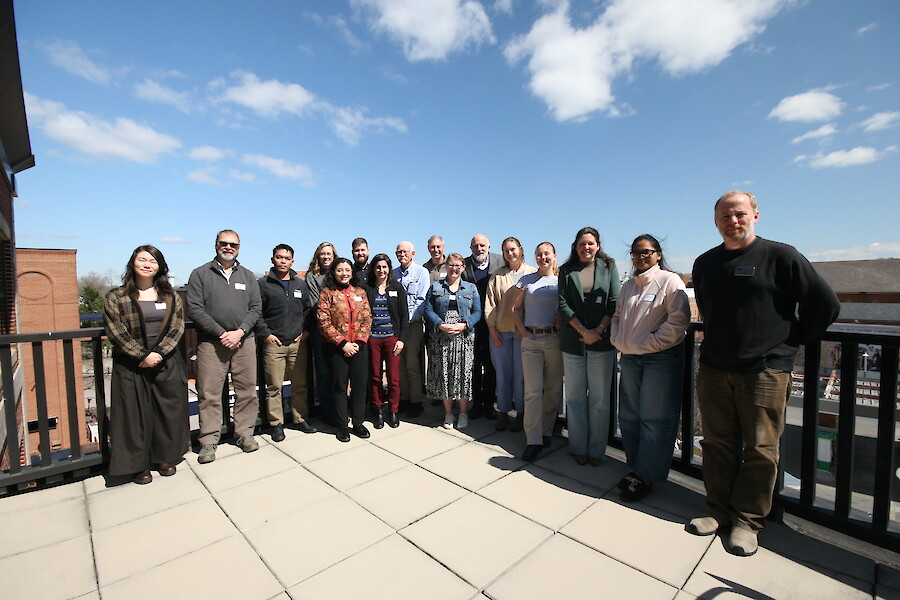
In the last part of the workshop, participants volunteered themselves and others for working groups to help guide the indicator development process for each category. We really appreciated everyone's input and look forward to continually improving our report card. Next, we will focus on social and cultural tidal indicators with a workshop set for June this year.
About the author
Lili Badri
Lili is a Senior Science Communicator at the University of Maryland Center for Environmental Science’s Integration and Application Network (IAN). Her work at IAN focuses on the synthesis and dissemination of scientific information through data analysis, visualization, and stakeholder engagement. She collaborates within and across disciplines to develop accessible communication products that support evidence-based decision-making. Her professional interests include enhancing science communication practices and understanding community perspectives to support sustainable and informed environmental solutions. She earned a Master's degree in Environmental Science at SUNY ESF and a Bachelor's degree in Chemistry at the University of South Alabama. Her previous research focused broadly on lab and field analysis of dissolved organic matter characterization and dynamics. Her personal interests include gardening, reading, and cooking.