

Science Communication Workshop at University of Illinois Urbana-Champaign
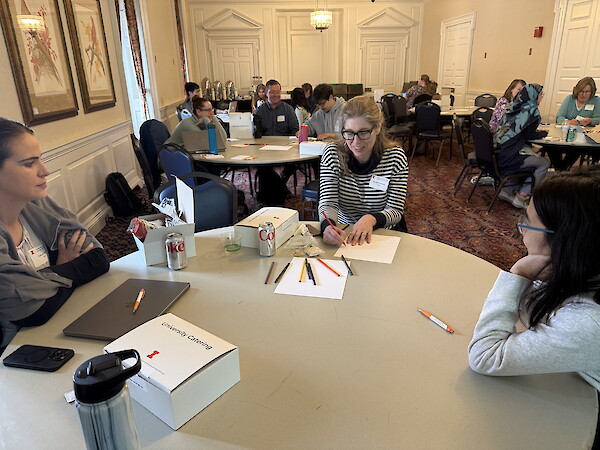
On May 7th, Alexandra Fries traveled to University of Illinois Urbana-Champaign (UIUC) to give a science communication workshop to faculty and researchers. The workshop included activities, such as Conceptionary, Title Pursuit, and ABT (And, But, Therefore), meant to sharpen participants science messaging skills through effective storytelling and visualizations. The Institute for Sustainability, Energy, and Environment hosted the visit. The institute is working on the Illinois Climate Action Plan, which will help the campus reach their goal of being carbon neutral by 2050. To learn more about Alex's time at UIUC, click here to read her latest blog.
Advancing Youth Education and Outreach with Blacks of the Chesapeake
On May 20th, Conor Keitzer helped with an outreach and education event for Annapolis High School students led by Blacks of the Chesapeake. A little over 30 high schoolers participated in this annual event, which began with a guided boat tour on the Chesapeake Bay. This was followed by a lunch n’ learn at Bates Heritage Center where Black in Marine Science shared some of the incredible eDNA work they are doing and a trip to Elktonia Carr’s Beach where students helped with eDNA sampling, tested water quality, or painted rain barrels. This was such a fun event, and it was energizing to see the student’s enthusiasm about getting their hands dirty (or wet or paint-stained) while learning about the Bay.
The 2025 IAN Report Card is complete!
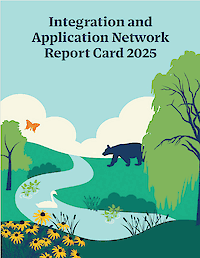
The 2025 IAN Report Card was completed and released in May this year. The report card evaluates how IAN is performing, holding ourselves accountable to achieving the goals we established in our 2025 Strategic Plan. The report card includes sections that show performance in four topical areas, including Socio-Environmental Impacts, Partner Engagement, Diversity, Equity, Inclusion and Justice, and Education and Outreach. In 2025, IAN earned a C grade overall, which reflects mixed results for individual indicators and categories. For example, IAN continues to foster strong relationships with partners and is achieving some targets related to products and their dissemination. However, we are not meeting our goals for some indicators in the Education and Outreach, and Diversity, Equity, Inclusion, and Justice categories. We believe that some of these results are due to recent changes in funding programs that de-emphasize these priorities; we need to redouble our efforts to succeed in these areas.
Understanding Salinity Risks for the Chesapeake Region
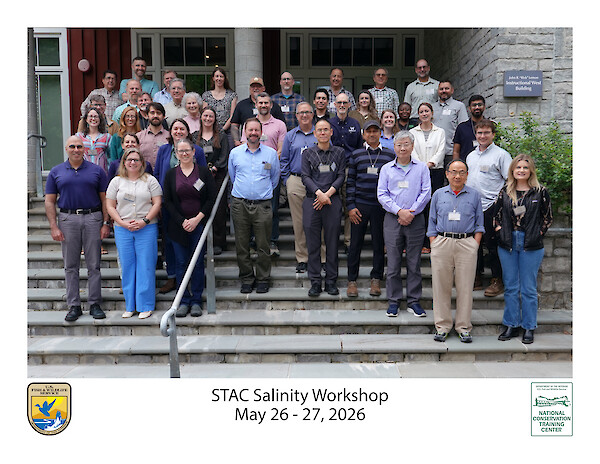
From May 26–27th, Conor Keitzer participated in a Science and Technical Advisory Committee (STAC) workshop on Salinity Risks. This workshop took a “headwaters to the bay” approach to understand what we know about the impacts of saltier freshwaters on people and the environment, as well what the options are for anticipating and managing these risks. From human health to food production to biodiversity, salt touches everything. This workshop brought together leading researchers, modelers, managers, and practitioners to inform the Chesapeake Bay Program (CBP) about this issue. Conor co-presented with colleagues from the CBP’s watershed modeling team about the work IAN is doing to support their efforts to understand salt’s impacts.
Connecting Japanese Researchers with Annapolis Area Practitioners
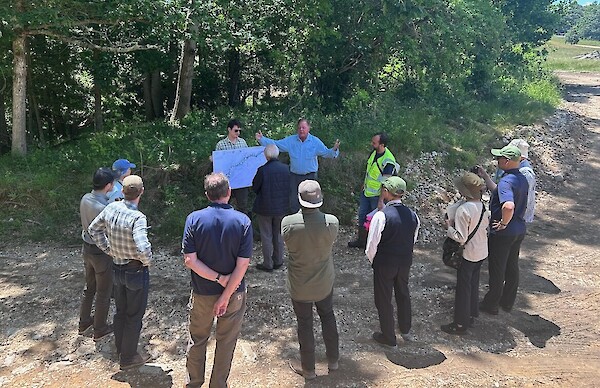
The Resilience Authority of Annapolis and Anne Arundel County hosted a brief international meeting at the UMCES and IAN offices on May 28th. The meeting brought together a small delegation from Japan with county and city officials and UMCES to discuss how to encourage nature-based solutions in coastal urban planning scenarios, using current examples in Tokyo that favor large development projects over small community parks. Following the morning session at 115 West Street, participants visited three sites to compare stream restoration activities in Millersville, Edgewater, and the Annapolis City Dock protection project. The Japanese delegation included researchers from several Tokyo-based universities, and a Tokyo area farmer. The Maryland delegation included Anne Arundel County Executive Steuart Pittman, Annapolis Mayor Jared Littmann, representatives from the Anne Arundel County Bureau of Watershed Protection and Restoration, the Resilience Authority, and Cedar Collective. Dave Nemazie and Heath Kelsey attended from UMCES.
Common Waters: Aligning Science and Community for a Sustainable Harbor
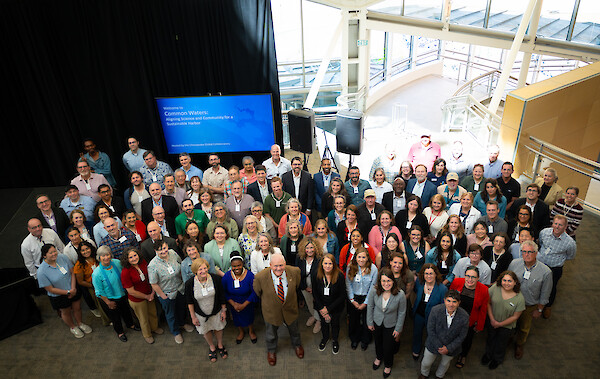
On May 28th, the Chesapeake Global Collaboratory hosted Common Waters: Aligning Science and Community for a Sustainable Harbor, convening stakeholders from community organizations, government, and research to share ideas and foster collaborative projects to improve Baltimore Harbor for all. Speakers highlighted how hands-on education is connecting students in Baltimore to the harbor, the environment, and job development, and the interconnectedness of accessibility, joy, and environmental stewardship. Participants joined workshops facilitated by IAN staff that brainstormed and planned projects to improve the harbor. We look forward to seeing how the connections and projects from this summit continue to develop.