

CMC Training
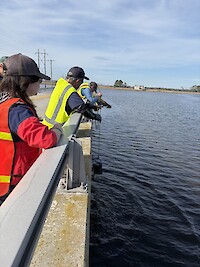
On April 14th, Ann Foo and Sidney Anderson went out to Blackwater National Wildlife Refuge (BNWR) to participate in a water monitoring sampling day as part of the Chesapeake Monitoring Cooperative. One of 22 monitoring groups in Maryland, the BWNR volunteers collect data monthly to track water health in the Chesapeake Bay, taking note of water clarity, temperature, conductivity, and dissolved oxygen, among many other parameters. Some data is taken in the field, while other samples are sent to labs for processing. Working as a well-oiled machine, these volunteers are an excellent example of how engaged community members can participate in rigorous, useful, and important data collection in the name of a healthier bay.
Defensores de la Cuenca Happy Hour
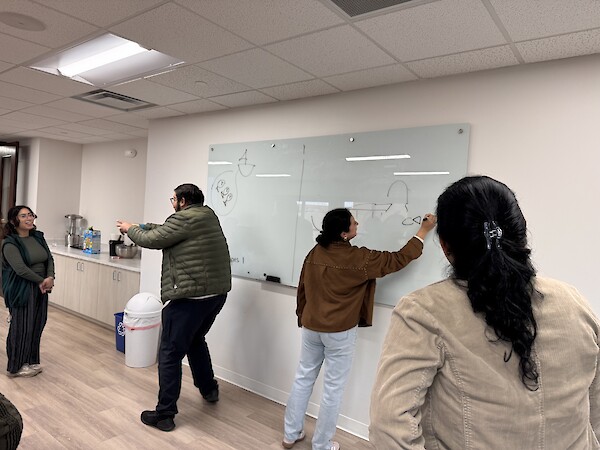
On Tuesday, April 28th, 2026, IAN hosted a happy hour with Defensores de la Cuenca. Defensores de la Cuenca (Watershed defenders) is a non-profit organization that helps the Latino community connect with the natural world. They host trainings, youth programs, and provide stewardship opportunities for people to interact with the natural world and grow in their skills and passions. Both IAN and Los Defensores connect on our emphasis on community engagement. In an effort to connect with diverse communities, IAN has been working with Defensores de la Cuenca to grow our Spanish vocabulary, especially environmental terms. During the happy hour, we learned a whole host of new words through a vocabulary game that Los Defensores created for us. We also played Conceptionary in Spanish, which we hope to play again in the future with more people in Spanish. We hope to continue our partnership with Los Defensores and reciprocate the help and support they have shown us.
Marshy Point Spring Festival
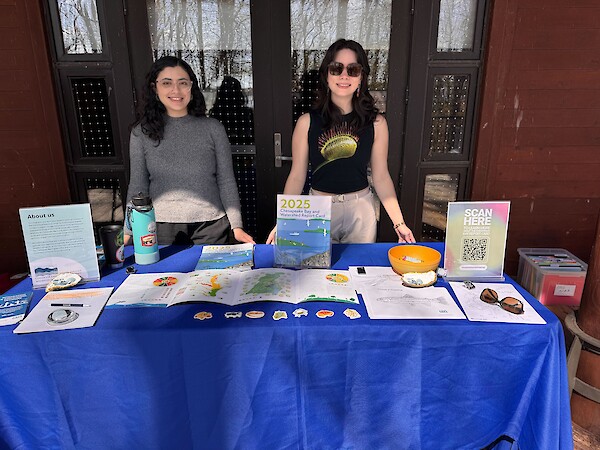
On April 11th, Ann Foo and Lili Badri tabled at the annual Spring Festival at Marshy Point Nature Center. The festival featured local organizations, crafts, music, and many family-friendly activities. Our main goals were to raise awareness about the Chesapeake Bay & Watershed Report Card and connect with the local community. We spoke with attendees about the socio-environmental health status of the Chesapeake Bay region and actions that can be taken to help improve the scores. It was a wonderful event, and we look forward to attending again in the future.
Patapsco Report Card Release
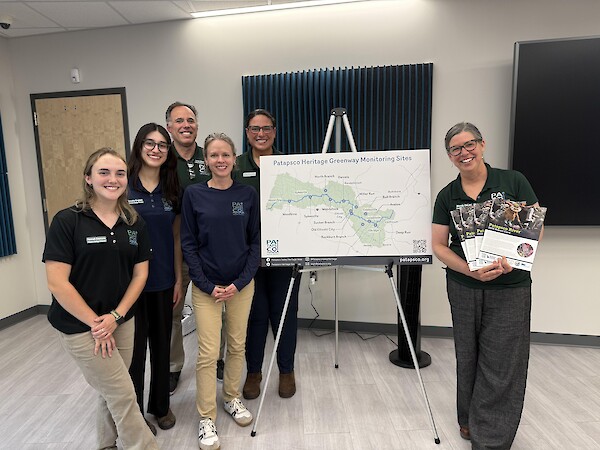
On April 30, Patapsco Heritage Greenway held its 2025 Report Card Release at the Catonsville Library. PHG is celebrating 5 years of water monitoring, and this is its fourth annual water quality report card. Matt Stover from the Maryland Department of the Environment presented on the value of community science data to MDE and the Integrated Report. Patapsco Heritage Greenway is a member of the Chesapeake Monitoring Cooperative, which supports community science groups in the Chesapeake Bay watershed in quality assurance, data analysis, and outreach. Through the CMC, Patapsco Heritage Greenway's data is publicly available on the CMC Data Explorer and sent to the Chesapeake Bay Program and MDE. The release event was attended by many passionate volunteers and community members, and we look forward to seeing the program continue to thrive and grow. Check out the report card here and visit patapsco.org to learn more about PHG.
USGS celebrates 15 years of WRTDS for water-quality science and management
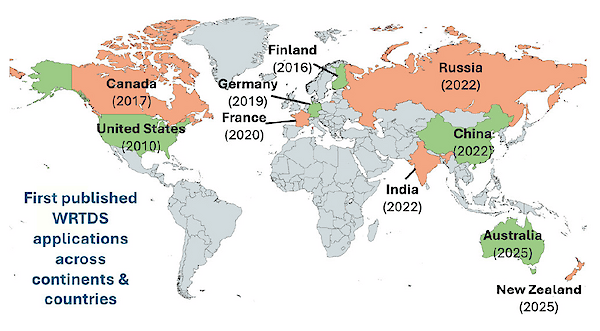
Since its inception in 2010, the Weighted Regressions on Time, Discharge, and Season (WRTDS) method has grown into a state-of-the-art tool informing water-quality science and management worldwide. The free R package EGRET (Exploration and Graphics for RivEr Trends) makes WRTDS analysis easily accessible and has been downloaded more than 80,000 times by users across the U.S. and worldwide. The flexible, data-driven framework of WRTDS accounts for factors like streamflow variability and seasonality. Two recent publications co-authored by scientists at the USGS, the University of Maryland Center for Environmental Science, and the Chesapeake Bay Program reflect on advancements in WRTDS over the last 15 years, including its growing application to water-quality science and management challenges worldwide. For more information, contact University of Maryland/Chesapeake Bay Program scientist Qian Zhang or USGS emeritus scientist Robert Hirsch.