

Continuing Natural Resource Assessments with NPS

IAN travelled to Maine the week of October 14th to facilitate a scoping meeting for the Katahdin Woods and Waters (KAWW) project. IAN is working with the National Park Service (NPS) to assess the condition of natural resources in KAWW to help guide management of the Monument. Thirty-five stakeholders representing various state and federal agencies and the Penobscot Nation shared their time and expertise to identify priority resources and stressors that will guide the Natural Resource Condition Assessment. The IAN team was also able to get out into the Monument and see some of its incredible natural resources during a site visit with their NPS collaborators. Maine was as amazing as advertised and it was inspiring that so many people generously donated their time to support this project. The IAN team is looking forward to visiting again and working with such a dedicated group of people to protect this wild and beautiful place.
Project Highlight: Katahdin Woods and Waters National Monument
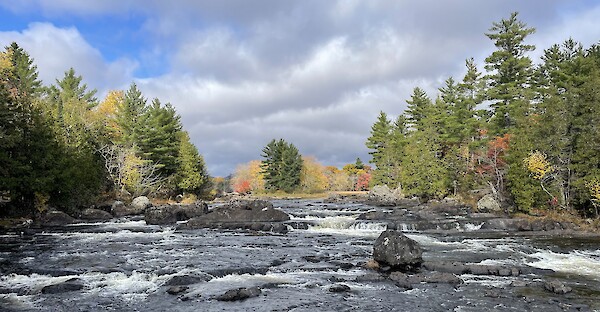
Nearly two years after the initial scoping meeting in Patten, ME, the Natural Resource Condition Assessment for Katahdin Woods and Waters National Monument is almost done. This assessment uses existing data, literature, and expert input to provide a snapshot of conditions for priority resources, including birds, forest vegetation, mammal communities, stream conditions, and threatened and endangered species. Some highlights include finding that the monument has vast core forests and potential old growth stands that shelter priority bird species and iconic mammals like moose and black bear. Additionally, the monument’s rivers and streams provide vital spawning and nursery habitat for the federally endangered Atlantic salmon and support rare wood turtles and wild brook trout. We also found that while the monument generally supports high biodiversity and good natural resource conditions, managers face growing environmental pressures and significant data gaps for most priority resources. The results of this assessment will be used to guide future research and the development of conservation management plans. To find out more about the project and read the final assessment when it is published, please visit the project website.