Projects in collaboration with Environmental Protection Agency
2020-01-01 —
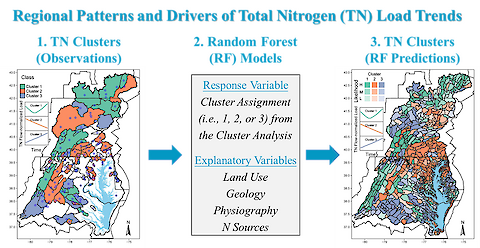
The main objective of this project is to leverage machine learning approaches -- more specifically, the combined use of hierarchical clustering and random forest (RF) classification -- to reveal regional patterns and drivers of nitrogenand phosphorus trends across the Chesapeake Bay watershed. This work involves three objectives:
2018-01-01 —
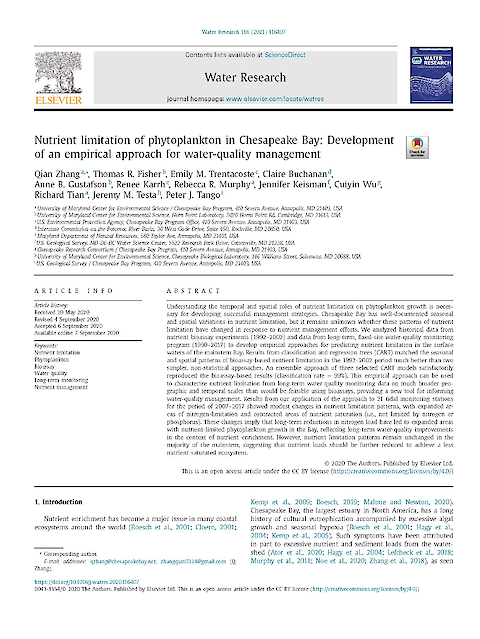
This project is aimed toward better understanding nutrient limitation of phytoplankton in Chesapeake Bay and its tidal tributaries. Leveraging novel statistical approaches and long-term monitoring data sets from the Chesapeake Bay Program Partnership, this project helps understand whether nutrient limitation patterns have changed in response to decades of nutrient reduction efforts.
2017-01-01 —
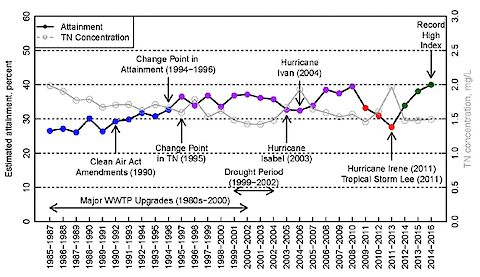
This project is aimed toward better understanding the current status and long-term trends of Chesapeake Bay in terms of its water quality standards attainment.
2013-03-01 — 2014-12-31
Degradation of nearshore quality is a primary concern of Lake Tahoe’s residents and stakeholders. Issues impacting the nearshore environment include visible algal growth as well as the establishment and threat of aquatic invasive species. This project seeks to improve the effectiveness of communicating the results and findings of the Evaluation of Nearshore Ecology and Aesthetics Project to informed stakeholders, the general public, and the science community.