Publications by Caroline Donovan

IAN is committed to producing practical, user-centered communications that foster a better understanding of science and enable readers to pursue new opportunities in research, education, and environmental problem-solving. Our publications synthesize scientific findings using effective science communication techniques.

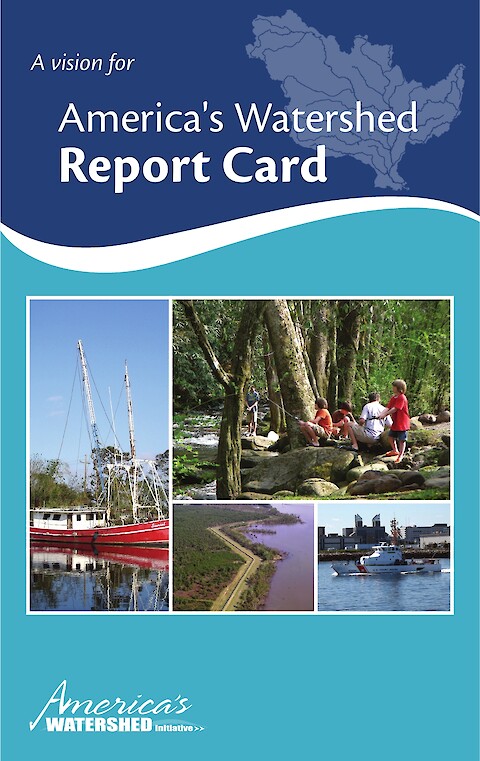
A vision for America

A vision for America's Great Watershed Report Card

Heath Kelsey, Caroline Donovan, Brianne Walsh, Jonathan Kellogg, Bill Dennison, Alexandra Fries ·

Report cards can be part of a tiered approach to communicating results with varying technical detail. Our vision for this report card framework is based on goals identified in America’s Great Watershed Initiative and derived from principles of Integrated River Basin Management. The framework includes balanced information from Social, Economic, and Environmental sectors, and is intended to be transparent and clear.

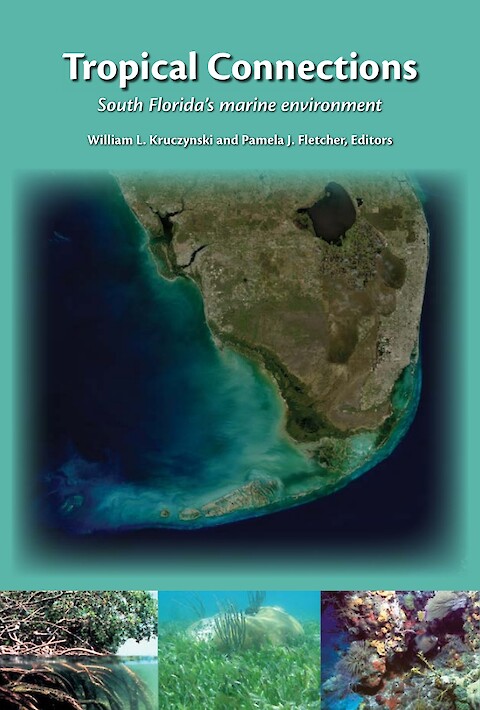
Tropical Connections: South Florida

Tropical Connections: South Florida's marine environment

Kruczynski WL and Fletcher PJ ·

This book summarizes information on the south Florida marine ecosystem in a manner that is easy to read and understand. The book covers physical and biological oceanography, ecology, human impacts, and climate change. This book is unique in that it consists of fact pages that were prepared by 162 experts in their scientific disciplines. Filled with rich graphics and photos, it is appropriate for students, educators, scientists, and stakeholders.

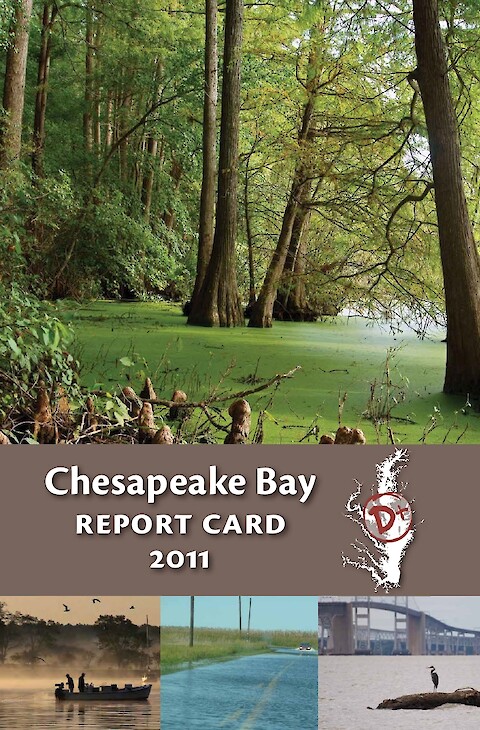
2011 Chesapeake Bay Report Card (Page 1)

2011 Chesapeake Bay Report Card

Bill Dennison, Caroline Donovan, Jonathan Kellogg, Alexandra Fries ·

This report card provides a transparent, timely, and geographically detailed assessment of Chesapeake Bay. The overall health of Chesapeake Bay, determined using water quality and biotic indicators, declined slightly in 2011. The overall grade of D+ was a decrease for the second year in a row, down from a C- in 2010. Only two reporting regions, the Patapsco and Back Rivers, and the Lower Western Shore (MD), had improved grades in 2011.

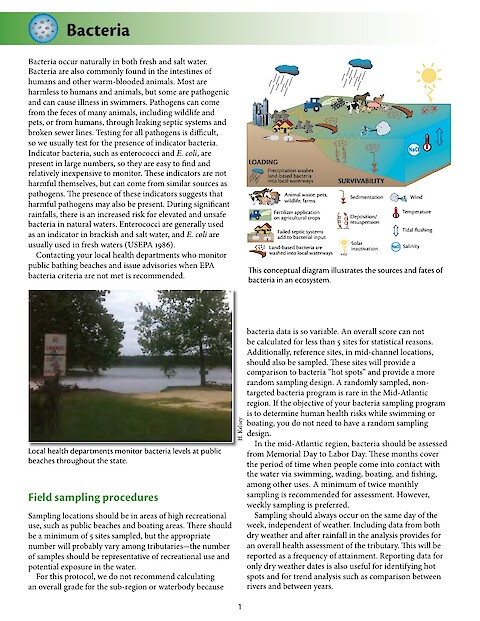
Bacteria sampling and data analysis protocol addendum for Mid-Atlantic tidal tributary indicators (Page 1)

Bacteria sampling and data analysis protocol addendum for Mid-Atlantic tidal tributary indicators

Wicks EC, Kelsey RH, Fries AS, Kellogg JP ·

This document provides guidelines for the successful production of tidal ecosystem health report cards. Specifically, this document serves as an addendum to the Sampling and data analysis protocols for Mid-Atlantic tidal tributary indicators which develops a clear and consistent protocol for the identification, collection, and analysis of the indicator of bacteria.

Baltimore Harbor

Baltimore Harbor's Ecological and Human Health: 2010

Caroline Donovan, Heath Kelsey, Sara Powell ·

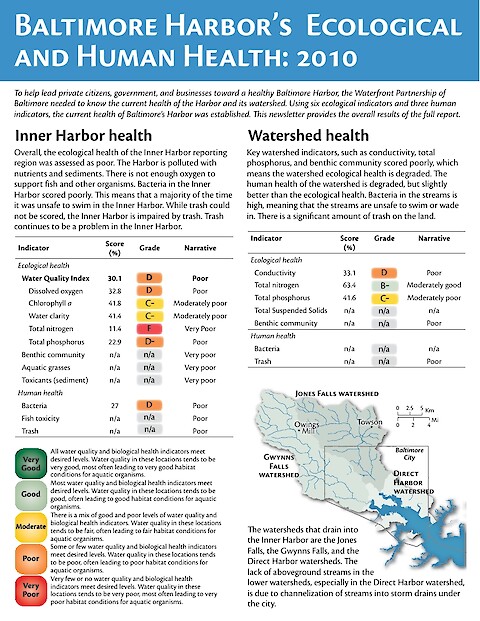
To help lead private citizens, government, and businesses toward a healthy Baltimore Harbor, the Waterfront Partnership of Baltimore needed to know the current health of the Harbor and its watershed. Using six ecological indicators and three human indicators, the current health of Baltimore's Harbor was established. This newsletter provides the overall results of the full report.

State of Baltimore Harbor

State of Baltimore Harbor's Ecological and Human Health: 2010

Wicks EC, Kelsey RH and Powell SL ·

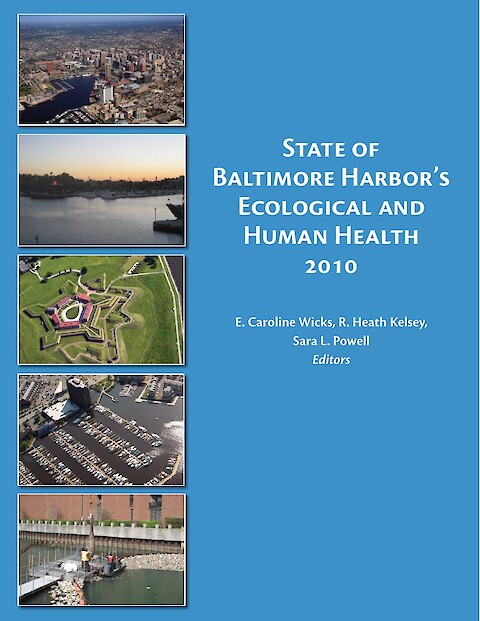
This baseline condition assessment was produced by EcoCheck (NOAA-UMCES Partnership) for the Waterfront Partnership of Baltimore, Inc. This report assesses the current ecosystem health status of Baltimore's Inner Harbor—future health can be assessed through annual Harbor ecosystem health report cards.

2010 Chester River Report Card (Page 1)

2010 Chester River Report Card

Heath Kelsey, Caroline Donovan, Sara Powell ·

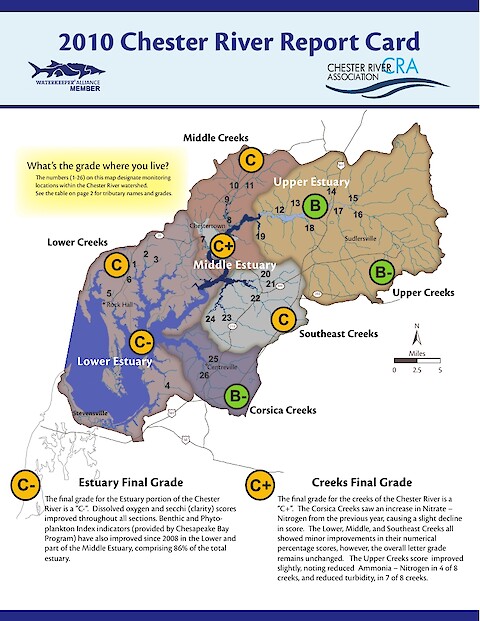
This report card summarizes 2010 water quality in the Chester River, based on data collected by the Chester River Association and various partners. It examines the health of the river in both tidal and non-tidal regions, and provides information on what concerned stakeholders can do to help improve water quality.

Total Maximum Daily Loads: A citizen

Total Maximum Daily Loads

A citizen's guide to the Chesapeake Bay TMDL

Melissa Andreychek, Sara Powell, Caroline Donovan ·

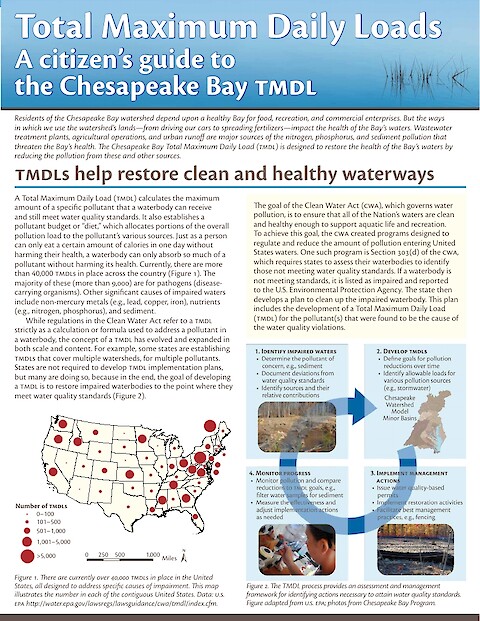
Residents of the Chesapeake Bay watershed depend upon a healthy Bay for food, recreation, and commercial enterprises. But the ways in which we use the watershed’s lands—from driving our cars to spreading fertilizers—impact the health of the Bay’s waters. Wastewater treatment plants, agricultural operations, and urban runoff are major sources of the nitrogen, phosphorus, and sediment pollution that threaten the Bay’s health.

Chesapeake Bay Report Card 2010 (Page 1)

Chesapeake Bay Report Card 2010

Bill Dennison, Heath Kelsey, Caroline Donovan, Sara Powell ·

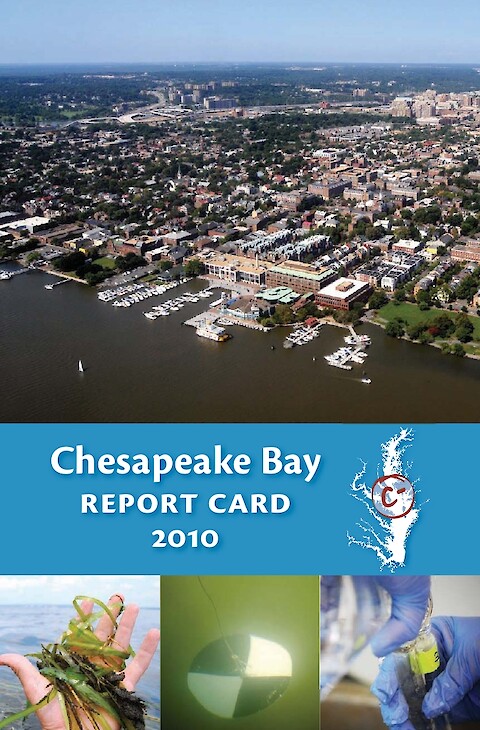
This report card provides a transparent, timely, and geographically detailed assessment of 2010 Chesapeake Bay health. The overall health of Chesapeake Bay, assessed using water quality and biotic indicators, declined slightly in 2010. The overall grade decreased from a C in 2009 to C- in 2010. Only two reporting regions (James River and York River) had improved grades in 2010, three were unchanged, and nine declined.