Publications by Conor Keitzer

IAN is committed to producing practical, user-centered communications that foster a better understanding of science and enable readers to pursue new opportunities in research, education, and environmental problem-solving. Our publications synthesize scientific findings using effective science communication techniques.
Evaluating Methods to Enhance Oyster Production with Alternative Substrates, Retrofits, and Hatchery Holding Times

A Report to the Maryland General Assembly, Governor, and Secretary of Natural Resources in Response to Senate Bill 830 (2022)

North, E., M. W. Gray, M. Fabra, J. Shaner, C. Keitzer, and R. Nair-Gonzalez ·
19 December 2025

This report is in response to Senate Bill 830 (2022) that instructed the University of Maryland Center … for Environmental Science (UMCES) to evaluate the following topics in collaboration with Smithsonian … Environmental Research Center, Virginia Institute of Marine Science, appropriate State and federal … agencies, and industry and other stakeholders:

Read more

Strengthening Habitats with Oysters on Retrofitted & Engineered Structures

Report on the Virtual Symposium Feb 26-27, 2025

Matthew Gray, Elizabeth North, William Nardin, Monica Fabra, Kurt Florez, Conor Keitzer, Roshni Nair-Gonzalez, and David Nemazie ·
15 November 2025

Structures (SHORES) is part of an effort to fill key knowledge gaps in support of Maryland’s … oyster resource and oyster industries. Chesapeake Bay is home to thriving commercial fishing and … aquaculture industries and one of the largest oyster restoration efforts in North America. The lack of … fresh shell substrate has become a major impediment to all of these activities and alternatives are … being considered for large-scale use in restoration and industry efforts.

Read more

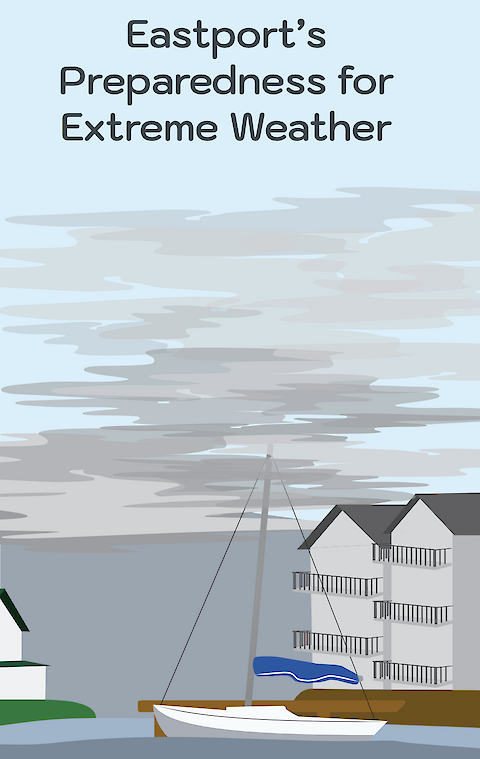
Eastport's Preparedness for Extreme Weather

Conor Keitzer, Katie May Laumann, Sidney Anderson, Annie Carew ·
27 June 2025

This community-level resilience report card examines the preparedness of the Eastport neighborhood in Annapolis, MD to threats like severe weather and flooding. After surveying community members to identify priority concerns in the neighborhood, indicators to assess threats and resilience around those concerns were selected to give the community a preparedness score. This report card recommends individual and community-wide actions that can reduce vulnerability in areas of concern.

Read more

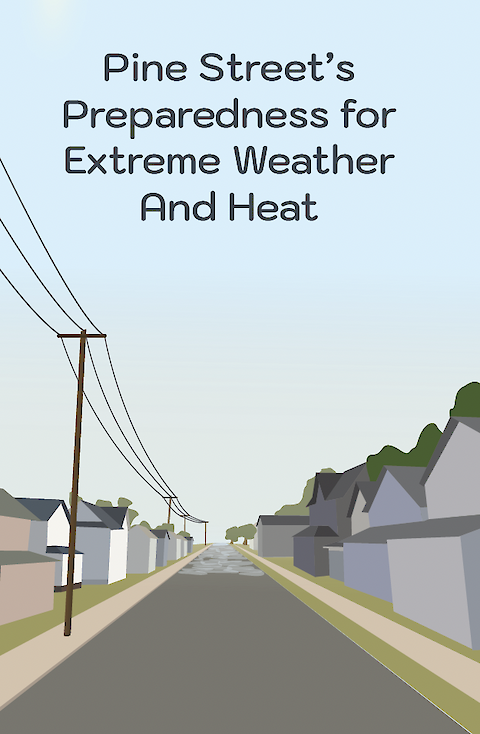
Pine Street's Preparedness for Extreme Weather and Heat

Conor Keitzer, Katie May Laumann, Sidney Anderson, Annie Carew ·
27 June 2025

This community-level resilience report card examines the preparedness of the Pine Street neighborhood in Cambridge, MD to threats like severe weather and extreme heat. After surveying community members to identify priority concerns in the neighborhood, indicators to assess threats and resilience around those concerns were selected to give the community a preparedness score. This report card recommends individual and community-wide actions that can reduce vulnerability in areas of concern.

Read more

Charles County Climate Adaptation Report Card (Page 1)

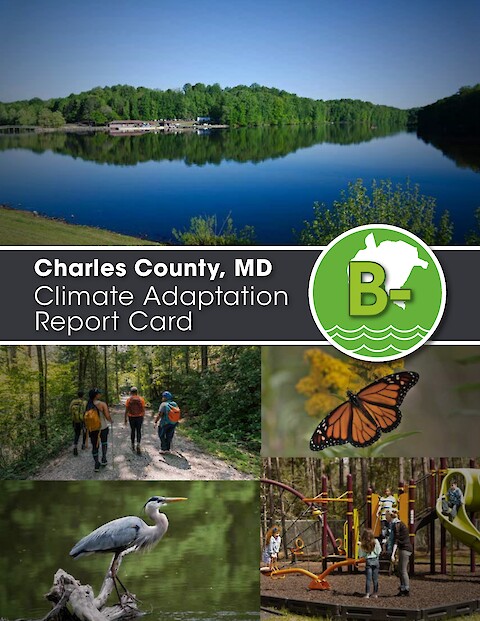
Charles County Climate Adaptation Report Card

Katie May Laumann, Stacy Schaefer, Conor Keitzer, Annie Carew, Lili Badri ·
26 June 2025

Following the first-ever Maryland Coastal Adaptation Report Card in 2021, IAN collaborated with the Charles County Resilience Authority to develop a county-level assessment of coastal adaptation. Following in-person and virtual stakeholder engagement workshops, a suite of eighteen resilience indicators and nine vulnerability indicators were identified and assessed. Dividing adaptation indicators into two categories highlights areas that are doing particularly well or require extra attention.

Read more

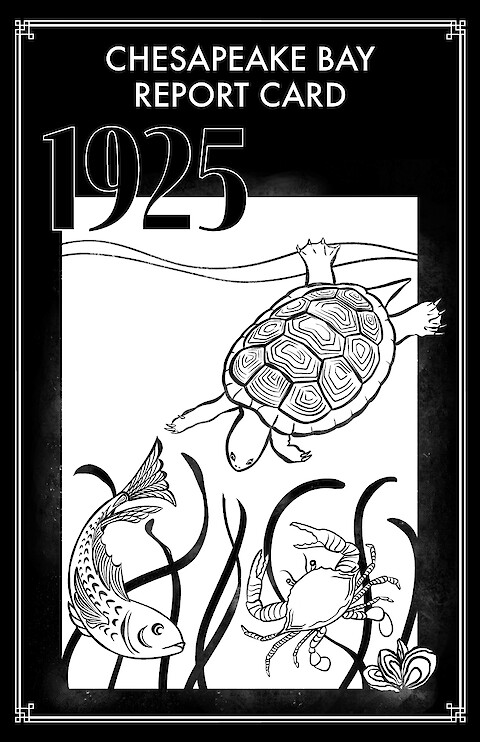
1925 Chesapeake Bay Report Card (Page 1)

1925 Chesapeake Bay Report Card

Ann Foo, Lili Badri, Conor Keitzer, Alexandra Fries, Heath Kelsey, Bill Dennison, Dave Nemazie ·
10 June 2025

The 1925 Chesapeake Bay Report Card was produced to celebrate the UMCES Centennial. Inspired by 1920s design, this report card offers a glimpse of what a Chesapeake Bay Report Card might have been like in 1925, when UMCES was founded. The state of the Bay in 1925 is not an accurate scientific assessment, but an estimation based on informed opinions and broad historical generalizations.

Read more

2025 Chesapeake Bay & Watershed Report Card (Page 1)

2025 Chesapeake Bay & Watershed Report Card

Ann Foo, Conor Keitzer, Lili Badri, Heath Kelsey, Alexandra Fries ·
10 June 2025

This report card provides a transparent, timely, and geographically detailed assessment of Chesapeake Bay and its Watershed. Since 2016, UMCES has engaged stakeholders throughout the watershed to transform the report card into an evaluation of the Chesapeake Watershed health. Watershed health includes traditional ecological indicators, but also economic and societal indicators.

Read more

Reporte de salud de 1925 sobre la bahía de Chesapeake (Page 1)

Reporte de salud de 1925 sobre la bahía de Chesapeake

Ann Foo, Lili Badri, Conor Keitzer, Alexandra Fries, Heath Kelsey, Bill Dennison, Dave Nemazie ·
10 June 2025

El Reporte de Salud de la bahía de Chesapeake de 1925 se elaboró ​​para celebrar el centenario de la UMCES. Inspirado en el diseño de la década de 1920, este informe ofrece una visión de cómo habría sido un Reporte de salud sobre la bahía de Chesapeake en 1925, cuando se fundó la UMCES. El estado de la bahía en 1925 no es una evaluación científica precisa, sino una estimación basada en opiniones fundamentadas, y generalizaciones históricas generales.

Read more

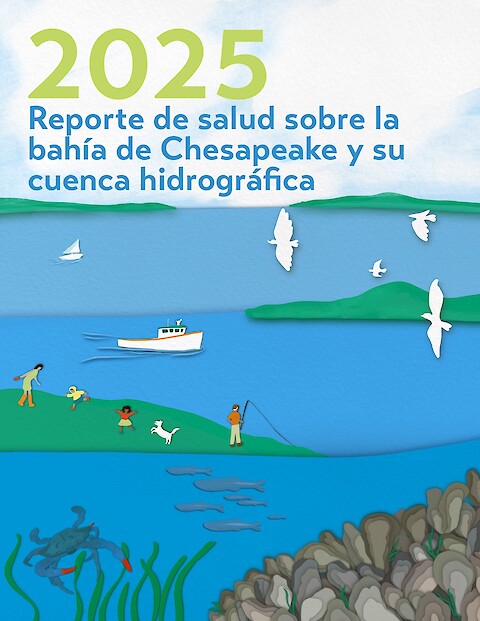
Boletín informativo de 2025 sobre la bahía de Chesapeake y su cuenca hidrográfica (Page 1)

Reporte de salud de 2025 sobre la bahía de Chesapeake y su cuenca hidrográfica

Ann Foo, Conor Keitzer, Lili Badri, Heath Kelsey, Alexandra Fries ·
10 June 2025

Este informe proporciona una evaluación transparente, oportuna, y geográficamente detallada de la bahía de Chesapeake y su cuenca. Desde 2016, UMCES ha involucrado a las partes interesadas de toda la cuenca para transformar el informe en una evaluación de la salud de la cuenca de Chesapeake. Los indicadores de la bahía evalúan la salud del ecosistema acuático, mientras que los indicadores de la cuenca hidrográfica cubren las condiciones ecológicas, sociales, y económicas.

Read more