IAN is committed to producing practical, user-centered communications that foster a better understanding of science and enable readers to pursue new opportunities in research, education, and environmental problem-solving. Our publications synthesize scientific findings using effective science communication techniques.
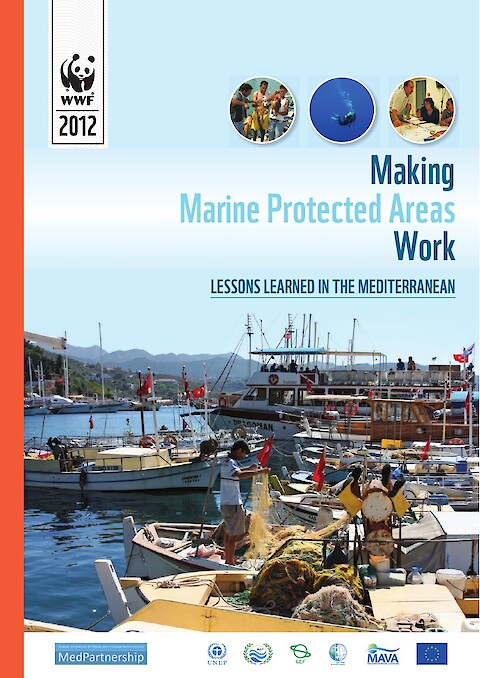
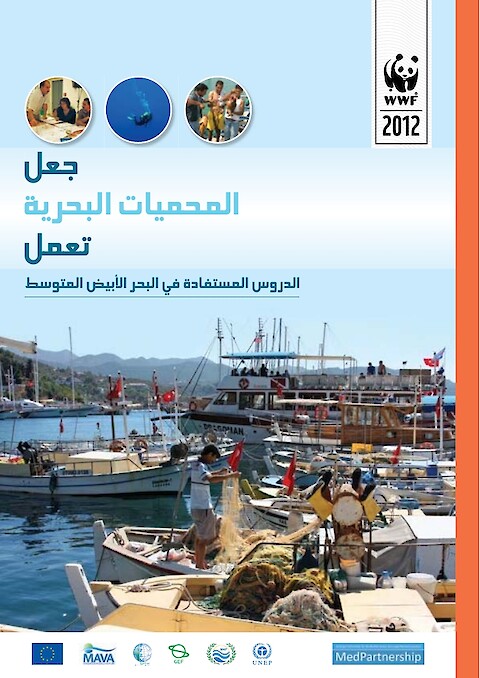
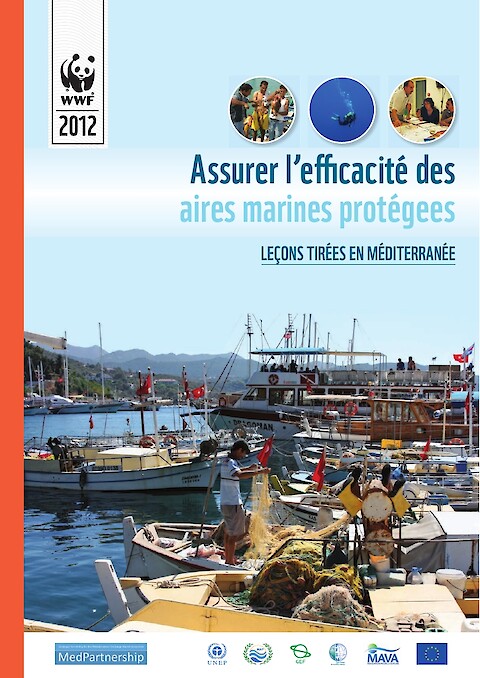
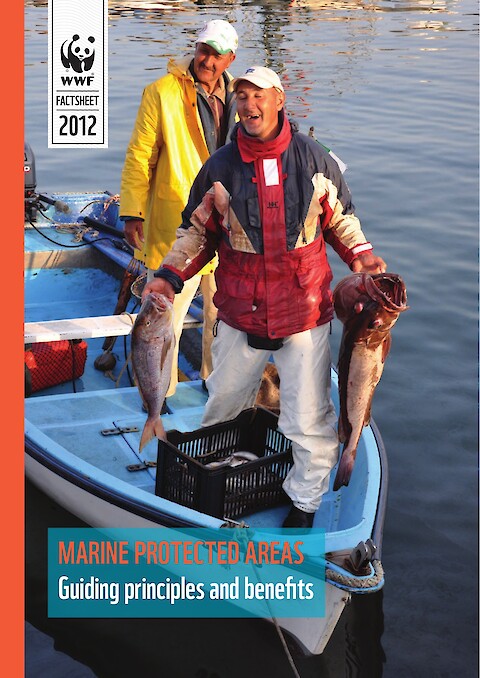
Early engagement with local communities and regional and national officials are essential to the capacity and efficiency of marine protected areas (MPAs). This WWF MedPAN South report, along with the Marine Protected Areas: Guiding Principles and Benefits newsletter, identifies lessons learned in case studies from 5 countries with MPAs in the southern and eastern Mediterranean.
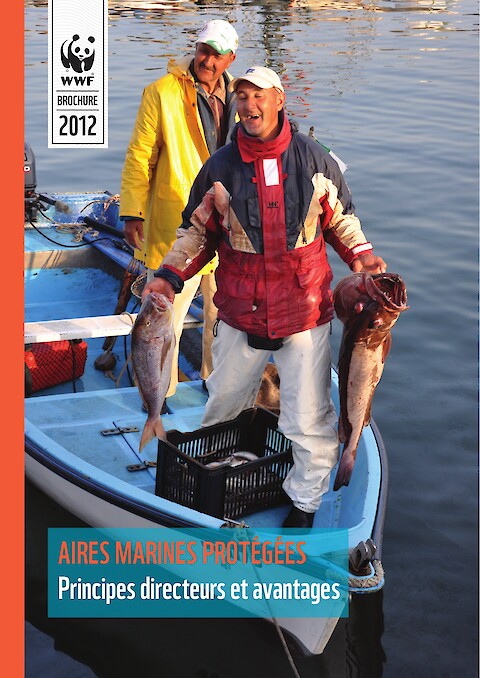
Early engagement with local communities and regional and national officials are essential to the capacity and efficiency of marine protected areas (MPAs). This WWF MedPAN South report, along with the Marine Protected Areas: Guiding Principles and Benefits newsletter, identifies lessons learned in case studies from 5 countries with MPAs in the southern and eastern Mediterranean.
Early engagement with local communities and regional and national officials are essential to the capacity and efficiency of marine protected areas (MPAs). This WWF MedPAN South report, along with the Marine Protected Areas: Guiding Principles and Benefits newsletter, identifies lessons learned in case studies from 5 countries with MPAs in the southern and eastern Mediterranean.
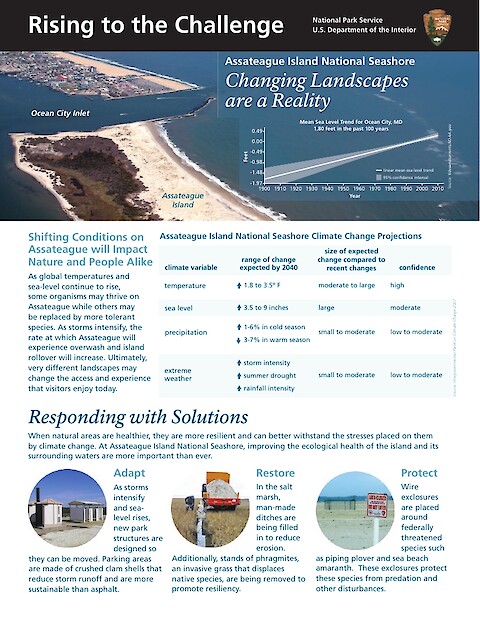
As global temperatures and sea levels continue to rise, some organisms may thrive on Assateague Island while others may be replaced by more tolerant species. As storms intensify, the rate at which this Mid-Atlantic barrier island will experience overwash and rollover will increase. Ultimately, very different landscapes may change the access and experience that visitors enjoy today at Assateague Island National Seashore.
Marine Protected Areas (MPAs) are slices of the sea and coastline set aside because of their ecological importance. Creating an MPA requires a holistic approach that includes and integrates ecological, biological, social, and economic considerations. This approach cannot be successful without proper legislation, a functional institutional framework, financial resources, and active engagement of stakeholders.
Marine Protected Areas (MPAs) are slices of the sea and coastline set aside because of their ecological importance. Creating an MPA requires a holistic approach that includes and integrates ecological, biological, social, and economic considerations. This approach cannot be successful without proper legislation, a functional institutional framework, financial resources, and active engagement of stakeholders.
Marine Protected Areas (MPAs) are slices of the sea and coastline set aside because of their ecological importance. Creating an MPA requires a holistic approach that includes and integrates ecological, biological, social, and economic considerations. This approach cannot be successful without proper legislation, a functional institutional framework, financial resources, and active engagement of stakeholders.
Bob Graham, former Commission Co-Chair William K. Reilly, former Commission Co-Chair Frances Beinecke, former Commission Member Donald F. Boesch, former Commission Member Terry D. Garcia, , former Commission Member Cherry A. Murray, former Commission Member Fran Ulmer, former Commission Member ·
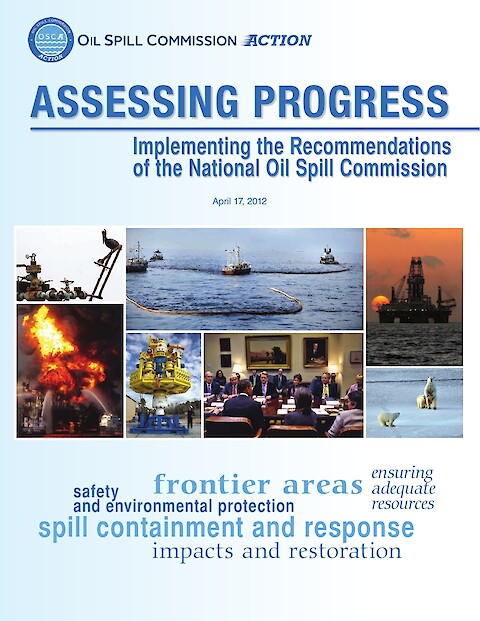
The National Commission on the BP Deepwater Horizon Oil Spill and Offshore Drilling established by President Obama was tasked with determining the root causes of the April 2010 Gulf of Mexico oil spill, evaluate the responses, and make recommendations to minimize the risk that such a disaster would ever happen again. This report by the Commission is a graded progress assessment of the Administration, Congress, and the Oil Industry on implementing those recommendations.
Carruthers TJB, Carter SL, Lookingbill TR, Florkowski LN, Hawkey JM, and Dennison WC ·
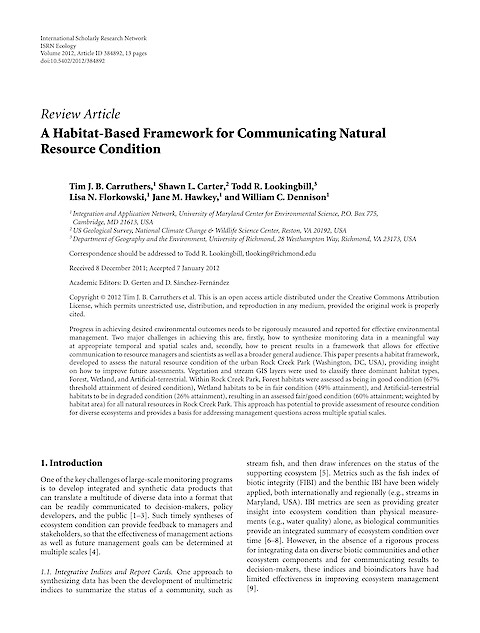
Progress in achieving desired environmental outcomes needs to be rigorously measured and reported for effective environmental management. Two major challenges in achieving this are, firstly, how to synthesize monitoring data in a meaningful way at appropriate temporal and spatial scales and, secondly, how to present results in a framework that allows for effective communication to resource managers and scientists as well as a broader general audience.
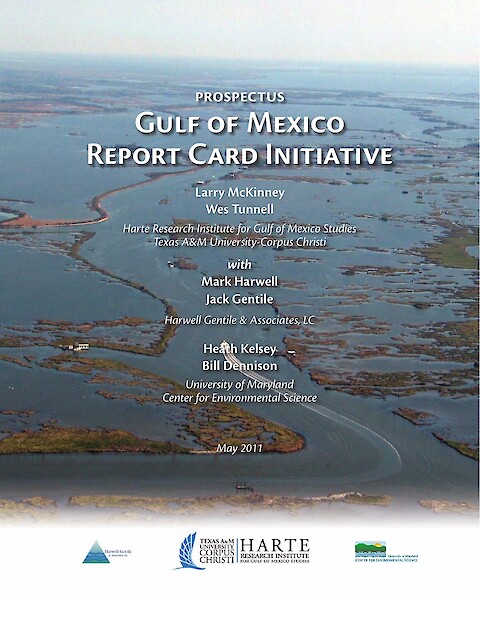
McKinney L, Tunnell W, Harwell M, Gentile J, Kelsey RH and Dennison, WC ·
The Harte Research Institute for Gulf of Mexico Studies of Texas A&M University-Corpus Christi, along with its partners Harwell Gentile & Associates, LC, and the University of Maryland Center for Environmental Science, proposes to develop a comprehensive framework for a Report Card on the health of the Gulf of Mexico.