IAN is committed to producing practical, user-centered communications that foster a better understanding of science and enable readers to pursue new opportunities in research, education, and environmental problem-solving. Our publications synthesize scientific findings using effective science communication techniques.
Ziolkowski D, Celis-Murillo A, Malpass J, Pardieck K, Martin J, and Walker L ·
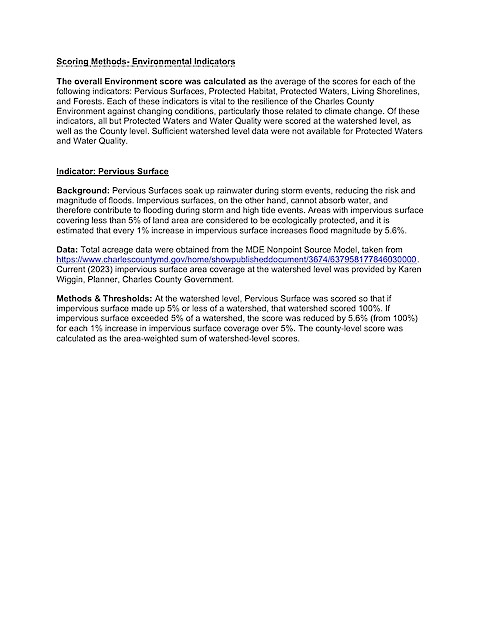
Birds are vital to our economy, ecosystems, and cultural heritage. Investing in bird conservation benefits communities, businesses, and working lands while reinforcing our nation’s legacy of stewardship and biodiversity. By valuing birds, we ensure a richer, healthier, and more vibrant future for all Americans.
Vargas-Nguyen V, Kelsey H, Badri L, Adebayo A, Breton T, Byun J, Fife A, Kalama I, Matthew L, Novara A, Sequeira R ·
Coastal environments face unique challenges that profoundly affect human well-being. Stressors such as pollution, rising temperatures, flooding, harmful algal blooms (HABs), and emerging contaminants threaten ecosystems and disproportionately impact vulnerable communities. This report presents the findings from the Fall 2024 Coastal Environment and Community Health course, by graduate students in the Marine, Estuarine, and Environmental Science program at the University System of Maryland.
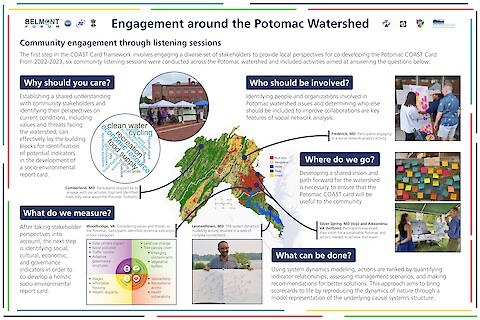
From 2022-2023, the COAST Card project held a series of listening sessions to stimulate community engagement throughout the Potomac Watershed. This poster summarizes the results of the activities at those listening sessions.
Robertson E, Malpass J, Ottinger C, Griffin J, Densmore C, and Hyer K ·
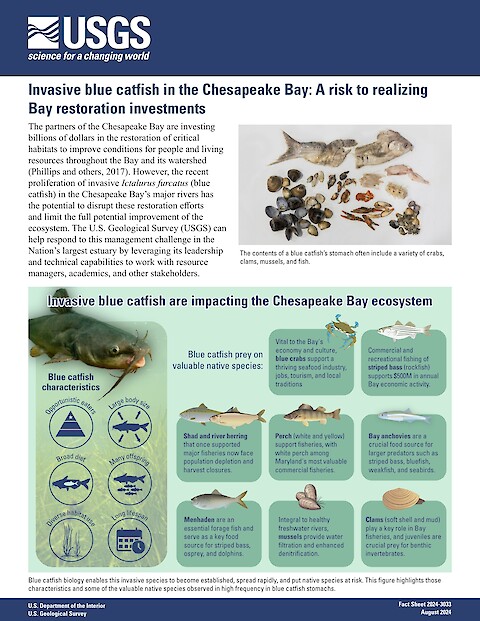
The partners of the Chesapeake Bay are investing billions of dollars in the restoration of critical habitats to improve conditions for people and living resources throughout the Bay and its watershed. However, the recent proliferation of invasive Ictalurus furcatus (blue catfish) in the Chesapeake Bay’s major rivers has the potential to disrupt these restoration efforts and limit the full potential improvement of the ecosystem.
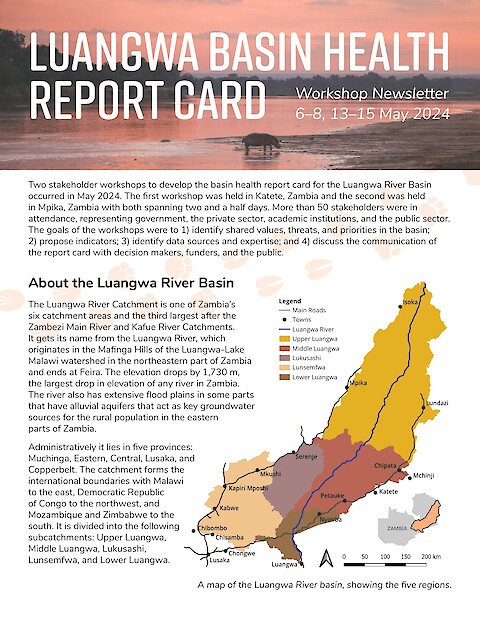
For the development of the Luangwa River Basin Report Card, IAN and WWF Zambia conducted two stakeholder workshops, with one held in Katete, Zambia from May 6-8 and the other held in Mpika, Zambia from May 13-15. This newsletter summarizes the activities and main findings of the workshops and serves as the foundation for the socio-environmental analysis of the Luangwa River Basin.
Noe G, Angermeier PL, Barber LB, Buckwalter J, Cashman MJ, Devereux O, Doody TR, Entrekin S, Fanelli RM, Hitt N, Huber ME, Jasmann JR, Maloney KO, Mohs TG, Sabat-Bonilla S, Smalling K, Wagner T, Wolf JC, Hyer KE ·
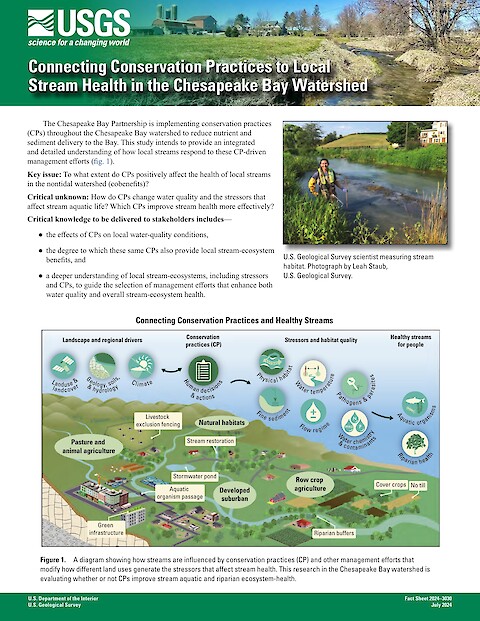
The Chesapeake Bay Partnership is implementing conservation practices (CPs) throughout the Chesapeake Bay watershed to reduce nutrient and sediment delivery to the Bay. This study intends to provide an integrated and detailed understanding of how local streams respond to these CP-driven management efforts. The publication can also be found on the USGS website here.
Vargas-Nguyen V, Edgerton J, Nair R, Anderson S, Badri L, Lucchese V, Fife A, Kelsey H, Dennison B, Knauss C, Trenholm N ·
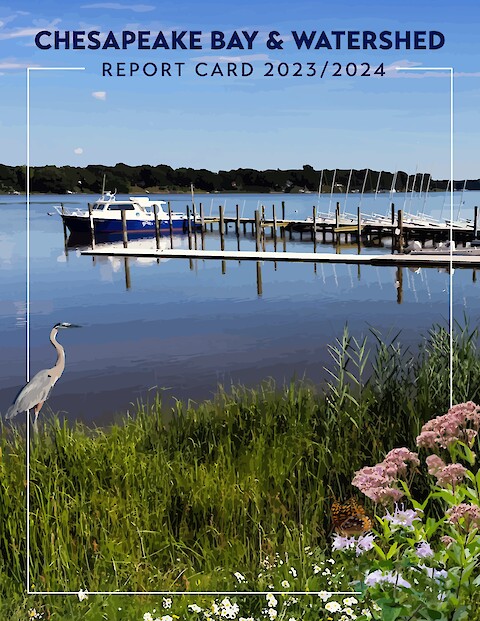
This report card provides a transparent, timely, and geographically detailed assessment of Chesapeake Bay and its Watershed. Since 2016, UMCES has engaged stakeholders throughout the watershed to transform the report card into an evaluation of the Chesapeake Watershed health. Watershed health includes traditional ecological indicators, but also economic and societal indicators.
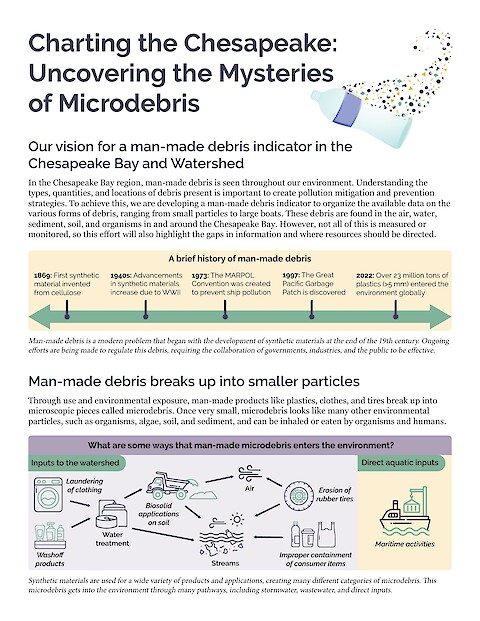
Man-made debris is found throughout the Chesapeake Bay and its watershed, but its status is largely unknown due to the lack of a monitoring framework. Recent research has aimed to collect data on this debris and develop methods for long-term monitoring. The goal is to use this data as an indicator in a future Chesapeake Bay & Watershed Report Card.
Stakeholder Engagement is Key to Creating a Vision for the Future
William C. Dennison, Vanessa Vargas-Nguyen, Keita Furukawa, Sidney Anderson, Roshni Nair, Arga C. Anil, Rhodora V. Azanza, S. Lili Badri, Lourdes J. Cruz, Pål I. Davidsen, Dattesh V. Desai, Charissa Ferrera, Tom Gerald Genovia, Gil Jacinto, Lidita Khandeparker, Midori Kawabe, Masashi Kodama, Pheng Lor, Veronica M. Lucchese, Yasumasa Miyazawa, Yushi Morioka, Hilde Maria Nacorda, Kazuo Nadaoka, Takashi Nakamura, Aklilu Tilahun Tadesse, Hiroshi Yagi ·
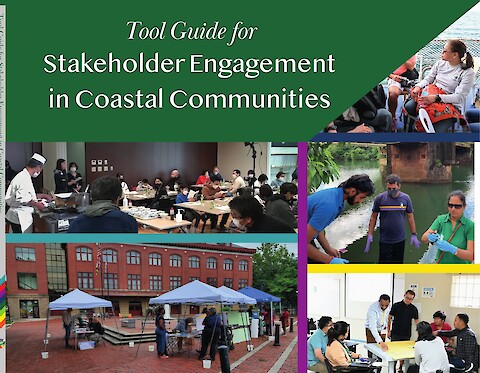
To learn more about best practices for organizing, facilitating, and interpreting the responses from stakeholder engagement events, download our Tool Guide for Stakeholder Engagement in Coastal Communities here.