Publications by Simon Costanzo

IAN is committed to producing practical, user-centered communications that foster a better understanding of science and enable readers to pursue new opportunities in research, education, and environmental problem-solving. Our publications synthesize scientific findings using effective science communication techniques.
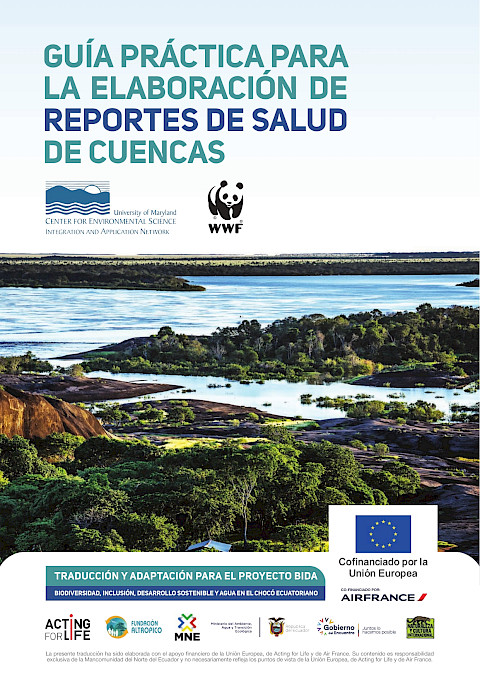
Guía práctica para la elaboración de reportes de salud de cuencas (Page 1)

Guía práctica para la elaboración de reportes de salud de cuencas

Costanzo S, Blancard C, Davidson S, Dennison W, Escurra J, Freeman S, Fries A, Krchnak K, Sherman J, Thieme M, Vargas-Nguyen V ·

Desarrollada en colaboración con World Wildlife Fund (WWF) como parte de la iniciativa Healthy Rivers for All, la Guía del profesional para desarrollar boletas de calificaciones de cuencas es una referencia y un recurso para el usuario:

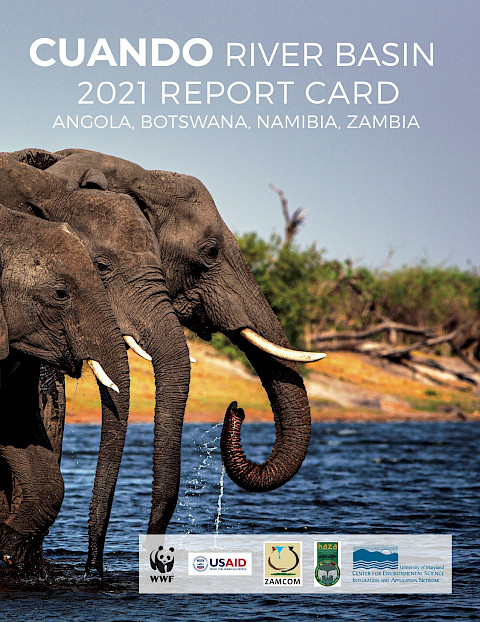
Cuando River Basin 2021 Report Card (Page 1)

Cuando River Basin 2021 Report Card

Heath Kelsey, Simon Costanzo, Annie Carew ·

The first-ever Cuando River Basin Report Card aims to assist in decision making to expand protected lands, increase biodiversity, maintain migration routes, and draw more tourists to the area. Inclusive conservation, which centers conservation actions on the needs of local communities, is at the heart of this approach.

Selecting Indicators for Basin Health (Page 1)

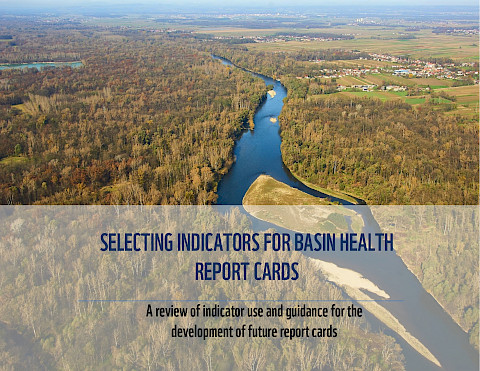
Selecting Indicators for Basin Health Report Cards

Canny A, Shahbol N, Thieme M, Fries A, Kelsey H, Costanzo S ·

This Guide is developed to supplement the Practitioner’s Guide to Developing River Basin Report Cards, which was developed in partner with World Wildlife Fund (WWF) as part of the Healthy Rivers for All initiative. It is intended for those developing indicators that can help understand the health of a basin report card or those who are developing a basin report card.

2019 Bhitarkanika Conservation Area Report Card– 1 (Page 1)

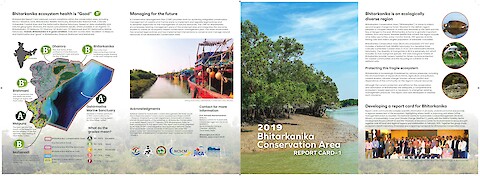
2019 Bhitarkanika Conservation Area Report Card - 1

Simon Costanzo, Katie May Laumann, Emily Nastase ·

The National Centre for Sustainable Coastal Management (NCSCM), Ministry of Environment, Forest and Climate Change (MoEF&CC), jointly with the Odisha Forestry Sector Development Project (OFSDP-II) and the University of Maryland Center for Environmental Science, brought together over 40 local and regional experts and stakeholders in February 2019. Together the group chose ecosystem health indicators, thresholds and a reporting framework for Bhitarkanika Conservation Area.

How to Protect Free Flowing Rivers: The Bita River Ramsar Site as an Example of Science and Management Tools Working Together (Page 1)

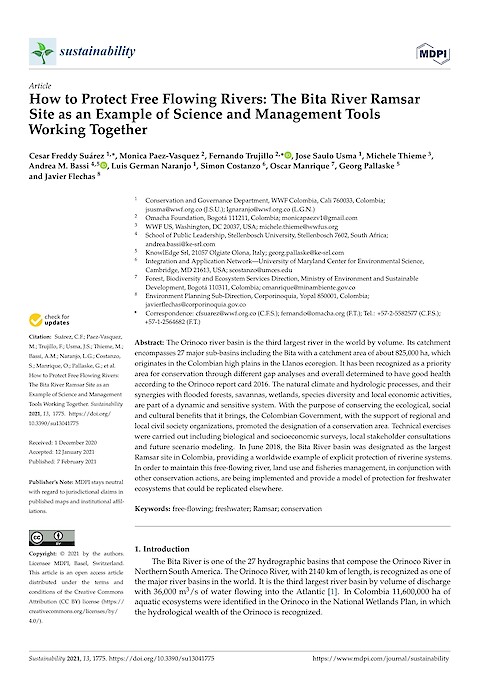
How to Protect Free Flowing Rivers: The Bita River Ramsar Site as an Example of Science and Management Tools Working Together

Suárez CF, Paez-Vasquez M, Trujillo F, Usma JS, Thieme M, Bassi AM, Naranjo LG, Costanzo S, Manrique O, Pallaske G, and Flechas J ·

The Orinoco river basin is the third largest river in the world by volume. Its catchment encompasses 27 major sub-basins including the Bita with a catchment area of about 825,000 ha, which originates in the Colombian high plains in the Llanos ecoregion.

Lower Kafue River Basin Report Card (Page 1)

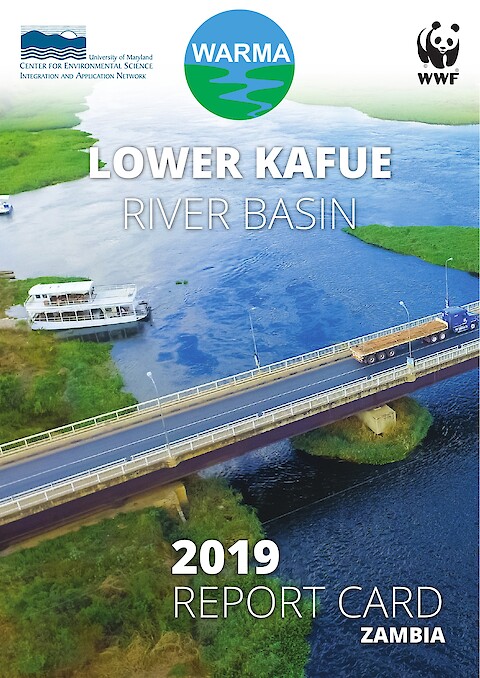
Lower Kafue River Basin 2019 Report Card

Simon Costanzo, Heath Kelsey, Annie Carew, Emily Nastase, Brianne Walsh ·

The first-ever Lower Kafue River Basin Report Card examines the health of the Kafue River in Zambia. Sixteen indicators in five categories were assessed across seven regions within the basin. The basin received a moderate score of 49, a C, illustrating that some regions of the basin are in better condition than others. This report card includes a detailed summary of the process and indicators as well as proposed management interventions and strategic actions to improve basin and river health.

Kwando River Basin Report Card Stakeholder Workshop Summary (Page 1)

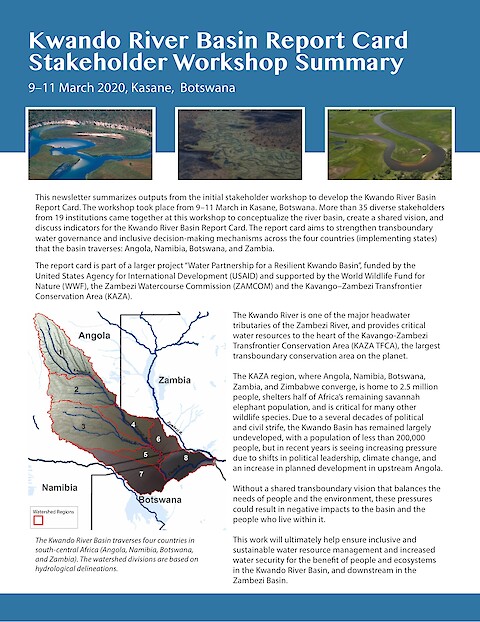
Kwando River Basin Report Card Stakeholder Workshop Summary

Annie Carew, Simon Costanzo, Heath Kelsey ·

This newsletter summarizes outputs from the initial stakeholder workshop to develop the Kwando River Basin Report Card. The workshop took place from 9–11 March in Kasane, Botswana. More than 35 diverse stakeholders from 19 institutions came together at this workshop to conceptualize the river basin, create a shared vision, and discuss indicators for the Kwando River Basin Report Card.

Towards integrated reporting for Darwin Harbour (Page 1)

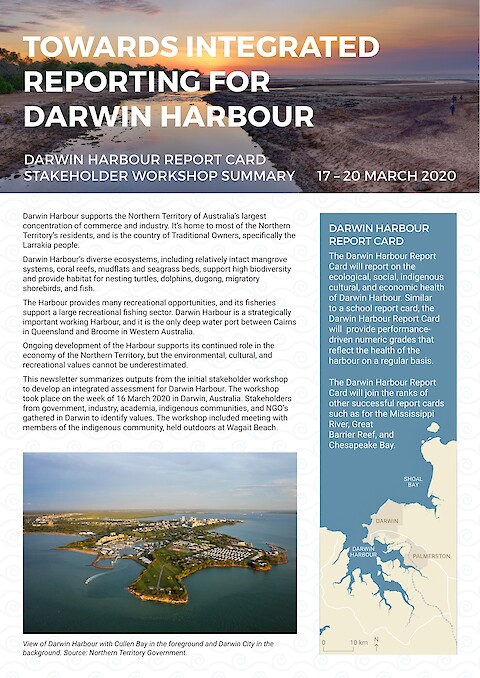
Towards integrated reporting for Darwin Harbour

Darwin Harbour Report Card Stakeholder Workshop Summary

Brianne Walsh, Bill Dennison, Simon Costanzo ·

This newsletter summarizes outputs from the initial stakeholder workshop to develop an integrated assessment for Darwin Harbour. The workshop took place on the week of 16 March 2020 in Darwin, Australia. Stakeholders from government, industry, academia, indigenous communities, and NGO’s gathered in Darwin to identify values. The workshop included meeting with members of the indigenous community, held outdoors at Wagait Beach.