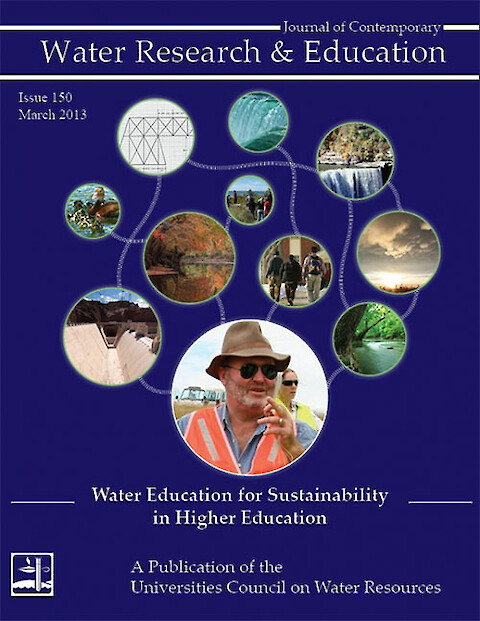
A new special issue on Water Education for Sustainability in Higher Education in the Journal for Contemporary Water Research & Education was published, an outcome of a workshop organized by the International WaterCentre. The special issue is dedicated to Dr. Peter Oliver, an educator who passed away last November. The special issue includes a tribute to Peter and two papers (1, 2) that he and I co-authored.
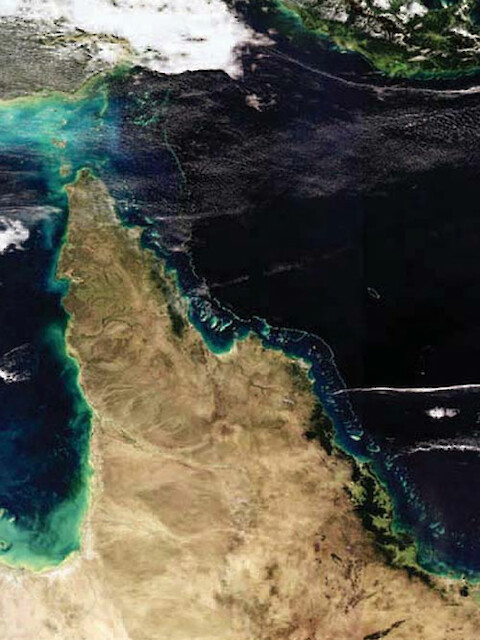
The concept of environmental literacy derives from a series of programs that have established various literacy principles, for example, ocean literacy and Chesapeake Bay literacy. These distillations attempt to identify the essence of what an informed person needs to know. The literacy principles form the overall outline presented here, but it is in the richness of examples, stories and visual supporting materials that bring the literacy alive. European Space Agency).
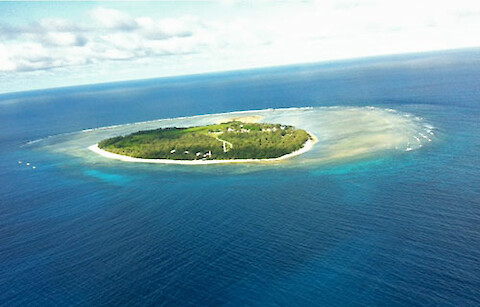
Standing on the coral rubble of a small cay in the Great Barrier Reef (Lady Elliot Island) is a biophilia experience. Biophilia, defined as 'love of life', is an appreciation that everything that you see and touch on the coral cay is created from living things.
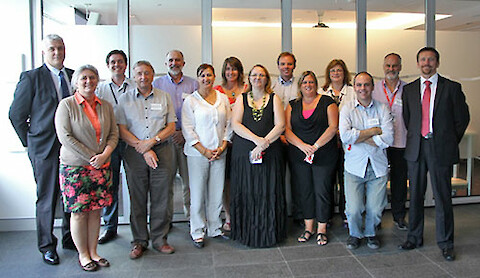
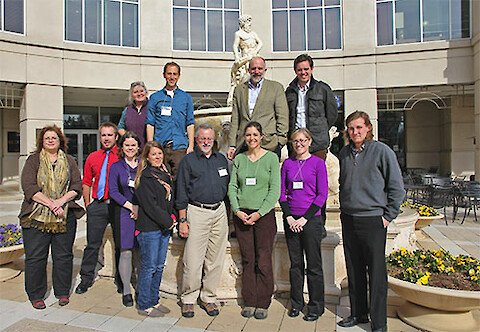
On March 18th and 19th, nine teachers and principals traveled from the far corners of the Australian continent to join the U.S.--Australia Virtual Environmental Partnership. The workshop was held in a very nice conference facility at the Sinclair Knight Merz headquarters in the Southbank area of Brisbane. SKM is a large multinational consulting company specializing in water related issues, and Simon Costanzo, IAN Science Integrator worked at SKM immediately prior to joining IAN.
We conducted our first workshop with 8 high school science teachers from around the U.S. to initiate a virtual environmental partnership. This initiative is called USAUS-H2O, and will be officially launched on World Water Day, 22 March 2013. The intent of the program is to educate and inform responsible stewardship of water resources between U.S. and Australian student teams through an interactive-virtual partnership.
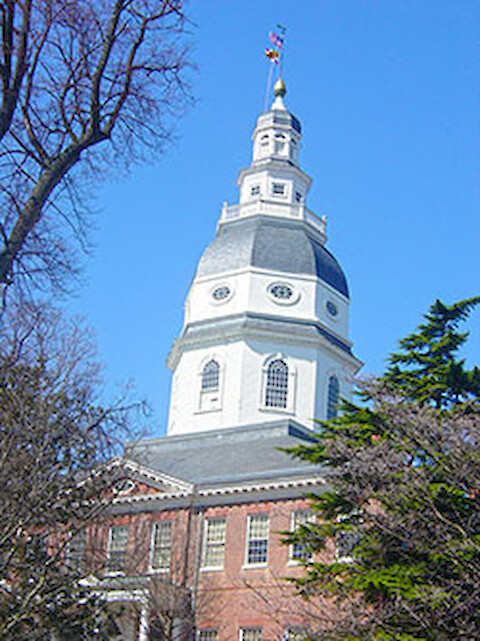
Yesterday, I provided testimony to the Maryland General Assembly in support of a bill that would require Maryland farmers to conduct soil testing for phosphorus levels and to report their findings. The bill was sponsored by Senator Pinsky and my testimony was to the Education, Health, and Environmental Affairs committee, chaired by Senator Joan Carter Conway. My written submission follows:
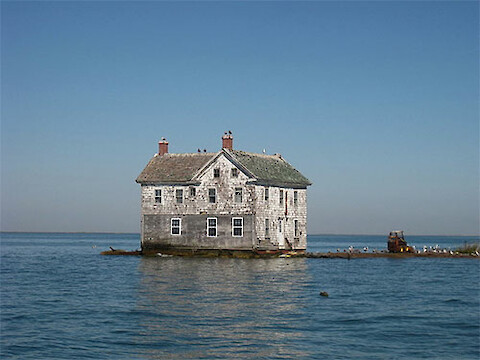
Hurricane Sandy was a wake-up call. More and more, people are asking, "What can be done to sustain coastal communities in the face of climate change and accelerated sea level rise?" The story of Holland Island, a once-thriving fishing community, reveals the importance of maintaining social infrastructure to sustain communities. The last house on Holland Island (credit: Wikipedia). Coastal communities must be resilient to cope with changing conditions served up by a sometimes harsh environment.
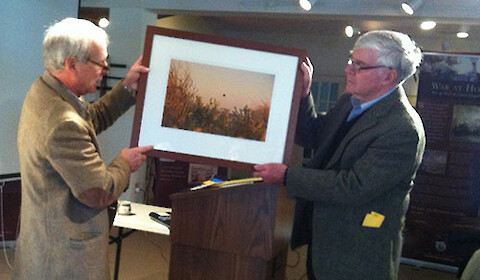
I attended the 6th Annual Dorchester Citizens for Planned Growth meeting at the Dorchester County Historical Society on January 27. It was a good gathering of people who live on or near the streams, rivers and Chesapeake Bay of Dorchester County. Dorchester County has a lot of wetlands and streams, with abundant wildlife. The event featured local oysters on the half shell and goose meat. There were two skipjack captains in the audience as well.
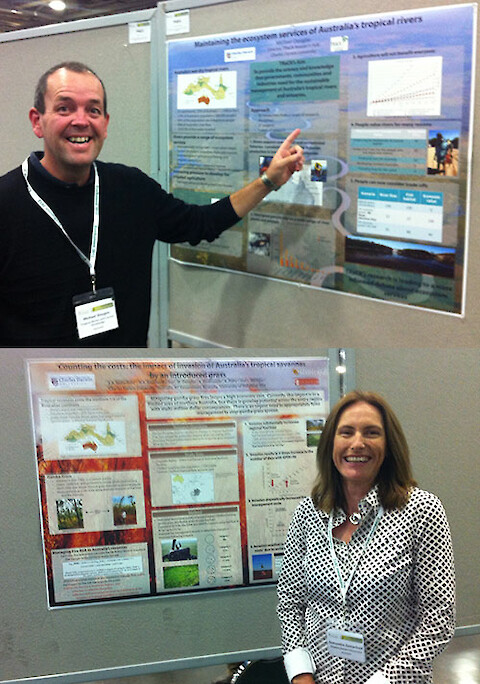
We said good-bye to Drs. Michael Douglas (‘Dougo’) and Samantha Setterfield (‘Sam’) from Charles Darwin University in Darwin, Northern Territory, Australia last week. Dougo and Sam joined the Integration and Application Network in August 2012 as part of their sabbatical. Dougo was in the U.S. as a Fulbright Scholar and he and Sam spent a couple of months at Oregon State University before coming to Maryland.
One of my favorite things to do in the world is to share these stories of people on convergent journeys, journeys like the one you are on with the Willamette River. The International RiverFoundation (IRF) promotes river restoration, protection and sustainable management of rivers and watersheds. Our vision is a world in which the rivers and watersheds are healthy and sustainably managed.