

IAN Participated in the Chesapeake Community Research Symposium (CCRS)
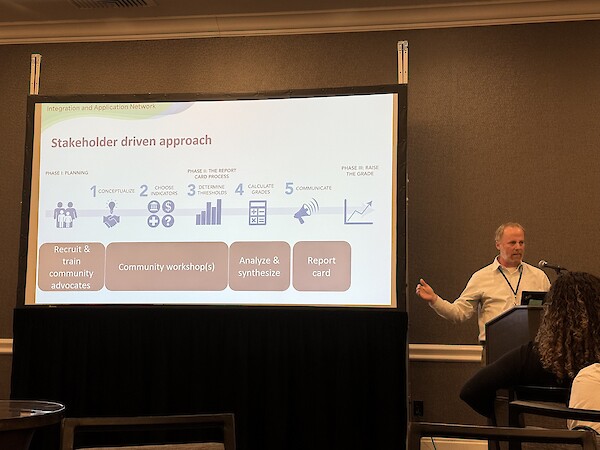
From June 1–3, Conor Keitzer, Katie May Laumann, and Alexandra Fries attended the 2026 CCRS Conference. The theme of the 2026 Symposium was Chesapeake Bay Research and Restoration: Next Generation Tools for a Dynamic Future. This was very relevant to several projects IAN staff have been working on, in particular the Chesapeake Bay Report Card, Eastport and Pine Street, and Underground Underwater projects. Conor participated on a panel about Increasing the Effectiveness and Impact of Technical Assistance Delivery to Low-Capacity Communities and discussed our work and experience on assessing and communicating climate resilience at the community-level in Maryland.
Chesapeake Bay Workshop on Societal Tidal Indicators
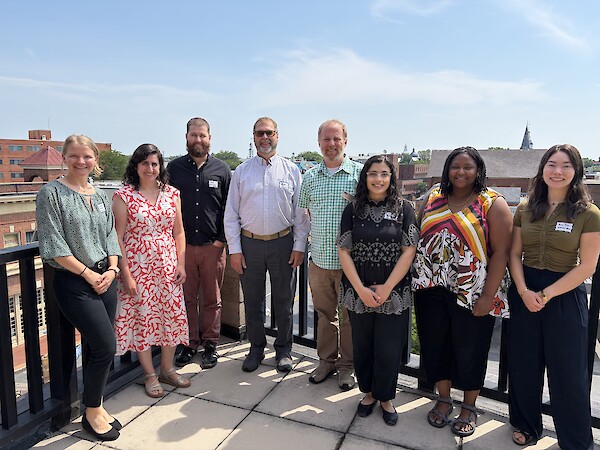
On June 11th, we held our second workshop geared towards developing new tidal indicators for the Chesapeake Bay and Watershed Report Card. This workshop was focused on developing societal indicators, covering categories of public health, fishing, swimmability, recreation, culture, and history. Though we were a small group, we were able to brainstorm a promising list of top indicators and their associated data sources. We held our first workshop in March, which was focused on ecological tidal indicators, and we look forward to hosting future workshops for indicators on economics and management and governance.
IMET Summer Interns Learn Effective Science Communication
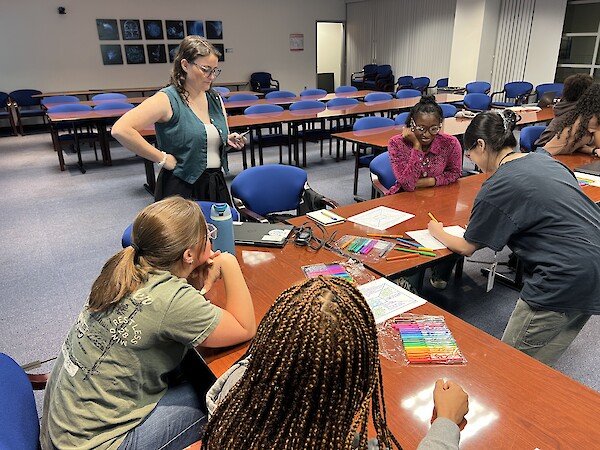
On June 23rd and 24th, Sidney Anderson and Lili Badri facilitated a science communication course for the REU students at IMET. The course covered the principles of science communication and designing graphics, posters, and presentations for use in presenting research and included a variety of activities on tailoring a message for an intended audience. Students were given tutorials on Adobe Illustrator and InDesign, making fast progress with each program, showcasing their creativity, and using the new concepts they learned to begin developing ways to present their summer research.
ShoreRivers Achieves Tier 3 for Bacteria Monitoring
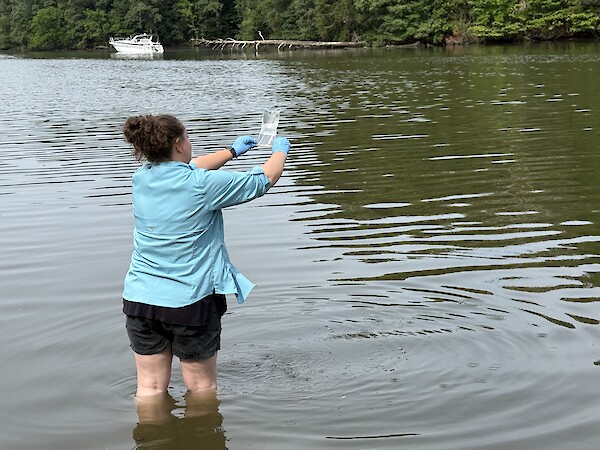
On June 25th, Alexandra Fries at IAN and Becky Monahan at MDE conducted a bacteria monitoring field and lab audit for ShoreRivers. The Chesapeake Monitoring Cooperative recently incorporated bacteria monitoring in its protocols and several groups in Maryland are collecting high quality bacteria data that is now approved as Tier III. Becky Golden, the Watershed Scientist at ShoreRivers, helps the four RiverKeepers that the organization encompasses. She took the field sample for bacteria at a wade-in site and two ShoreRivers staff members, Hope and Faith, prepared the water sample in the lab for incubation. ShoreRivers has many staff and volunteers going out to collect samples, and they were coming and going to pick up their sampling kits from the office. The data generated from these efforts helps local communities better understand their waterways.
Salt Watch Newsletter Out Now!
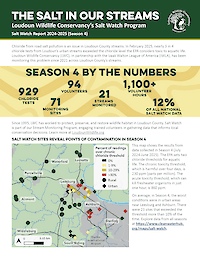
IAN and the Loudoun Wildlife Conservancy recently published "The Salt in our Streams," a newsletter summarizing the results of the Loudoun County Salt Watch Program 2024-2025 season. Salt Watch is a program that tracks the amount of chloride in waterways as a result of road salt use. In addition to being highly corrosive, elevated chloride levels negatively impact stream life, particularly sensitive macroinvertebrate species. This newsletter aims to educate residents about the impact of excessive road salt use and encourage community members to be more mindful about salt use and provide tools for reporting excessive road salt use by the county and state.
Data to Decisions Workshop Newsletter Out Now!
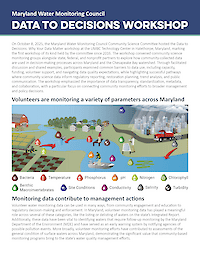
In October 2025, the Maryland Water Monitoring Council (MWMC) Community Science Committee hosted the Data to Decisions: Why Your Data Matter workshop at the UMBC Technology Center in Halethorpe, Maryland. The workshop convened community science monitoring groups alongside state, federal, and nonprofit partners to explore how community-collected data are used in decision-making processes across Maryland and the Chesapeake Bay watershed. Through facilitated discussion and shared examples, participants examined common barriers to data use, including capacity, funding, volunteer support, and navigating data quality expectations, while highlighting successful pathways where community science data inform regulatory reporting, restoration planning, trend analysis, and public communication. This newsletter shares the results of this workshop and provides next steps for continued improvement of water monitoring across the Chesapeake Bay watershed.
Gulf of Mexico Report Cards: An Evolution of the Yucatán Coastal Report Card
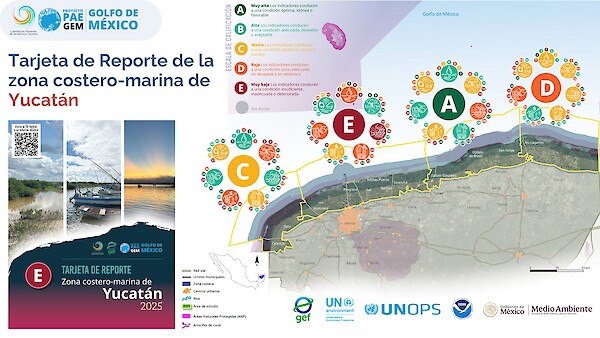
In 2017, Jane Hawkey and Heath Kelsey traveled to Mérida, Mexico to train scientists at Mexico’s National Coastal Resilience Laboratory (LANRESC) in the art and science of generating ecosystem health report cards. The first Yucatán Coastal Ecosystem Report Card was produced in 2018. Over the years, the effort has grown to include report cards for all of the Mexican Gulf states: Campeche, Yucatán, Tabasco, Tamaulipas, and Veracruz. Additionally, the report cards have followed a similar trajectory to ours here at IAN; they now include social and economic information with ecosystem health data. The project supports the Gulf of Mexico Large Marine Ecosystem Strategic Action Programme (GoM SAP) and is funded by the Global Environment Facility (GEF) and the UN Environment Programme. They are reporting impacts from the report cards that include the incorporation of key indicators into the state planning activities, nature-based solutions, restoration, and educational activities. IAN is proud to have helped this initiative get started almost 10 years ago!