

Second Annual Leggett Legacy Sail
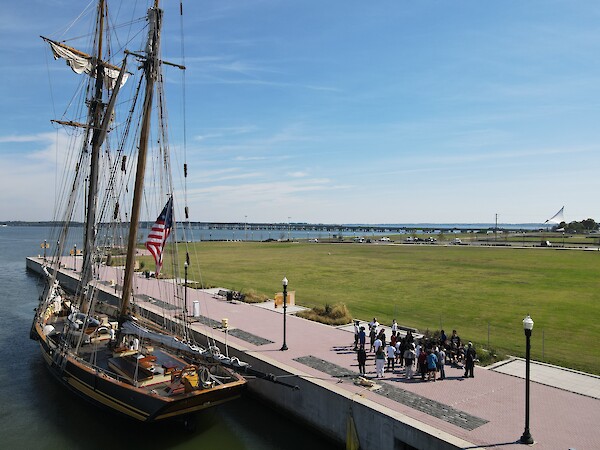
On October 2nd, Rosh and Conor participated in the second annual “Leggett Legacy Sail” event in Cambridge, MD. This educational event was organized by Blacks of the Chesapeake for 70 middle school students from Dorchester County. Students rotated through stations that included a drone demonstration led by Rosh, a water filtration activity that Conor helped lead, a boat making lesson by the Richardson Maritime Museum, and a guided tour of the Choptank River aboard the Pride of Baltimore II. The students asked great questions, we all got to do some hands-on learning, and it was a beautiful day on the shores of the Choptank.
Connecting with the Galesville Community
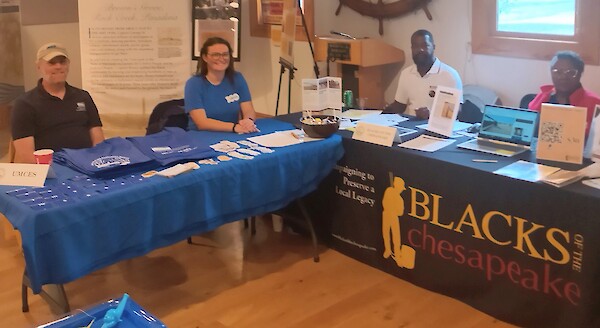
Sidney and Conor tabled at the Galesville Maritime Festival on October 3rd as part of a new project that is just getting started. We will be working closely with Blacks of the Chesapeake and the community to make Galesville more resilient to the growing environmental challenges (e.g., sea level rise) it’s facing using nature-based solutions. The maritime festival was a wonderful chance to meet the community, and despite the rainy day, there was a great turnout. We are excited to collaborate with this passionate community over the next couple of years!
Annual HPL Open House
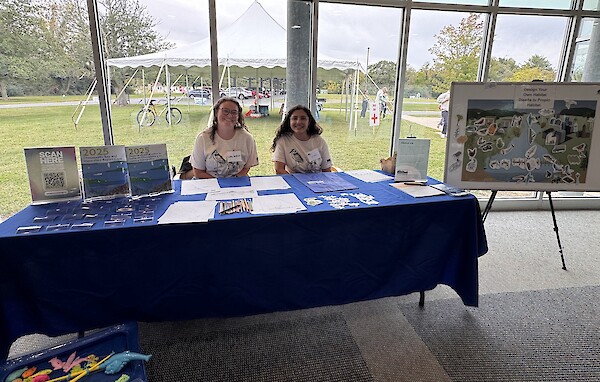
On October 10th, Sidney and Lili represented IAN at the annual Horn Point Laboratory Open House in Cambridge, MD. The event invites the public to explore UMCES’s extensive research through interactive exhibits, including tours of the oyster hatchery and the Rachel Carson research vessel. With strong attendance this year, we enjoyed connecting with the local community to share IAN’s work, including through engaging, kid-friendly activities. We look forward to returning next year!
20th Annual Chesapeake Bay & Watershed Report Card Released
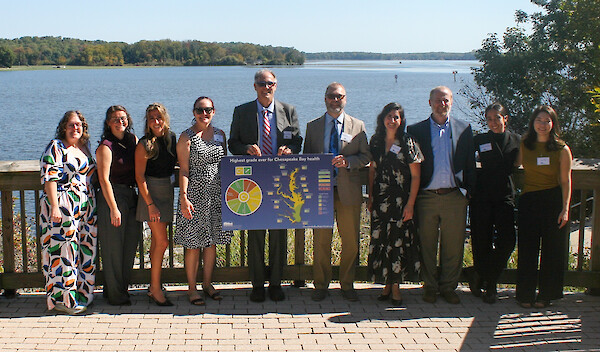
The 2026 Chesapeake Bay and Watershed Report Card was released on October 13, 2026 at George Mason University's Potomac Science Center. Speakers included GMU president Dr. Gregory Washington, UMCES president Dr. Fernando Miralles-Wilhelm, Secretary David Bulova, Representative Eugene Vindman, Secretary Serena McIllwain, Secretary Josh Kurtz, CBP representative Mr. Lee McDonnell, and Chesapeake Bay Foundation president and CEO Hilary Harp Falk. Dr. Heath Kelsey presented the results of the report card. The Bay earned a C+ (56%), its highest score in 40 years of tracking. To learn more about the scores, go to chesapeakebayreportcard.org and check out our documentary celebrating 20 years of the report card here on YouTube.
Annual Baltimore Ecosystem Study Meeting
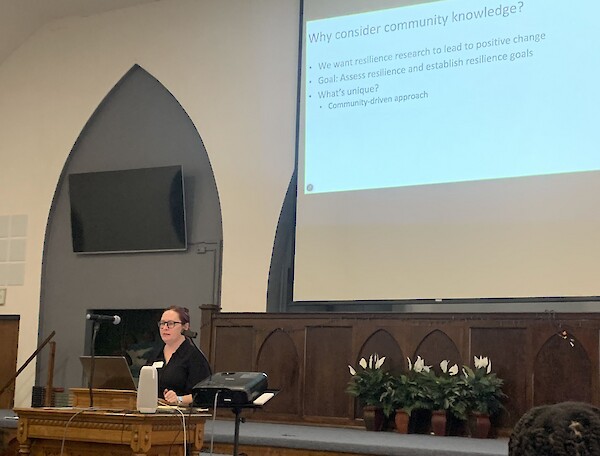
Katie May Laumann and Meena Toolaabee attended the Baltimore Ecosystem Study (BES) Annual Meeting on October 15th, which was hosted at the Stillmeadow Community Fellowship in West Baltimore. Environmental researchers and professionals gathered to share the projects they’ve been working on, covering a wide array of issues within communities, ecosystems, and green economics. Katie May introduced a new project focused on baselining Maryland’s resilience to climate change and opened the door for future collaboration with the attendees. With community-driven research, it’s always important to recruit a wide range of participants. BES attendees provided wonderful questions and suggestions that will further inform the course of the project.
Project Highlight: Chesapeake Monitoring Cooperative
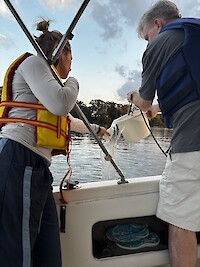
Across the Chesapeake Bay Watershed, people from Riverkeepers to volunteer citizen scientists monitor the quality of the waters they call home. The Chesapeake Monitoring Cooperative (CMC), a partnership between the Chesapeake Bay Program, the Alliance for the Chesapeake Bay, the Alliance for Aquatic Resource Monitoring, the Izaak Walton League of America, the Chesapeake Bay National Estuarine Research Reserve in Virginia (CBNERR-VA/VIMS), and the University of Maryland Center for Environmental Science (UMCES), supports these groups with training, data management, and communications expertise. The CMC collects water quality and benthic macroinvertebrate data from these organizations and makes it publicly available on the CMC Data Explorer. CMC data is used by state agencies, the Chesapeake Bay Program, EPA, UMCES, and more. The CMC also provides resources for monitoring groups and people who want to get involved in water monitoring. Through our work, the CMC aims to empower water quality monitoring efforts and data availability across the watershed.