Publications about James River

IAN is committed to producing practical, user-centered communications that foster a better understanding of science and enable readers to pursue new opportunities in research, education, and environmental problem-solving. Our publications synthesize scientific findings using effective science communication techniques.
James Tributary Summary: A summary of trends in tidal water quality and associated factors, 1985-2021 (Page 1)

James Tributary Summary: A summary of trends in tidal water quality and associated factors, 1985-2021

Sullivan B, Gootman K, Gunnerson A, Johnson C, Mason C, Perry E, Bhatt G, Keisman J, Webber J, Harcum J, Lane M, Devereux O, Zhang Q, Murphy R, Karrh R, Butler T, Van Note V, Wei Z ·

The James Tributary Summary outlines change over time for a suite of monitored tidal water quality parameters and associated potential drivers of those trends for the period 1985 – 2021 and provides a brief description of the current state of knowledge explaining these observed changes.

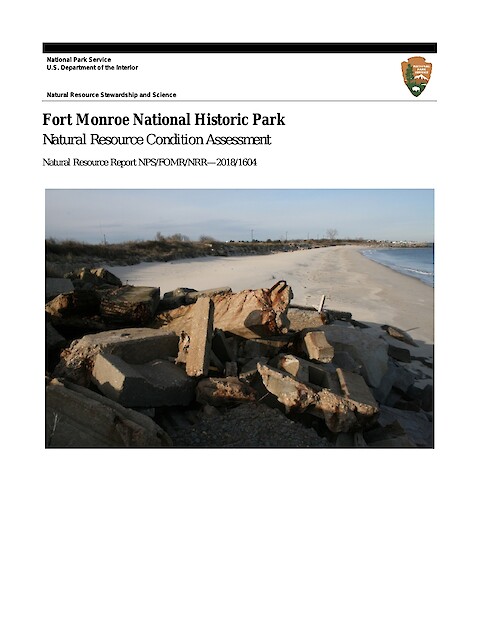
Fort Monroe National Historical Park Natural Resource Condition Assessment (Page 1)

Fort Monroe National Historical Park Natural Resource Condition Assessment

Lookingbill T, Engelhardt K, Geraghty C, Hatchel N, Kitchen D ·

Fort Monroe National Monument is located at the tip of the Virginia Peninsula in Hampton, Virginia. The site includes the largest stone fort built in the United States and was formally added to the National Park System in 2011, recognizing millennia of human interactions with this landscape. Natural resources within the 325-acre park boundary include an ecologically diverse and productive saltmarsh cordgrass wetlands within Mill Creek.

2012 Chesapeake Bay Report Card (Page 1)

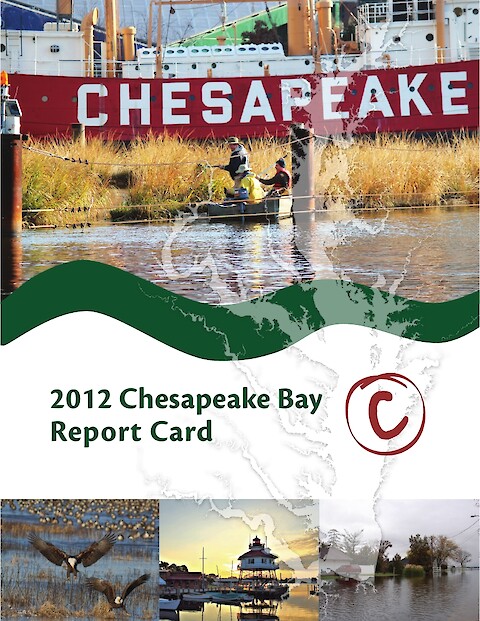
2012 Chesapeake Bay Report Card

Caroline Donovan, Bill Dennison, Heath Kelsey, Alexandra Fries ·

This report card provides a transparent, timely, and geographically detailed assessment of Chesapeake Bay. In 2012, the methods for the report card have changed to include five water quality indicators and two biotic indicators. In 2012, the overall grade for Chesapeake Bay is a 47%, a C. This means the Bay is in moderate health. Fisheries indicators as well as trajectories of reporting region health are also presented. For further details, visit the Report Card website .

2011 Chesapeake Bay Report Card (Page 1)

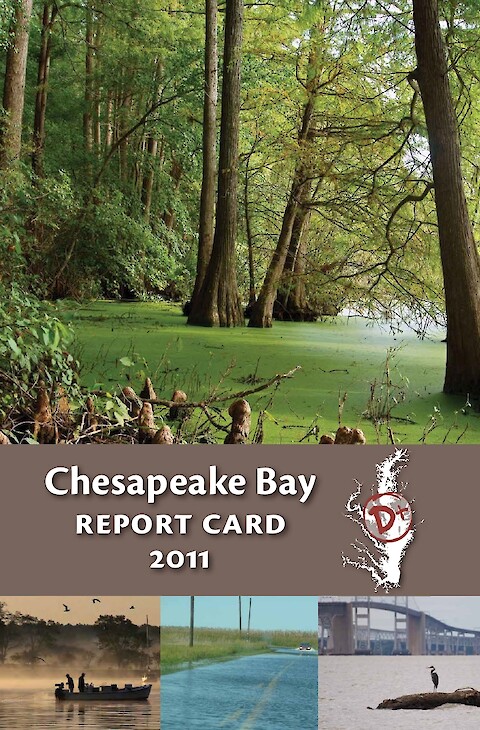
2011 Chesapeake Bay Report Card

Bill Dennison, Caroline Donovan, Jonathan Kellogg, Alexandra Fries ·

This report card provides a transparent, timely, and geographically detailed assessment of Chesapeake Bay. The overall health of Chesapeake Bay, determined using water quality and biotic indicators, declined slightly in 2011. The overall grade of D+ was a decrease for the second year in a row, down from a C- in 2010. Only two reporting regions, the Patapsco and Back Rivers, and the Lower Western Shore (MD), had improved grades in 2011.

Chesapeake Bay Report Card 2010 (Page 1)

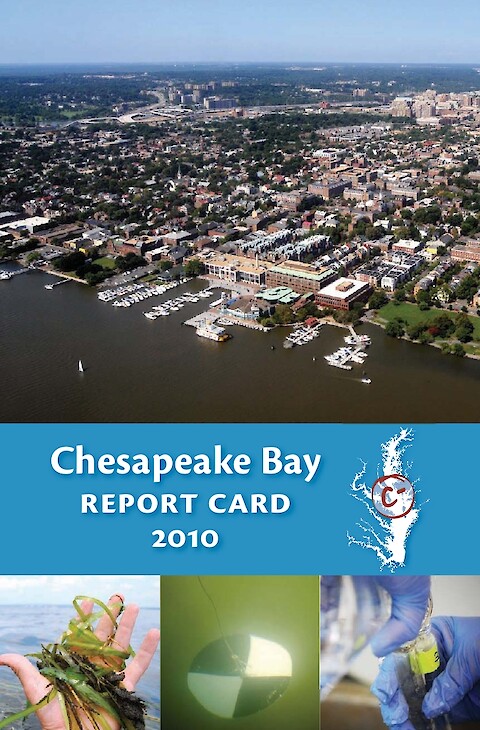
Chesapeake Bay Report Card 2010

Bill Dennison, Heath Kelsey, Caroline Donovan, Sara Powell ·

This report card provides a transparent, timely, and geographically detailed assessment of 2010 Chesapeake Bay health. The overall health of Chesapeake Bay, assessed using water quality and biotic indicators, declined slightly in 2010. The overall grade decreased from a C in 2009 to C- in 2010. Only two reporting regions (James River and York River) had improved grades in 2010, three were unchanged, and nine declined.

Chesapeake Bay Report Card 2009 (Page 1)

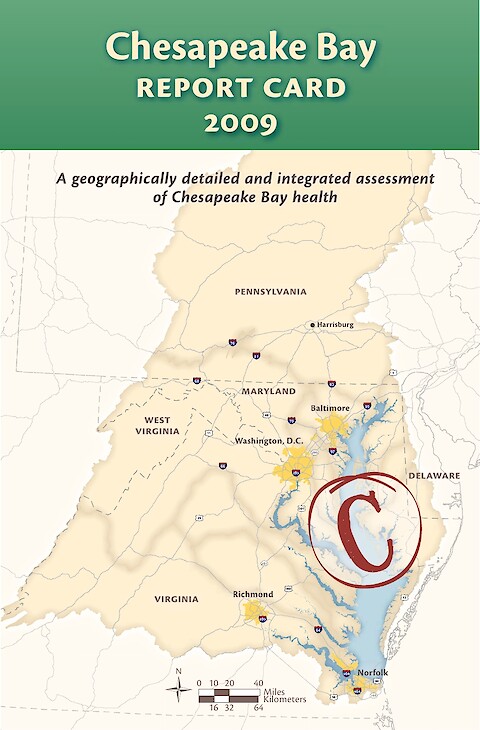
Chesapeake Bay Report Card 2009

Caroline Donovan, Heath Kelsey, Sara Powell ·

This report card provides a transparent, timely, and geographically detailed assessment of 2009 Chesapeake Bay habitat health. The overall health of Chesapeake Bay, assessed using water quality and biotic indicators, was the best it has been since 2002. The overall grade improved from C- in 2008 to C in 2009. Eight reporting regions had improved grades in 2009, four were unchanged, and two had slightly worse grades.

2008 Chesapeake Bay Report Card (Page 1)

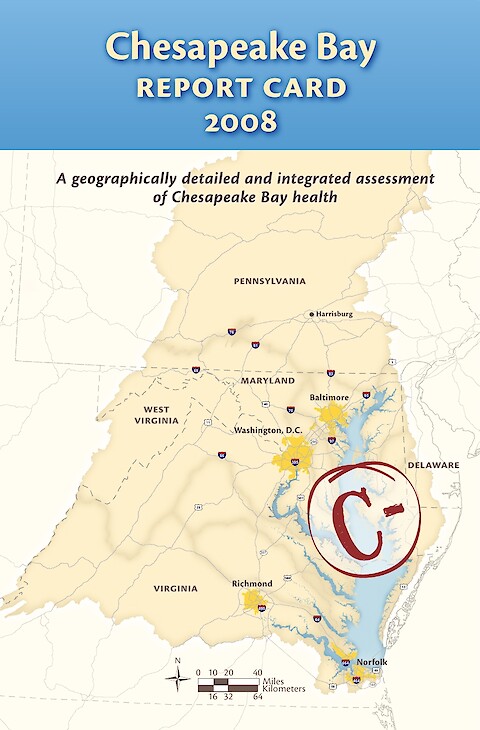
2008 Chesapeake Bay Report Card

Ben Longstaff, Michael Williams, Caroline Donovan, Emily Nauman, Heath Kelsey ·

This report card provides a transparent, timely, and geographically detailed annual assessment of 2008 Chesapeake Bay habitat health. This is the third year that the report card has been released. This report card rates 15 reporting regions of the Bay using six indicators that are combined into a single overarching index of habitat health. The overall health of Chesapeake Bay was poor in 2008, obtaining a grade of C-.

Chesapeake Bay Health Report Card: 2007 (Page 1)

Chesapeake Bay Health Report Card: 2007

Ben Longstaff, Caroline Donovan ·

This report card provides a transparent, timely, and geographically detailed annual assessment of 2007 Chesapeake Bay habitat health. This is the second year that the report card has been released. This report card rates 15 reporting regions of the Bay using six indicators that are combined into a single overarching index of habitat health. Habitat health is defined as progress of the six indicators towards established scientifically derived ecological thresholds or goals.

Effects of nutrient enrichment in the Nation

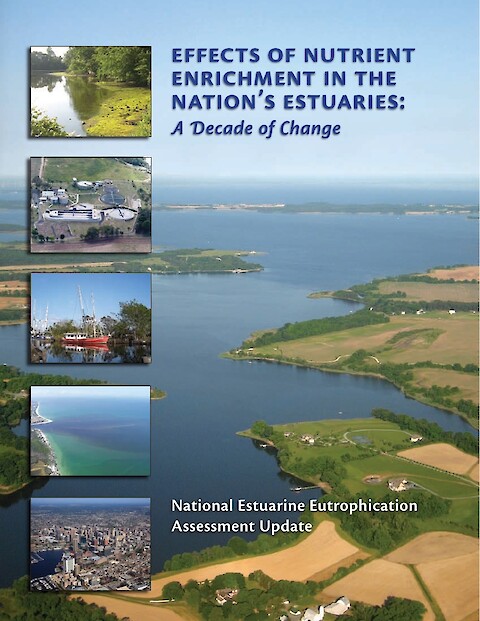
Effects of nutrient enrichment in the Nation's estuaries: A decade of change

Bricker S, Longstaff BJ, Dennison WC, Jones AB, Boicourt K, Wicks EC and Woerner JL ·

This report provides an assessment of eutrophic conditions for 141 U.S. estuaries. The report was based on data and information provided by scientists and experts from around the country. Results from the assessment show that two-thirds of the estuaries evaluated exhibited moderate to high levels of eutrophication. Report production was a collaborative effort between Suzanne Bricker (NOAA NCCOS), EcoCheck (NOAA-UMCES Partnership) and IAN. More information is available from the NEEA website.

Chesapeake Bay Habitat Health Report Card: 2006 (Page 1)

Chesapeake Bay Habitat Health Report Card: 2006

Ben Longstaff, Michael Williams, Caroline Donovan, Bill Dennison ·

This report card provides a transparent, timely, and geographically detailed annual assessment of 2006 Chesapeake Bay habitat health. A report card will be released each year, in early to mid April, providing an assessment of the previous year’s habitat health. 2006 is the first year that the report card has been released. This report card rates 15 reporting regions of the Bay using six indicators that are combined into a single overarching index of habitat health.