IAN is committed to producing practical, user-centered communications that foster a better understanding of science and enable readers to pursue new opportunities in research, education, and environmental problem-solving. Our publications synthesize scientific findings using effective science communication techniques.
Donovan EC, Towle EK, Blondeau J, Eakin M, Edwards K, Edwards P, Enochs I, Fleming C, Formel N, Geiger E, Gorstein M, Grove J, Groves S, Johnson M, Kelsey RH, Manzello D, Miller N, and Viehman S ·
The primary purpose of this document is to describe the scoring process used for all the Atlantic jurisdictions: Florida, the United States Virgin Islands (USVI), Puerto Rico, and the Flower Garden Banks.
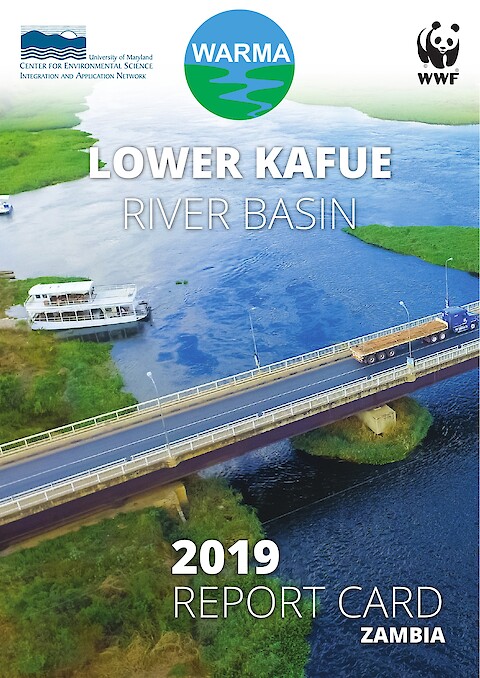
The first-ever Lower Kafue River Basin Report Card examines the health of the Kafue River in Zambia. Sixteen indicators in five categories were assessed across seven regions within the basin. The basin received a moderate score of 49, a C, illustrating that some regions of the basin are in better condition than others. This report card includes a detailed summary of the process and indicators as well as proposed management interventions and strategic actions to improve basin and river health.
Crausbay SD, Betancourt J, Bradford J, Cartwright J, Dennison WC, Dunham J, Enquist CAF, Frazier AG, Hall KR, Littell JS, Luce CH, Palmer R, Ramirez AR, Rangwala I, Thompson L, Walsh BM, Carter S ·
Novel forms of drought are emerging globally, due to climate change, shifting teleconnection patterns, expanding human water use, and a history of human influence on the environment that increases the probability of transformational ecological impacts. These costly ecological impacts cascade to human communities, and understanding this changing drought landscape is one of today’s grand challenges.
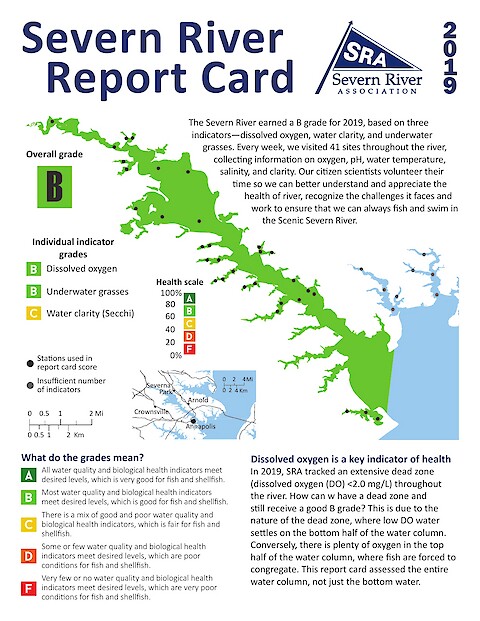
Published in 2020, the 2019 Severn River Report Card summarizes data collected in the summer of 2019. The Severn River earned a B in 2019, in part because of a "banner year" for underwater grasses. The coverage of underwater grasses in the Severn River more than doubled from 2018 to 2019, which is the greatest coverage seen in generations. The report card also provides recommendations for civilian action that can help improve the cleanliness of the river.
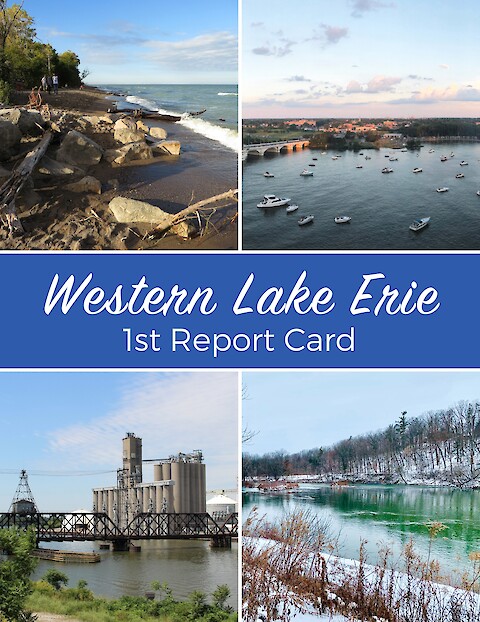
About one-third of the total population of the Great Lakes Basin lives within the Lake Erie Watershed. The lake provides drinking water for 11 million residents and is home to one of the largest freshwater commercial and recreational fisheries in the world. The lake and surrounding areas provide many recreational opportunities, such as camping, kayaking, boating, hiking, birding, and fishing, and are vital to the economy of the region.
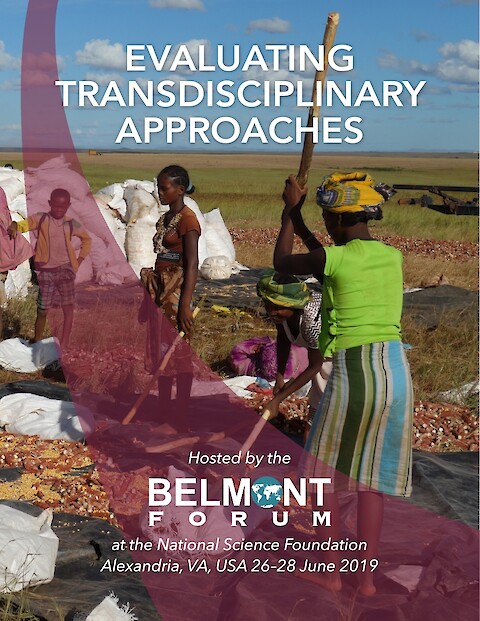
The Evaluating Transdisciplinary Approaches Workshop was convened by the Belmont Forum at the National Science Foundation and facilitated by the University of Maryland Center for Environmental Science in Alexandria, VA, USA on 26–28 June 2019. Participants of the workshop are part of a growing community of transdisciplinary research supporters and practitioners. Their efforts contribute to our fundamental and applied understanding of complex systems.
The Chester River, a tributary of Chesapeake Bay, provides critical habitats for numerous living species and oyster aquaculture, but faces increasing anthropogenic stresses due to excessive nutrient loading and hypoxia occurrence.
Newton A, Icely J, Cristina S, Perillo GME, Turner RE, Ashan D, Cragg S, Luo Y, Tu C, Li Y, Zhang H, Ramesh R, Forbes DL, Solidoro C, Béjaoui B, Gao S, Pastres R, Kelsey RH, Taillie D, Nguyen Nhan N, Brito AC, Lima RD, Kuenzer C ·
Coastal wetlands, such as saltmarshes and mangroves that fringe transitional waters, deliver important ecosystem services that support human development. Coastal … wetlands are complex social-ecological systems that occur at all latitudes, from polar … regions to the tropics. This overview covers wetlands in five continents. The wetlands … are of varying size, catchment size, human population and stages of economic … development.
This assessment of the Office of the Great Barrier Reef in Queensland, Australia established five institutional goals: cohesive staff, credible science, resilient organization, relevance to stakeholders, and effective outreach. Each goal had its own set of indicators.
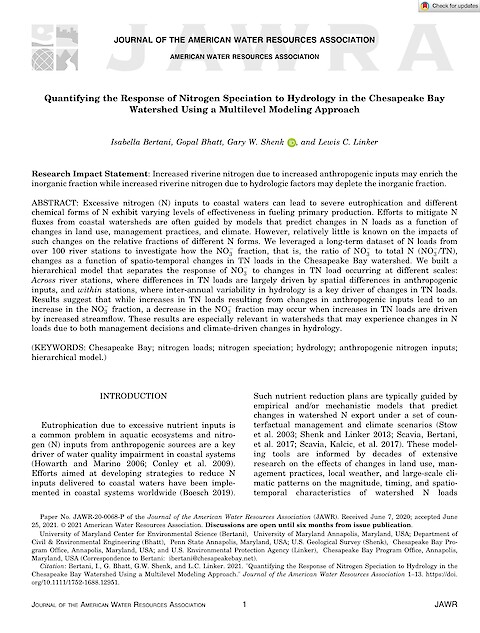
Excessive nitrogen (N) inputs to coastal waters can lead to severe eutrophication and different chemical forms of N exhibit varying levels of effectiveness in fueling primary production. Efforts to mitigate N fluxes from coastal watersheds are often guided by models that predict changes in N loads as a function of changes in land use, management practices, and climate. However, relatively little is known on the impacts of such changes on the relative fractions of different N forms.