Publications by Caroline Donovan

IAN is committed to producing practical, user-centered communications that foster a better understanding of science and enable readers to pursue new opportunities in research, education, and environmental problem-solving. Our publications synthesize scientific findings using effective science communication techniques.
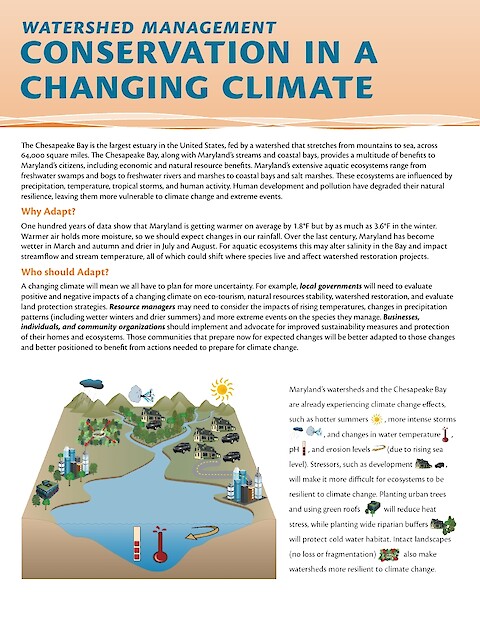
Watershed Management: Conservation in a changing climate (Page 1)

Watershed Management: Conservation in a changing climate

Marcus Griswold, Caroline Donovan ·

Maryland’s extensive aquatic ecosystems range from freshwater swamps and bogs to freshwater rivers and marshes to coastal bays and salt marshes. These ecosystems are influenced by precipitation, temperature, tropical storms, and human activity. Human development and pollution have degraded their natural resilience, leaving them more vulnerable to climate change and extreme events.

2012 Chesapeake Bay Report Card (Page 1)

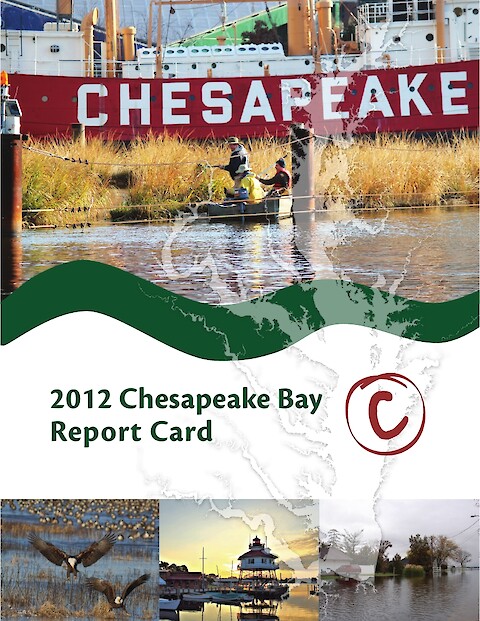
2012 Chesapeake Bay Report Card

Caroline Donovan, Bill Dennison, Heath Kelsey, Alexandra Fries ·

This report card provides a transparent, timely, and geographically detailed assessment of Chesapeake Bay. In 2012, the methods for the report card have changed to include five water quality indicators and two biotic indicators. In 2012, the overall grade for Chesapeake Bay is a 47%, a C. This means the Bay is in moderate health. Fisheries indicators as well as trajectories of reporting region health are also presented. For further details, visit the Report Card website .

Updating Maryland

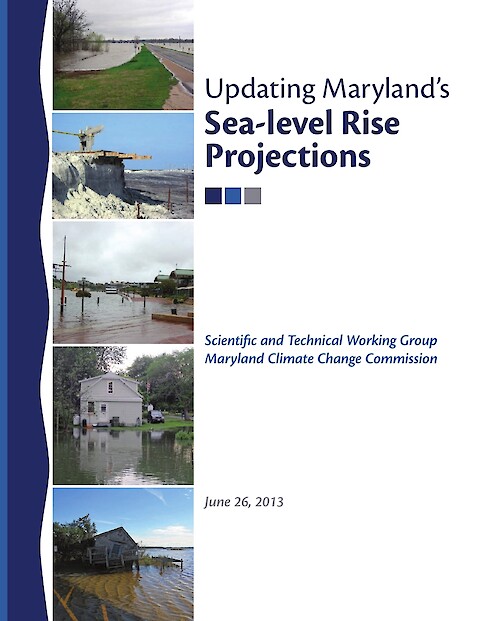
Updating Maryland's Sea-level Rise Projections

Boesch DF, Atkinson LP, Boicourt WC, Boon JD, Cahoon DR, Dalrymple RA, Ezer T, Horton BP, Johnson ZP, Kopp RE, Li M, Moss RH, Parris A and Sommerfield CK ·

With 3,100 miles of tidal shoreline and low-lying rural and urban lands, "The Free State" is one of the most vulnerable to sea-level rise. Historically, Marylanders have long had to contend with rising water levels along the Chesapeake Bay, Atlantic Ocean, and Coastal Bay shores. Shorelines have eroded and low-relief lands and islands (some previously inhabited) have been inundated.

Baltimore Healthy Harbor Report Card 2012 (Page 1)

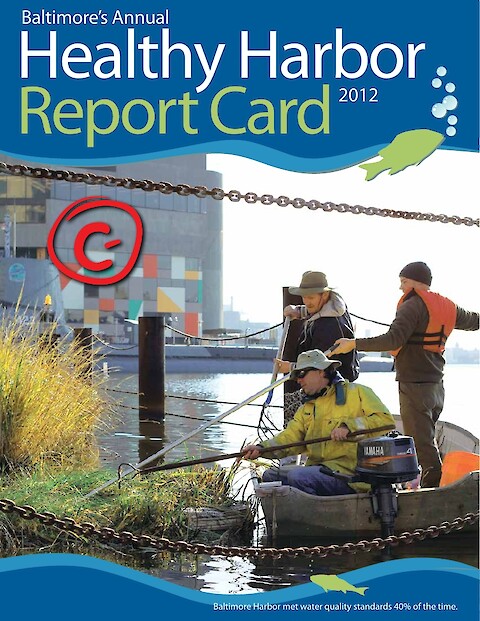
Baltimore Healthy Harbor Report Card 2012

Caroline Donovan, Alexandra Fries ·

This report card was developed to help lead private citizens, government, and businesses toward a healthy Baltimore Harbor, which is swimmable and fishable by 2020. The Waterfront Partnership of Baltimore, and Blue Water Baltimore, published this Healthy Harbor Report Card to help work toward clean, safe, and accessible streams and Harbor for everyone.

Sampling and data analysis protocols for Mid-Atlantic non-tidal stream indicators (Page 1)

Sampling and data analysis protocols for Mid-Atlantic non-tidal stream indicators

Wicks EC, Fries AS and Kelsey RH ·

This document provides guidelines for the successful production of non-tidal stream health report cards. Specifically, this document develops clear and consistent protocols for the identification, collection, and analysis of indicators to be used by report card-producing organizations in Mid-Atlantic rivers and streams.

Climate Change Impact Areas: Planning for a changing climate (Page 1)

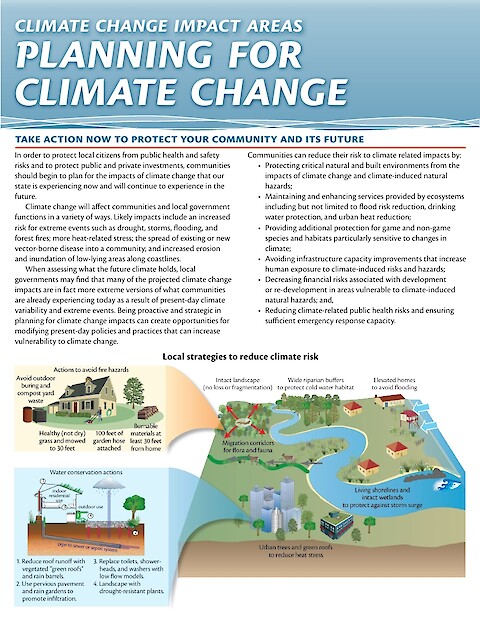
Climate Change Impact Areas: Planning for a changing climate

Griswold M, Wicks EC and Johnson Z ·

Changes in Maryland's climate system will likely have far-reaching impacts, most notably those associated with rising sea level, increasing temperatures, and changes in precipitation patterns. Acknowledging the increasing likelihood and magnitude of these impacts and their associated risks is necessary to protect both natural and man-made environments for years to come.

Land Management: Farming in a changing climate (Page 1)

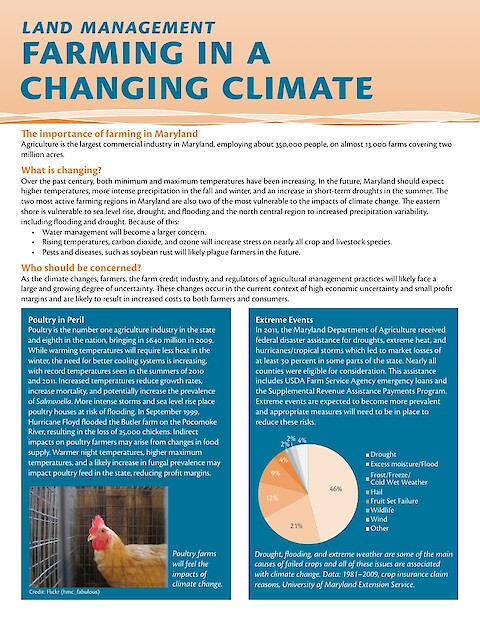
Land Management: Farming in a changing climate

Griswold M, Johnson Z and Wicks EC ·

Agriculture is the largest commercial industry in Maryland, employing about 350,000 people, on almost 13,000 farms covering two million acres. With increasing impacts of climate change, water management will become a larger concern, rising temperatures, carbon dioxide, and ozone will increase stress on nearly all crop and livestock species, and pests and diseases, such as soybean rust will likely plague farmers in the future.

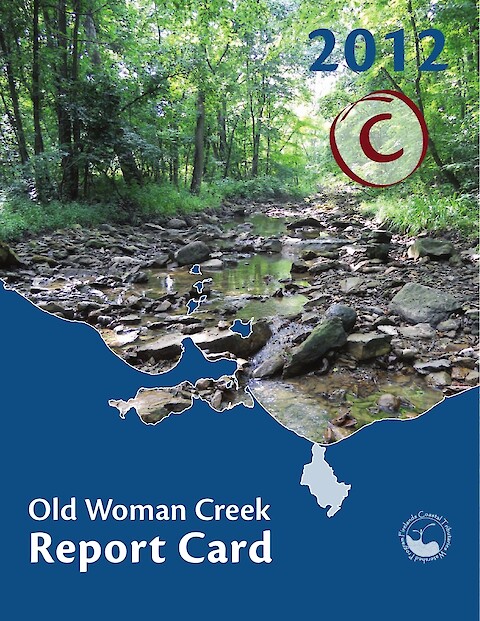
2012 Old Woman Creek Report Card (Page 1)

2012 Old Woman Creek Report Card

Caroline Donovan, Alexandra Fries, Heath Kelsey, Katie Foreman ·

Old Woman Creek, on the south-central shore of Lake Erie, is one of Ohio’s few remaining examples of a natural estuary and is designated as a National Estuarine Research Reserve and a Ohio State Nature Preserve. It is the only Great Lakes freshwater estuary in the National Estuarine Research Reserve System and is managed cooperatively by NOAA and the ODNR.

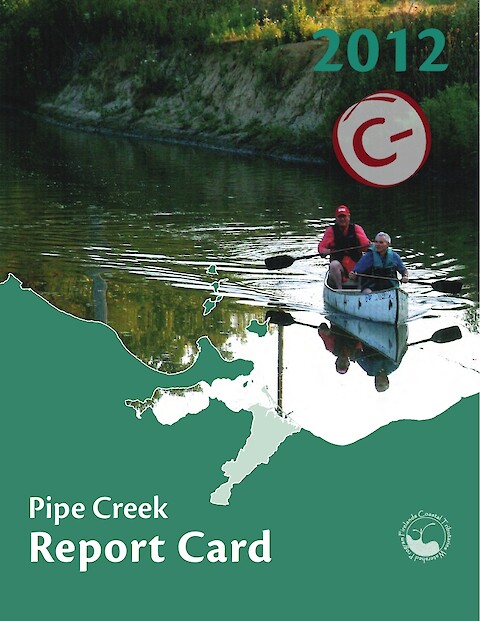
2012 Pipe Creek Report Card (Page 1)

2012 Pipe Creek Report Card

Caroline Donovan, Alexandra Fries, Heath Kelsey, Katie Foreman ·

Pipe Creek is a small tributary to Sandusky Bay on the south-central shore of Lake Erie. The Pipe Creek watershed is largely developed by a combination of urban and agricultural land uses. Pipe Creek is best known for its 97 acre State Wildlife Area located at the mouth of Pipe Creek, which was constructed in the early 1990s as a mitigation site for wetlands destroyed by development elsewhere.

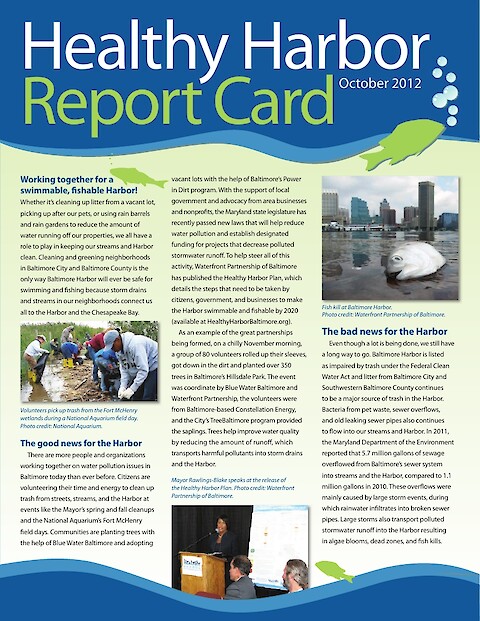
Healthy Harbor Report Card (Page 1)

Healthy Harbor Report Card

Caroline Donovan, Alexandra Fries, Heath Kelsey ·

This report card was developed to help lead private citizens, government, and businesses toward a healthy Baltimore Harbor, which is swimmable and fishable by 2020. The Waterfront Partnership of Baltimore, and Blue Water Baltimore, published this Healthy Harbor Report Card to help work toward clean, safe, and accessible streams and Harbor for everyone.