Publications by Jane Thomas

IAN is committed to producing practical, user-centered communications that foster a better understanding of science and enable readers to pursue new opportunities in research, education, and environmental problem-solving. Our publications synthesize scientific findings using effective science communication techniques.
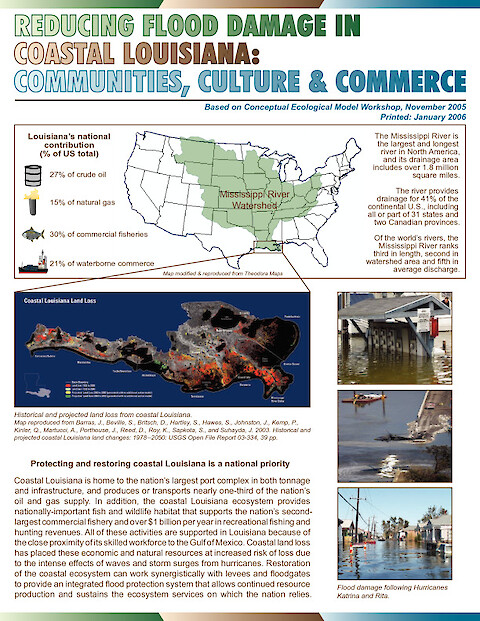
Beneficial use of dredged material to restore Chesapeake Bay wetlands (Page 1)

Beneficial use of dredged material to restore Chesapeake Bay wetlands

Emily Benson, Heather Lane, Jane Thomas ·

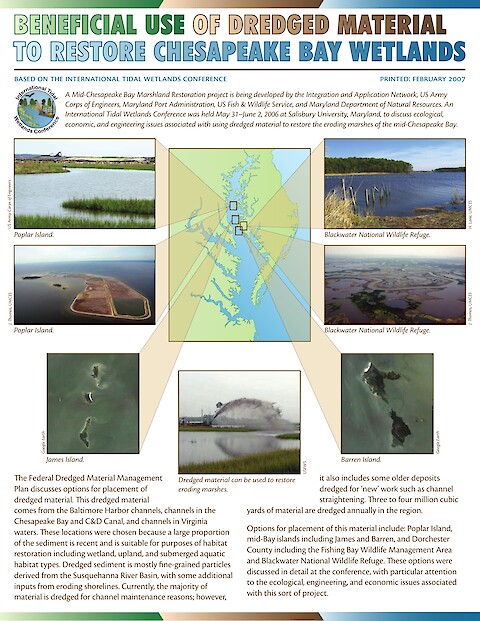
A Mid-Chesapeake Bay Marshlands Restoration project is being developed by the Integration and Application Network, the US Army Corps of Engineers, Maryland Port Administration, US Fish & Wildlife Service, and Maryland Department of Natural Resources. This newsletter discusses the ecological, economic, and engineering issues associated with using dredged material to restore the eroding marshes of the mid-Chesapeake Bay.

Communicating Science Effectively: A Practical Handbook for Integrating Visual Elements

Thomas JE, Saxby TA, Jones AB, Carruthers TJB, Abal EG and Dennison WC ·

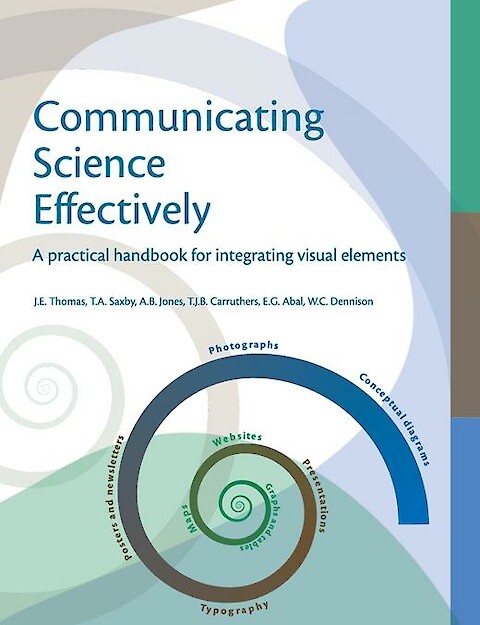
This is a practical handbook on how to communicate science effectively. The first part is an introduction to the principles of science communication – what effective science communication is, why it is important, and how to do it. The principles in these chapters include how effective science communication can change societal paradigms and make one a better scientist.

Communicating Science Effectively: A Practical Handbook for Integrating Visual Elements

Thomas JE, Saxby TA, Jones AB, Carruthers TJB, Abal EG, and Dennison WC ·

This is a practical handbook on how to communicate science effectively. The first part is an introduction to the principles of science communication-what effective science communication is, why it is important, and how effective science communication can change societal paradigms and make one a better scientist.

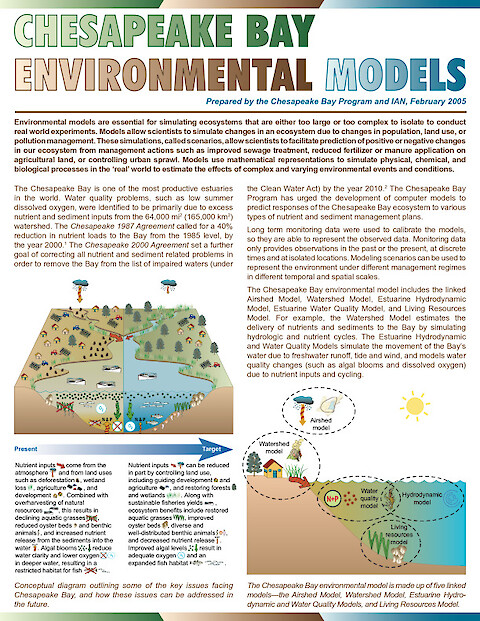
Chesapeake Bay Environmental Models (Page 1)

Chesapeake Bay Environmental Models

Ping Wang, Bill Dennison, Jane Thomas ·

Environmental models are essential for simulating ecosystems that are either too large or too complex to isolate to conduct real world experiments. Models allow scientists to simulate changes in an ecosystem due to changes in population, land use, or pollution management.

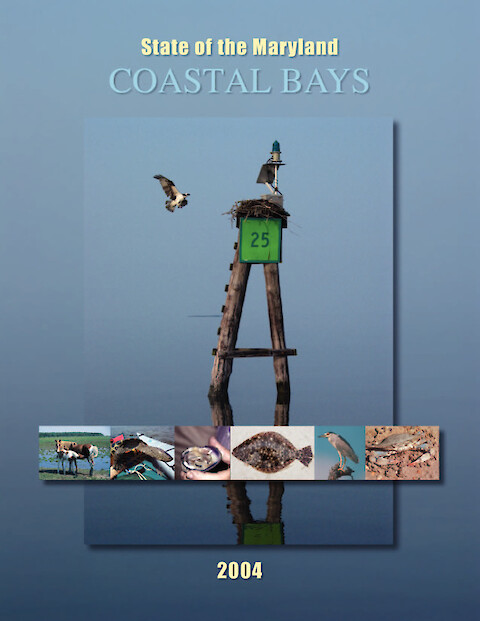
State of the Maryland Coastal Bays 2004 (Page 1)

State of the Maryland Coastal Bays 2004

Wazniak C, Hall M, Cain C, Wilson D, Jesien R, Thomas JE, Carruthers TJB and Dennison WC ·

This report summarizes monitoring data collected over the past several years for water quality, aquatic living resources, and habitat categories. It utilizes conceptual diagrams for each reporting region to highlight the key ecosystem processes, biota and estuarine health problems.

Nutrient Management of Delmarva Soils & Waters (Page 1)

Nutrient Management of Delmarva Soils & Waters

Jane Thomas ·

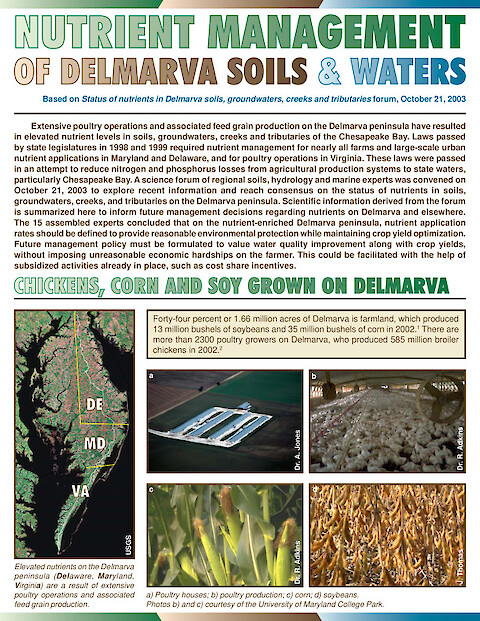
This newsletter is based on the 'Status of nutrients in Delmarva soils, groundwaters, creeks and tributaries forum', October 21, 2003. Extensive poultry operations and associated feed grain production on the Delmarva Peninsula have resulted in elevated nutrient levels in soils, groundwater, creeks and tributaries of the Chesapeake Bay.

Developing a Chesapeake Bay Report Card (Page 1)

Developing a Chesapeake Bay Report Card

Adrian Jones, Bill Dennison, Jane Thomas ·

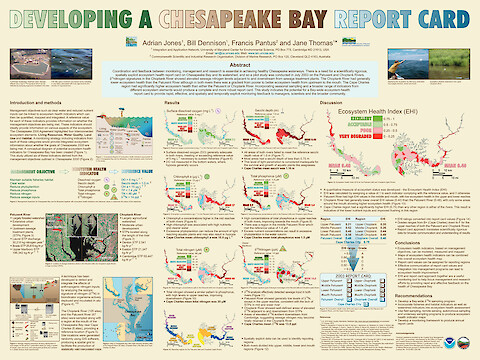
This poster details the importance of developing a scientifically rigorous, spatially explicit ecosystem health report card on Chesapeake Bay and its watershed to facilitate coordination and feedback between monitoring, management and research. A pilot study was conducted in July 2003 on the Patuxent and Choptank Rivers using a novel stable isotope technique (see "Assessing Nutrient Sources" newsletter below) together with more traditional water quality monitoring techniques.

A comparison of issues and management approaches in Moreton Bay, Australia and Chesapeake Bay, USA (Page 1)

A comparison of issues and management approaches in Moreton Bay, Australia and Chesapeake Bay, USA

Dennison WC, Carruthers TJB, Thomas JE, and Glibert PM ·

Management of coastal systems is becoming increasingly important, however understanding the process of effective management often remains elusive. This chapter contrasts examples of environmental problems and associated management in Moreton Bay, Australia, and Chesapeake Bay, USA. Targeted research in Moreton Bay identified specific issues which led to changed practices, while intense management and research in Chesapeake Bay has been unable to keep pace with increasing anthropogenic stress.