IAN is committed to producing practical, user-centered communications that foster a better understanding of science and enable readers to pursue new opportunities in research, education, and environmental problem-solving. Our publications synthesize scientific findings using effective science communication techniques.
Kimberly Lutz, Frank Morton, Bob Beduhn, Joan Freitag, Stephen Gambrell, Steve Mathies, Dan Mecklenborg, Michael Reuter, David Simmons, Larry Weber (Chair), Heath Kelsey, Vanessa Vargas-Nguyen, Katie May Laumann, Steven Guinn, Sky Swanson, Jane Hawkey. and AWI Board of Directors: Kimberly Lutz, AWI Executive Director Bob Beduhn, HDR Inc. Sean Duffy Sr., Big River Coalition Joan C. Freitag, Hanson Professional Services Stephen Gambrell, Mississippi Valley Flood Control Association Teri Goodmann, City of Dubuque, Iowa Steve Mathies, Stantec Consulting Services Dan Mecklenborg, Ingram Barge Company Frank Morton, Turn Services LLC Rachel Orf, National Corn Growers Association Michael Reuter, The Nature Conservancy Rainy Shorey, Caterpillar, Inc. Robert “Bob” Sinkler, Streamside Systems Inc, and Dawson & Associates BG (Ret.) C. David Turner, American Water Military Services Group Kirsten Wallace, Upper Mississippi River Basin Association Larry Weber, University of Iowa ·
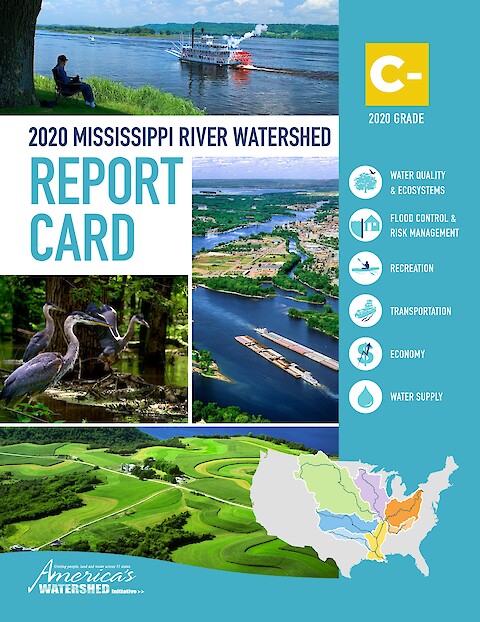
Stretching across 31 US states and 2 Canadian provinces, America’s Watershed benefits millions of people and thousands of communities. It supports our many economic activities while remaining a natural and recreational treasure of global importance.
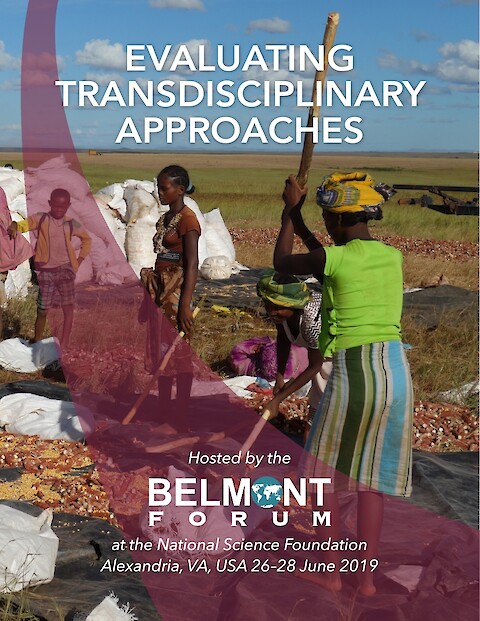
The Evaluating Transdisciplinary Approaches Workshop was convened by the Belmont Forum at the National Science Foundation and facilitated by the University of Maryland Center for Environmental Science in Alexandria, VA, USA on 26–28 June 2019. Participants of the workshop are part of a growing community of transdisciplinary research supporters and practitioners. Their efforts contribute to our fundamental and applied understanding of complex systems.
Laumann KM, Nastase EA, Vargas-Nguyen V, Kelsey RH, Carew A, Donovan EC, Fries AS, Spitzer SE, and Dennison WC ·
Early ecosystem health report cards focused on assessing the health of natural ecosystems, producing a “snapshot” of ecosystem health at one point in time. Ecosystem health report cards are used to guide efforts that improve ecosystem health through natural resources manage- ment and stakeholder engagement. Common themes among Report Cards include water quality and quantity and habitat. These indicators are not strictly environmental concerns, though.
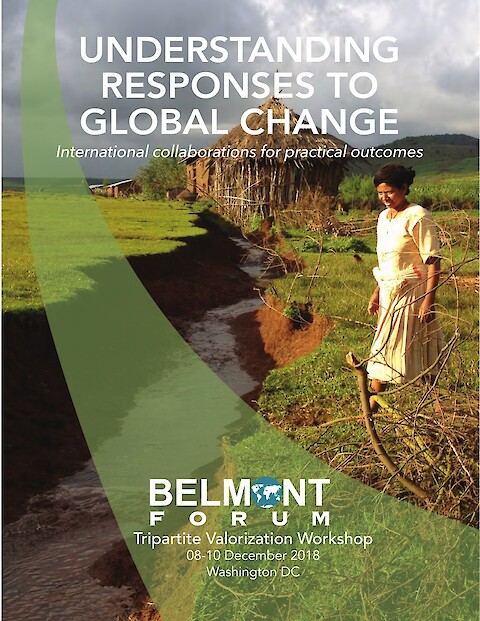
The Tripartite Valorization Workshop was convened by the Belmont Forum and facilitated by the University of Maryland Center for Environmental Science in Washington DC on 8-10 December 2018. It served as the-end term meeting for the Food Security and Land Use Change Collaborative Research Action (CRA), and mid-term meetings for the Arctic Observing and Science for Sustainability and Mountains as Sentinels of Change CRAs.
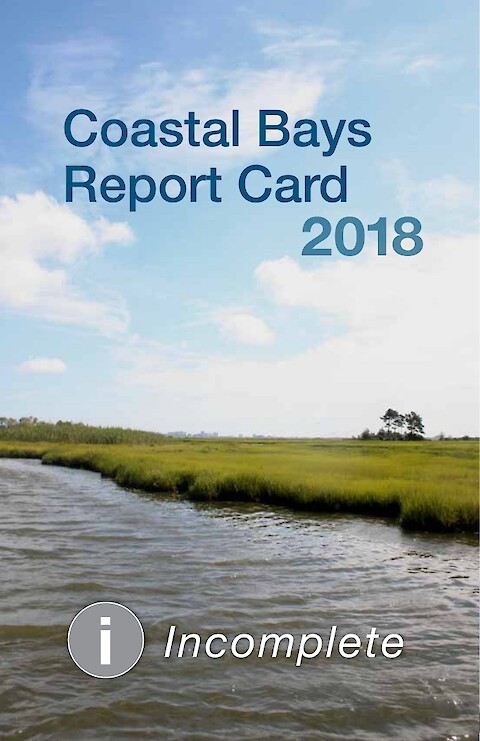
The aim of this report card is to provide a transparent, timely, and geographically detailed assessment of 2018 Coastal Bays health. Coastal Bays health is defined as the progress of four water quality indicators (total nitrogen, total phosphorus, chlorophyll a, dissolved oxygen) and two biotic indicators (seagrass, hard clams) toward scientifically derived ecological thresholds or goals.
This newsletter summarizes outputs from the initial stakeholder workshop to develop the Bhitarkanika Conservation Area Report Card. The workshop took place between 6–7 February in Bhubaneswar, Odisha, India. More than 40 diverse stakeholders came together at this workshop to define the scope of the Bhitarkanika Conservation Area Report Card, create a shared vision for the future of Bhitarkanika, and discuss indicators, thresholds, and data sources for the report card.
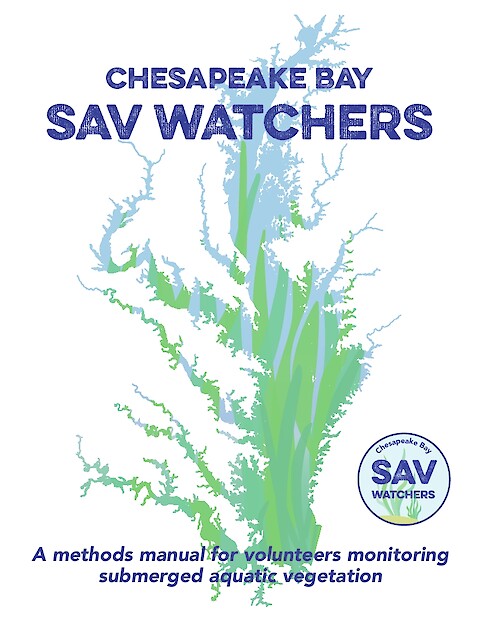
The Methods Manual includes background information on SAV and the Chesapeake Bay SAV Watchers Monitoring Program, detailed protocol for the Advanced Monitoring Program (Tier 2), safety information, an updated SAV species guide, and many other resources.
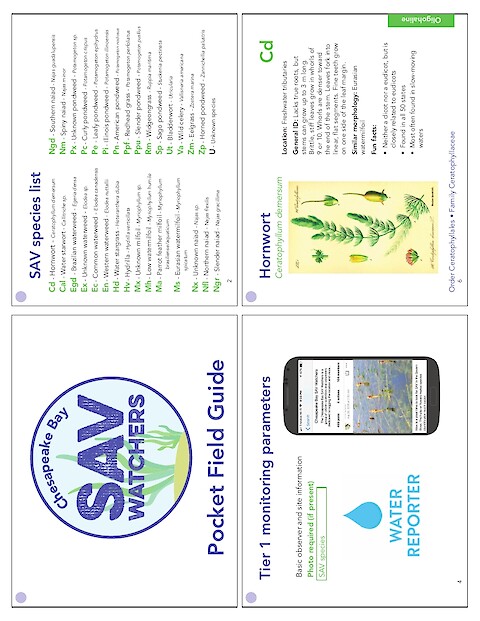
A pocket-sized SAV species identification guide that also includes a field packing list, protocol reminders, and reference photos of other macrophytes. For use in the field by volunteers participating in the Chesapeake Bay SAV Watchers Introductory and Advanced Monitoring Programs. This version is designed to be viewed on a phone or computer screen.
A pocket-sized SAV species identification guide that also includes a field packing list, protocol reminders, and reference photos of other macrophytes. For use in the field by volunteers participating in the Chesapeake Bay SAV Watchers Introductory and Advanced Monitoring Programs. This version is designed for double-sided printing.