Publications by Nicole Lehmer

IAN is committed to producing practical, user-centered communications that foster a better understanding of science and enable readers to pursue new opportunities in research, education, and environmental problem-solving. Our publications synthesize scientific findings using effective science communication techniques.
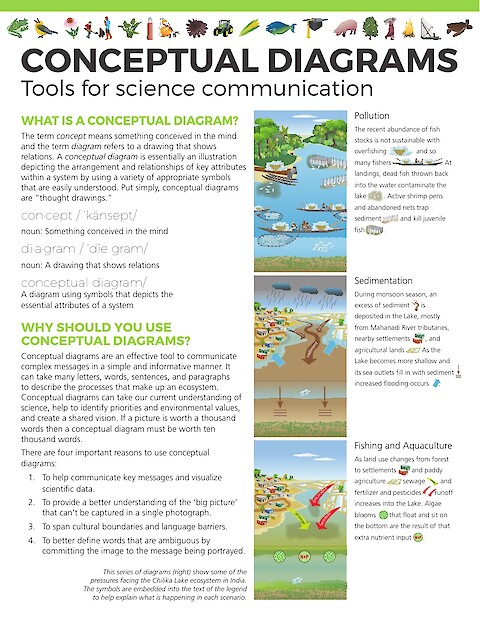
Conceptual Diagrams (Page 1)

Conceptual Diagrams

Tracey Saxby, Nicole Lehmer, Jane Thomas, Jane Hawkey, Adrian Jones, Bill Dennison ·

This newsletter details the use of symbols as a visual language. Symbols are useful for depicting unequivocal messages that transcend cultures, languages and times. The use of symbols to construct conceptual diagrams ('thought drawings') can be an effective tool for science communication and problem solving. Conceptual diagrams help to clarify thinking and provide a communication interface between scientists and non-scientists.

State of the South Atlantic 2015 (Page 1)

State of the South Atlantic 2015

Jane Hawkey, Caroline Donovan, Nicole Lehmer, Heath Kelsey ·

The South Atlantic Landscape Conservation Cooperative (South Atlantic LCC) is a partnership of federal, state, and private organizations dedicated to conserving a landscape capable of sustaining the nation’s natural and cultural resources for current and future generations. The primary objective of this project was to develop a short synthesis report assessing 11 habitats, using a variety of ecological indicators.

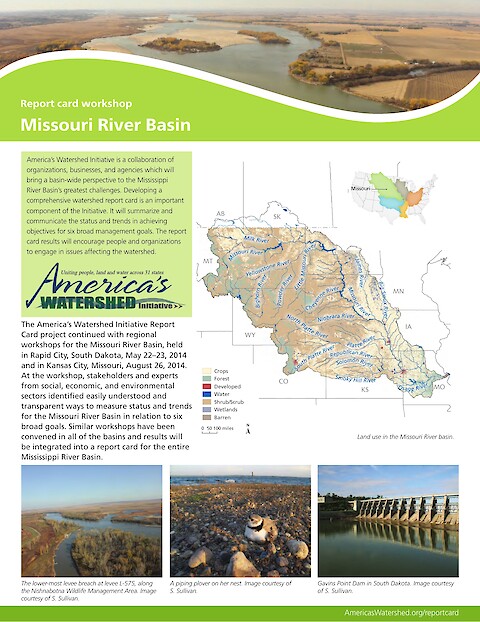
Missouri River Basin report card workshop newsletter (Page 1)

Missouri River Basin report card workshop newsletter

Nicole Lehmer, Brianne Walsh, Jane Thomas, Caroline Donovan, Heath Kelsey, Bill Dennison, Bill Nuttle ·

The America's Watershed Initiative Report Card project continued with regional workshops for the Missouri River Basin, held in Rapid City, South Dakota, May 22–23, 2014 and in Kansas City, Missouri, August 26, 2014. At the workshop, stakeholders and experts from social, economic, and environmental sectors identified easily understood and transparent ways to measure status and trends for the Missouri River Basin in relation to six broad goals.