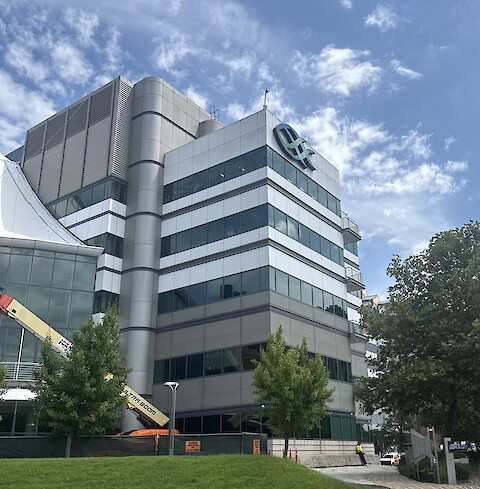
A Tour of the Institute of Marine & Environmental Technology: Bay Research is the Backbone of Science Communication

Adriana Schulman · Chesapeake Bay Experience |     1 comments

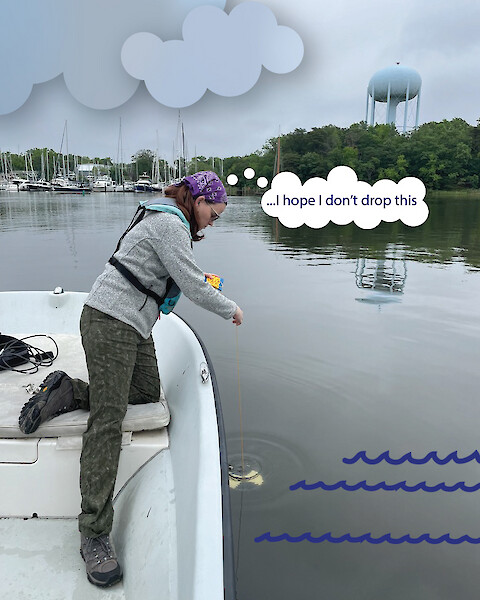
As the largest estuary in the United States, Chesapeake Bay is a highly productive habitat that garners much interest for study.1 Whether focused on human dimensions, the ecosystem, or wildlife, academics study the watershed for the benefit of the people and hundreds of plant and animal species that live within it.

A Look Inside a Delmarva Land and Litter Collaborative (DLLC) Workshop

Connor Olsen · Applying Science |     2 comments

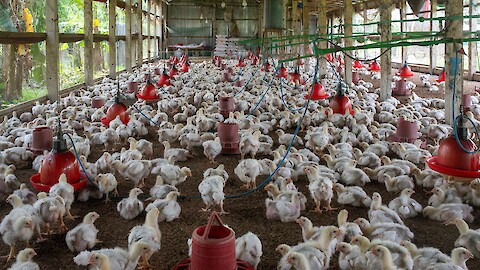
The Delmarva Peninsula is the peninsula between the Chesapeake Bay and the Atlantic Ocean. This area is named after the three states that occupy it: Delaware, Maryland, and Virginia. This area is well known for the amount of farmland and agriculture that takes place. The Delmarva Land and Litter Collaborative (DLLC) is a group of stakeholders from the Delmarva Peninsula.

Bridging Science and Community: The 2025 Chesapeake Bay Report Card

Julia Frangenberg · Science Communication |     2 comments

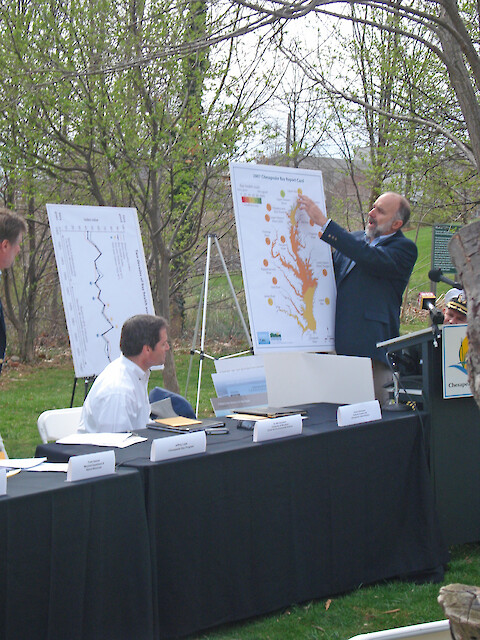
The Chesapeake Bay and its watershed are more than beautiful landscapes. They are the backbone of local economies, habitat for rare and fascinating species, and the home of complex systems between humans, wildlife, and policy. Intensifying climate change and urban development increase stressors negatively impacting this rich ecosystem and the people who rely on it. In 1998, the Chesapeake Bay Foundation (CBF) produced its first annual “State of the Bay” report card.

Climbing Down the Ivory Tower

Annie Carew, Lili Badri · Applying Science | 

The second annual Scientists Serving Communities workshop brought together UMD researchers with expertise in climate adaptation and resilience and connected them with regional stakeholders and community members who will use the information to strengthen their communities. This approach to science actively deconstructs the “ivory tower syndrome” that is often present in academia and encapsulates IAN's work on scientific application and community engagement.

The Role of Local Communities in Tackling Global Environmental Issues

Loni Matthew ·    7 comments

Conservation efforts have become highlighted with the incoming changes of ecological issues such as climate change. The emphasis on conservation efforts are mainly directed at governmental bodies that are able to enact legislative change. However, this focus minimizes a very powerful force that is derived from the general public. Governmental bodies take precedence largely due to their dominant positions of societal power and financial resources to enact change.

Seas on the Rise: Extreme Flooding Impacts

Alison Novara ·    7 comments

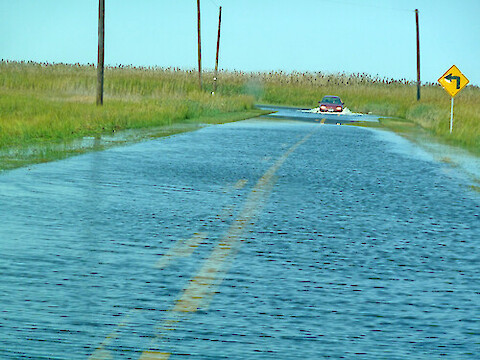
Climate change impacts are more prevalent than ever, with one major indicator being sea level rise. Driven by the increase in Earth’s average temperatures, sea surface temperatures rise as well. As water absorbs heat, or gets warmer, water expands. With nowhere to go but up, sea levels rise, significantly affecting our coastal regions.

Plastic pollution: A menace?

Adetutu Adebayo ·    4 comments

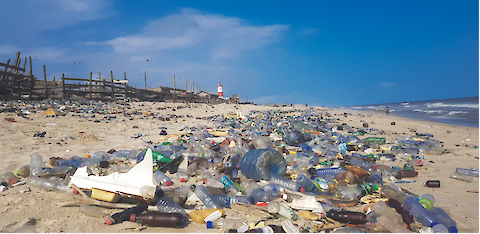
Once upon a time, we thought the production of plastics was a new technique to make life easier. Centuries later, it has become a menace not only to human health, but also to animals, the environment and planet earth. Now, imagine a world without plastics!

We eat from where we dump

Jun Suk Byun ·    5 comments

So many resources are used to sustain our daily lives. We pay the price of that every time we go into the water or eat anything from the water. Everyone does.