

The 2026 Chesapeake Bay and Watershed Report Card Release
Ann Foo · | Environmental Report Cards |This year’s Chesapeake Bay Report Card release was held at George Mason University’s Potomac Science Center in Woodbridge, Virginia, a picturesque location for celebrating the Bay’s highest score yet.
The event opened with a speech by George Mason University president Dr. Gregory Washington, who introduced UMCES president Fernando Miralles-Wilhelm. Dr. Miralles-Wilhelm was previously the dean of GMU’s College of Science, and both university presidents emphasized the value of partnership in building a sustainable future for the Bay.
Virginia Secretary of Natural and Historic Resources David Bulova gave the keynote speech and highlighted the social, environmental, and economic value of the Bay, which supports hundreds of thousands of jobs across the watershed. He spoke on the importance of the Watershed Agreement and the efforts of advocates, farmers, watermen, scientists, planners, engineers, and elected officials in achieving the Bay’s C+. “You can’t restore the Chesapeake Bay without restoring our headwaters, without restoring our streams, our creeks, our small watersheds; the stuff that starts in our backyards,” said Secretary Bulova. Lastly, he highlighted the importance of environmental education and literacy to build future environmental leaders.
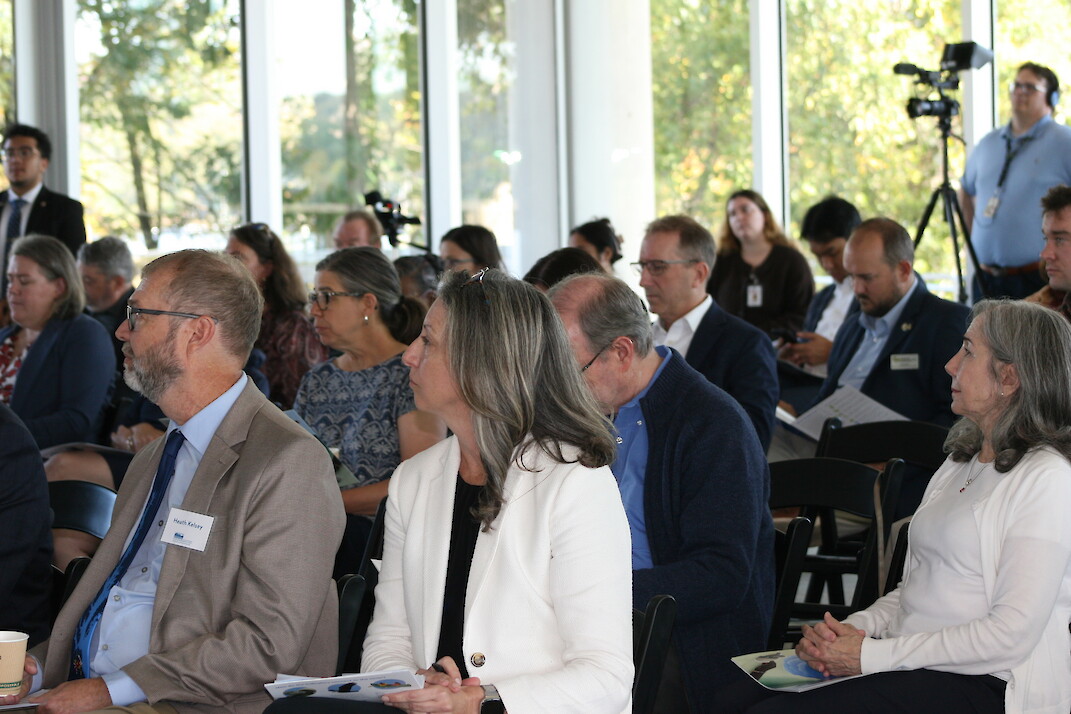
Across the speakers, who included Congressman Eugene Vindman, Lee McDonnell of the USEPA, Secretary Serena McIlwain, Secretary Josh Kurtz, and Chesapeake Bay Foundation president Hilary Harp Falk, there was a clear throughline of hope for the Bay and the importance of continued investment. “It’s my hope that in 20 years to come, when we look back on the C+, it’s not a high watermark, but one more step on the way towards a healthy, thriving Chesapeake Bay for more generations to come,” said Congressman Vindman.
UMCES provost Dr. Bill Dennison paid tribute to Dr. Walter Boynton, an influential Chesapeake Bay scientist and beloved UMCES professor who passed away in September 2026. Dr. Boynton’s research on nutrient pollution and water monitoring in the Chesapeake was foundational to today’s work protecting and restoring the Bay.
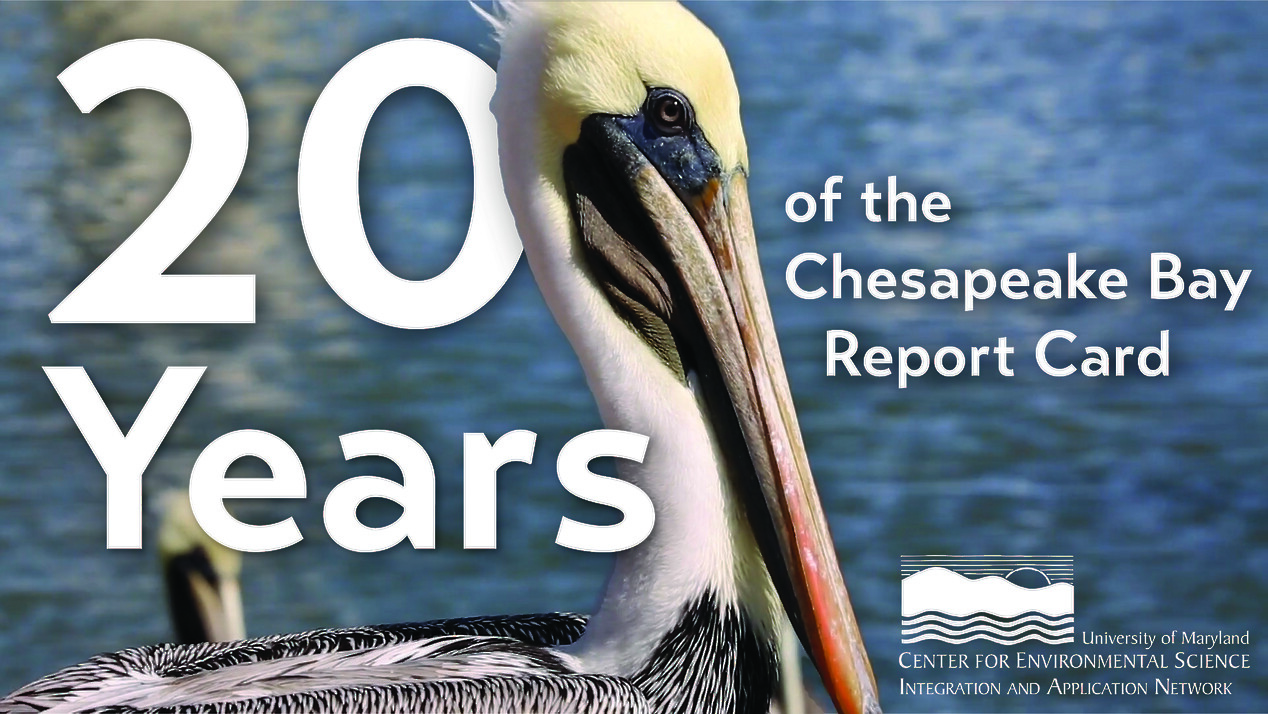
This year, we produced a documentary on the history and impact of the report card in honor of its twentieth year that you can check out on YouTube to learn about the work our team does. You can also explore the history of the Chesapeake Bay’s challenges and successes at chesapeakebaystory.umces.edu.
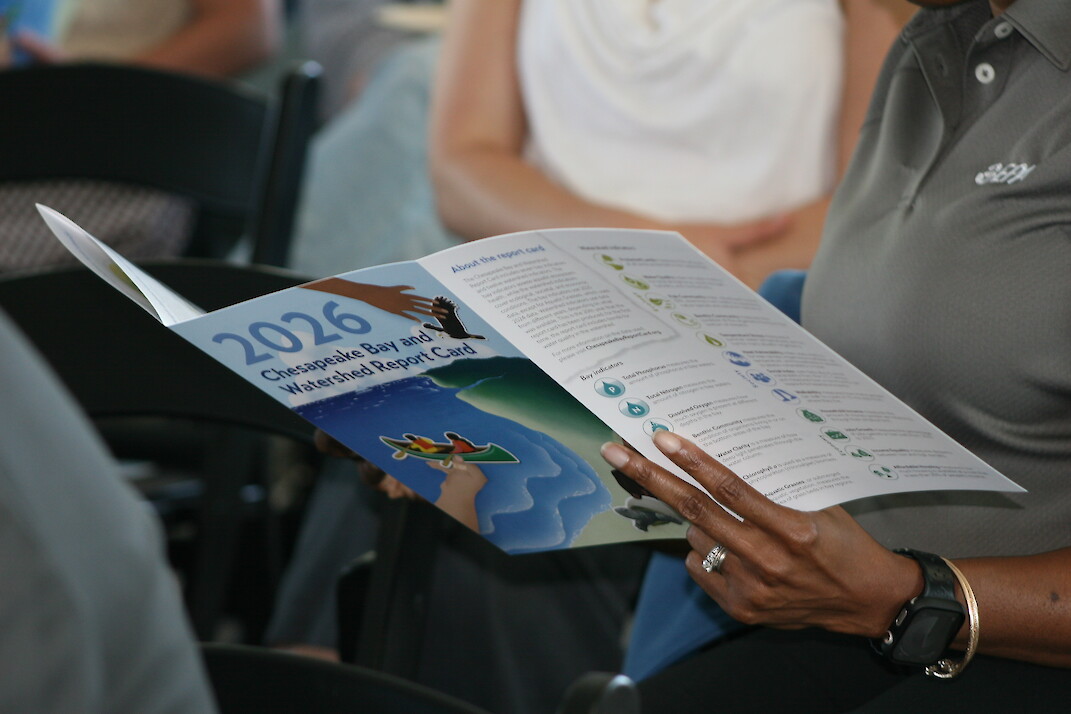
The 2026 Chesapeake Bay and Watershed Report Card can be found here, and more detailed information is at chesapeakebayreportcard.org.
The report card is the product of a year of intensive work for our team. Just as soon as one year’s report card is released, data collection and analysis starts for the next. The Integration and Application Network is already hard at work preparing for next year’s report card. In the meantime, we look forward to the continued restoration and conservation efforts across the watershed, and hope that people follow the advice of Hilary Harp Falk in her speech: “We need to take the lessons from this report and apply them. When we invest in restoration, we get results.”
About the author
Ann Foo

Ann is a Science Communicator at UMCES. She graduated from the University of Maryland, College Park, with a B.S. in Cell Biology and Genetics and a B.A. in Classical Languages and Literatures. Ann previously did research on foodborne pathogens and on the gut microbiome. Ann has a cat named Toast and enjoys cooking, listening to podcasts, and going to museums.