Publications by Alexandra Fries

IAN is committed to producing practical, user-centered communications that foster a better understanding of science and enable readers to pursue new opportunities in research, education, and environmental problem-solving. Our publications synthesize scientific findings using effective science communication techniques.
2019 Chesapeake Bay & Watershed Report Card (Page 1)

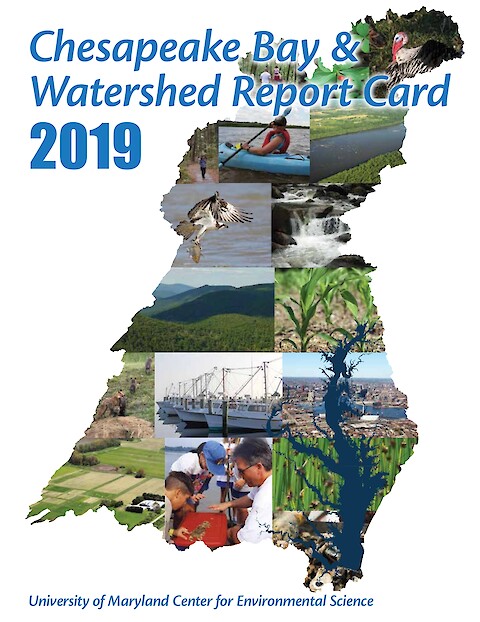
2019 Chesapeake Bay & Watershed Report Card

Alexandra Fries, Sky Swanson, Dylan Taillie, Caroline Donovan, Max Hermanson, Heath Kelsey ·

This report card provides a transparent, timely, and geographically detailed assessment of Chesapeake Bay. Since 2016, UMCES has engaged stakeholders throughout the watershed to transform the report card into an evaluation of the Chesapeake Watershed health. Watershed health includes traditional ecosystem indicators, but also social, economic, and cultural indicators. This is the first year the watershed has been scored, using five indicators of ecological and socioeconomic health.

2020 Verde River Watershed Report Card (Page 1)

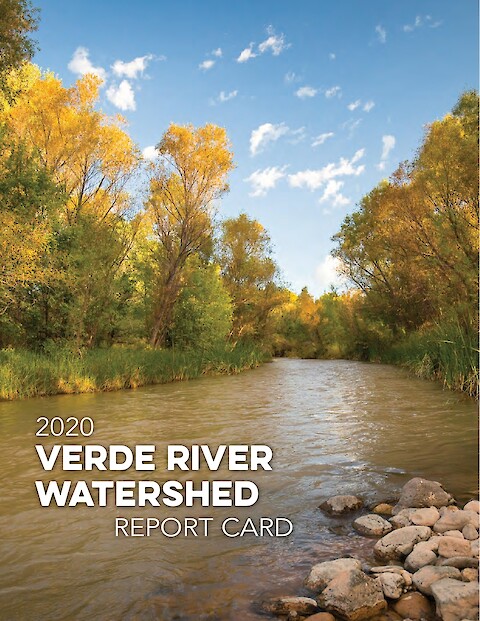
2020 Verde River Watershed Report Card

Andrew Elmore, Alexandra Fries, Emily Nastase, Heath Kelsey ·

Watershed report cards are powerful tools to describe ecosystem status, increase public awareness, and inform and influence decision makers to improve the health of a watershed. This is the first Verde River Watershed Report Card. It is the collective effort of dozens of stakeholders throughout the Verde watershed. Indicators in the report card were selected to assess the health of three different values in the Verde watershed: Water, Habitat, and Communities.

Moving beyond the ecosystem in ecosystem health report cards (Page 1)

Moving beyond the ecosystem in ecosystem health report cards

Laumann KM, Nastase EA, Vargas-Nguyen V, Kelsey RH, Carew A, Donovan EC, Fries AS, Spitzer SE, and Dennison WC ·

Early ecosystem health report cards focused on assessing the health of natural ecosystems, producing a “snapshot” of ecosystem health at one point in time. Ecosystem health report cards are used to guide efforts that improve ecosystem health through natural resources manage- ment and stakeholder engagement. Common themes among Report Cards include water quality and quantity and habitat. These indicators are not strictly environmental concerns, though.

2018 Chesapeake Bay & Watershed Report Card (Page 1)

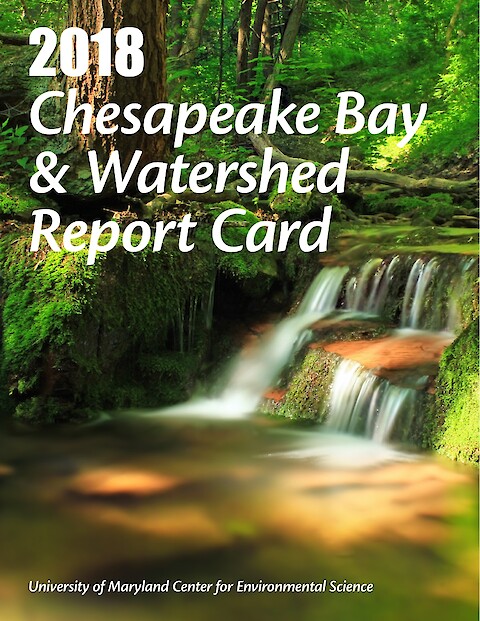
2018 Chesapeake Bay & Watershed Report Card

Alexandra Fries, Caroline Donovan, Dylan Taillie, Heath Kelsey, Sky Swanson, Bill Dennison ·

This report card provides a transparent, timely, and geographically detailed assessment of Chesapeake Bay. In 2018, the report card includes five water quality indicators and two biotic indicators. In 2018, the overall grade for Chesapeake Bay is a 46%, a C. This means the Bay is in moderate health. Despite the decrease in score from 2017, overall bay health is still significantly improving over time. Long term trends of each reporting region health and a fisheries index are also presented.

Developing a Report Card for the Verde River Watershed (Page 1)

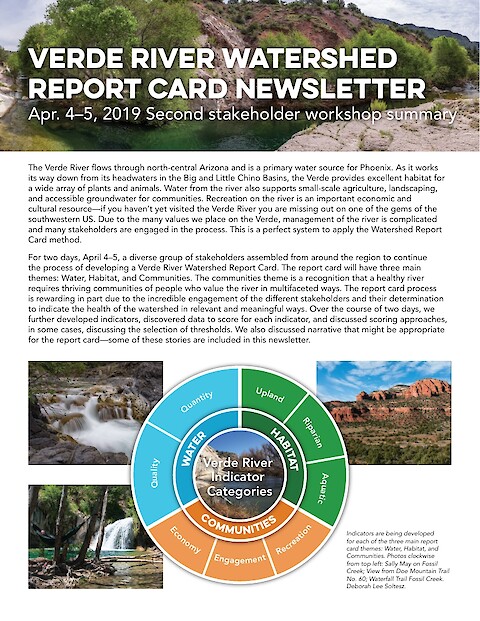
Verde River Watershed Report Card 2nd Newsletter

Apr. 4–5, 2019 Second stakeholder workshop summary

Andrew Elmore, Emily Nastase, Alexandra Fries, Heath Kelsey ·

This newsletter summarizes outputs from the second stakeholder workshop to develop the Verde River Watershed Report Card. The objectives of the workshop were to: i) develop indicators, ii) discuss scoring approaches, and iii) establish narrative appropriate for the report card. Indicators for the report card center around three main themes: Water, Habitat, and Communities—all necessary components to determine the health of the Verde watershed.

2012-2017 Everglades Report Card (Page 1)

2012-2017 Everglades Report Card

Alexandra Fries, Emily Nastase, Bill Nuttle, Caroline Donovan, Heath Kelsey ·

This is the first Everglades report card. It is a RECOVER product that provides a transparent, timely, and geographically detailed assessment of health of the Florida Everglades using data from May 1, 2012 – April 30, 2017. The Everglades Report Card, a complement to the 2019 System Status Report, assesses and synthesizes ecological data to evaluate overall ecosystem condition using performance-driven metrics compared against a goal or ecologically-relevant threshold.

2019 Everglades System Status Report (Page 1)

2019 Everglades System Status Report

Alexandra Fries, Emily Nastase, Bill Nuttle, Caroline Donovan ·

As a product of the REstoration COordination and VERification (RECOVER) Monitoring and Assessment Plan (MAP), this report details the evaluation of systemwide performance measures and their targets (or goals) using the ecological tools developed over the past several years under the RECOVER’s MAP program to measure restoration progress.

Healthy Rivers for All (Page 1)

Healthy Rivers for All

Brianne Walsh, Alexandra Fries, Heath Kelsey ·

The world’s waters are threatened by a host of problems. Impacts from human activities like development and overuse are exacerbated by changes in climate and increased competition by different societal interests, putting vulnerable communities and ecosystems at risk. Creating a sustainable balance of water needs for both nature and people is challenging. It will require people that are competing for water resources to work together in new collaborations and partnerships.

Developing a Report Card for the Verde River Watershed (Page 1)

Verde River Watershed Report Card 1st Newsletter

Nov. 13–14, 2018 Stakeholder workshop summary

Emily Nastase, Alexandra Fries, Andrew Elmore ·

This newsletter summarizes outputs from the initial stakeholder workshop to develop the Verde River Watershed Report Card. The objectives of the workshop were to: i) introduce the project and agree on expected outcomes; ii) begin the process of developing a report card; and, iii) define the geographic scope of the report card, indicators, thresholds, data sources, and communication plan.