Publications by Jane Thomas

IAN is committed to producing practical, user-centered communications that foster a better understanding of science and enable readers to pursue new opportunities in research, education, and environmental problem-solving. Our publications synthesize scientific findings using effective science communication techniques.
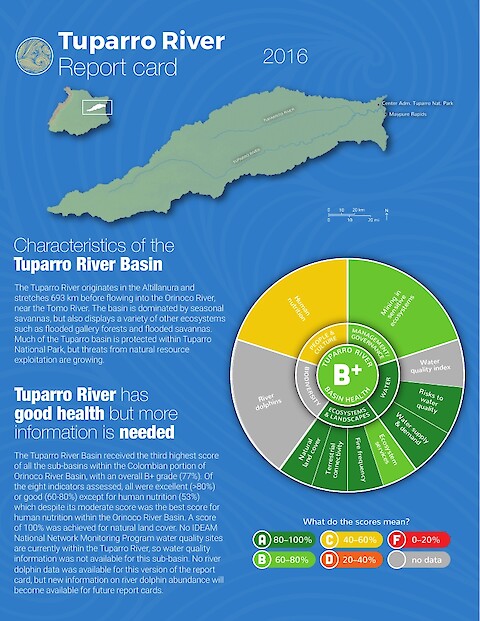
Tuparro River Report Card 2016 (Page 1)

Tuparro River Report Card 2016

Simon Costanzo, Alexandra Fries, Jane Thomas ·

This report card provides a transparent, timely, and geographically detailed assessment of the Tuparro River, a sub-basin in the Orinoco River Basin. In 2016, the overall grade for the Tuparro River is a 77%, a B+. This means the Tuparro is in moderately good health. For further details, visit the report card website at orinocoriver.ecoreportcard.org.

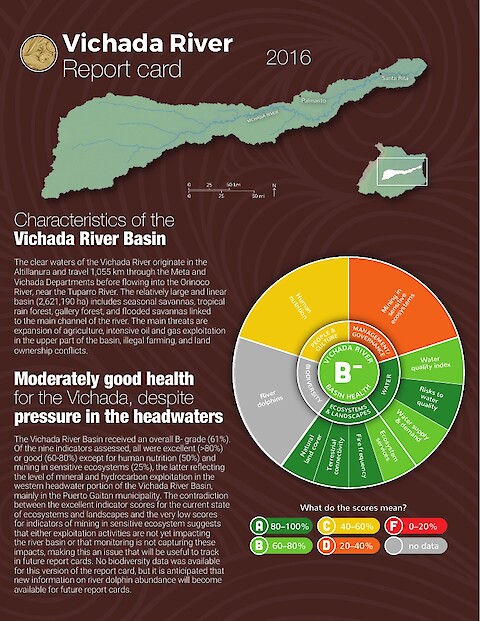
Vichada River Report Card 2016 (Page 1)

Vichada River Report Card 2016

Simon Costanzo, Alexandra Fries, Jane Thomas ·

This report card provides a transparent, timely, and geographically detailed assessment of the Vichada River, a sub-basin in the Orinoco River Basin. In 2016, the overall grade for the Vichada River is a 61%, a B-. This means the Vichada is in moderately good health. For further details, visit the report card website at orinocoriver.ecoreportcard.org.

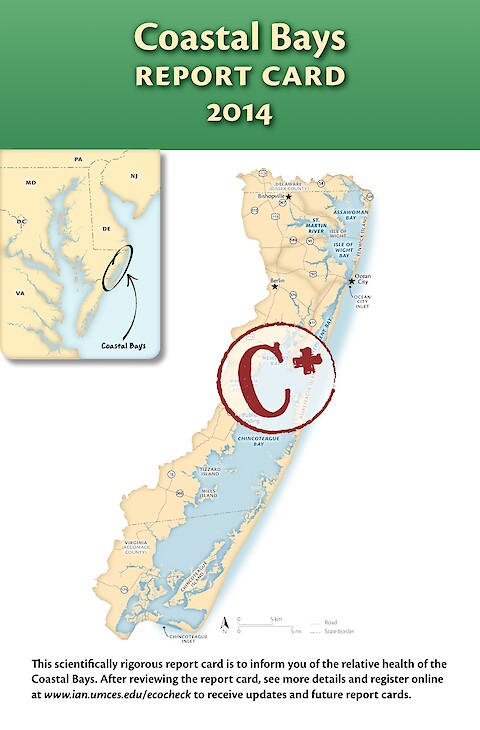
2014 Maryland Coastal Bays report card (Page 1)

2014 Maryland Coastal Bays report card

Jane Thomas, Bill Dennison ·

The aim of this report card is to provide a transparent, timely, and geographically detailed assessment of 2014 Coastal Bays health. Coastal Bays health is defined as the progress of four water quality indicators (total nitrogen, total phosphorus, chlorophyll a, dissolved oxygen) and two biotic indicators (seagrass, hard clams) toward scientifically derived ecological thresholds or goals.

America

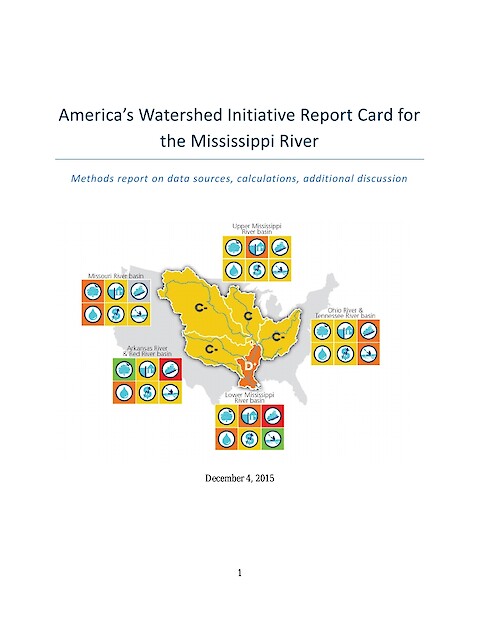
America's Watershed Initiative Report Card for the Mississippi River

Methods document

Bill Dennison, Heath Kelsey, Bill Nuttle, Jane Thomas, Brianne Walsh, Caroline Donovan ·

This companion document to the report card contains information about data sources for all indicators, summary of analysis methods, and scoring details for each of the six America’s Watershed Initiative goals, and for two watershed wide indicators. Additional information regarding the goals is included to provide greater detail and discussion than is possible in the report card document.

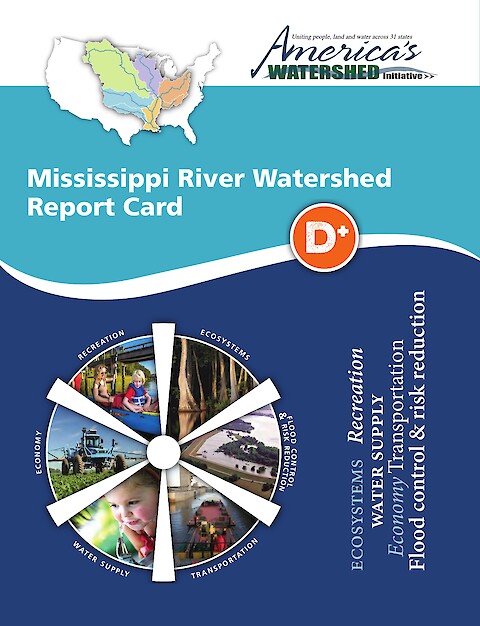
Mississippi River Watershed Report Card (Page 1)

Mississippi River Watershed Report Card

Bill Dennison, Jane Thomas, Caroline Donovan, Jane Hawkey, Heath Kelsey, Bill Nuttle, Brianne Walsh ·

The Report Card measured six broad goals for America's Watershed - Ecosystems, Flood Control & Risk Reduction, Transportation, Water Supply, Economy, and Recreation. The Report Card Measures how well we are currently meeting each one of these goals, using real data and relevant information that was identified by experts in these fields. Over time, as we adapt our management strategies for the Mississippi River Watershed, the Report Card can track progress in achieving objectives.

America

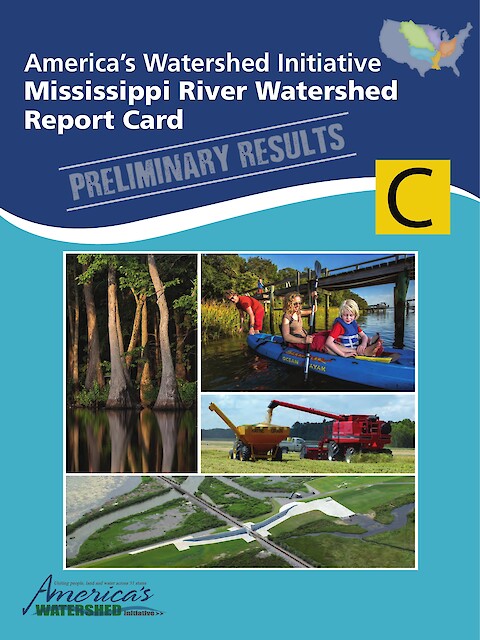
America's Watershed Initiative Mississippi River Watershed Report Card

Bill Dennison, Caroline Donovan, Heath Kelsey, Bill Nuttle, Jane Thomas, Brianne Walsh ·

The Mississippi River watershed is a globally important resource, providing water resources for people, industries, and ecosystems, food and energy production, and transportation of important agricultural and industrial commodities. Management of the watershed for these potentially conflicting uses and services is challenging, as the watershed spans parts of 31 states and 2 Canadian provinces.

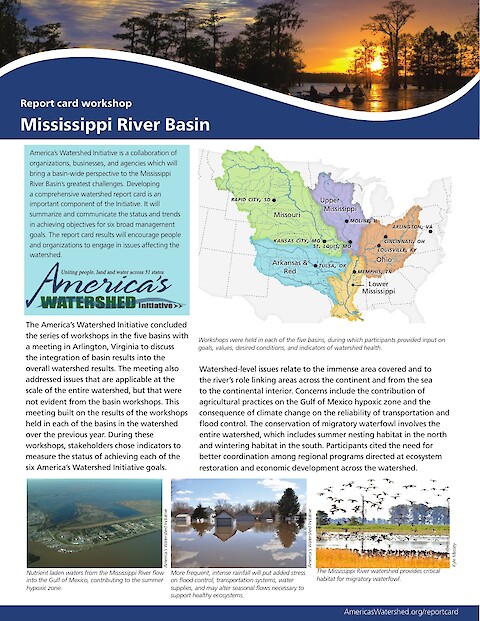
Mississippi River Report Card whole watershed report card workshop newsletter (Page 1)

Mississippi River Report Card whole watershed report card workshop newsletter

Suzanne Webster, Brianne Walsh, Caroline Donovan, Bill Dennison, Heath Kelsey, Bill Nuttle, Jane Thomas ·

The America's Watershed Initiative concluded the series of workshops in the five basins with a meeting in Arlington, Virginia to discuss the integration of basin results into the overall watershed results. The meeting also addressed issues that are applicable at the scale of the entire watershed, but that were not evident from the basin workshops. This meeting built on the results of the workshops held in each of the basins in the watershed over the previous year.

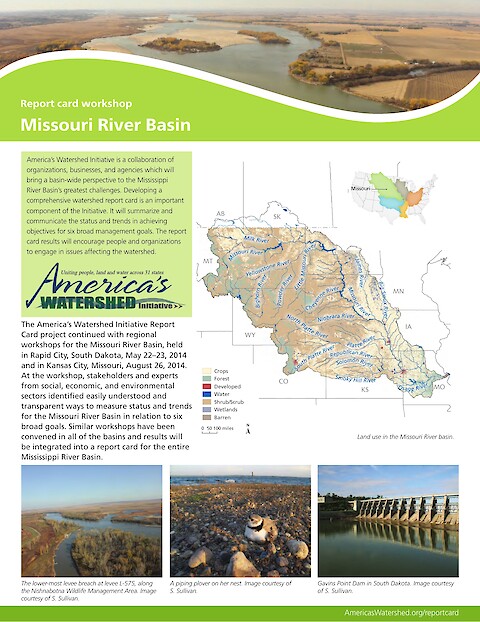
Missouri River Basin report card workshop newsletter (Page 1)

Missouri River Basin report card workshop newsletter

Nicole Lehmer, Brianne Walsh, Jane Thomas, Caroline Donovan, Heath Kelsey, Bill Dennison, Bill Nuttle ·

The America's Watershed Initiative Report Card project continued with regional workshops for the Missouri River Basin, held in Rapid City, South Dakota, May 22–23, 2014 and in Kansas City, Missouri, August 26, 2014. At the workshop, stakeholders and experts from social, economic, and environmental sectors identified easily understood and transparent ways to measure status and trends for the Missouri River Basin in relation to six broad goals.

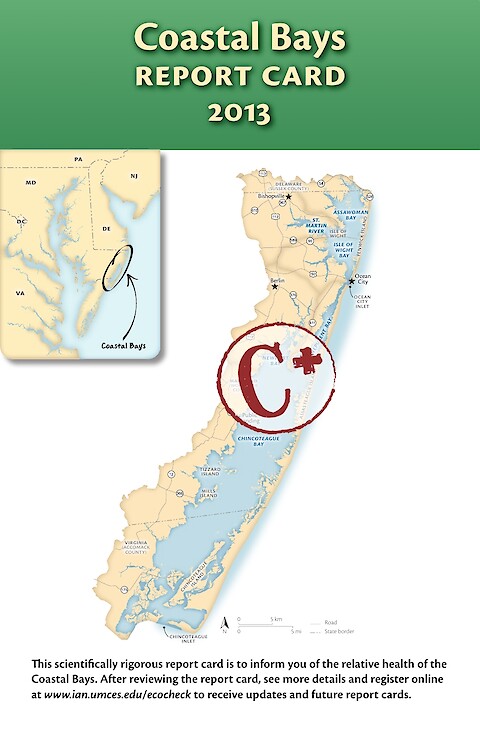
2013 Maryland Coastal Bays report card (Page 1)

2013 Maryland Coastal Bays report card

Jane Thomas, Bill Dennison ·

The aim of this report card is to provide a transparent, timely, and geographically detailed assessment of 2013 Coastal Bays health. Coastal Bays health is defined as the progress of four water quality indicators (total nitrogen, total phosphorus, chlorophyll a, dissolved oxygen) and two biotic indicators (seagrass, hard clams) toward scientifically derived ecological thresholds or goals.

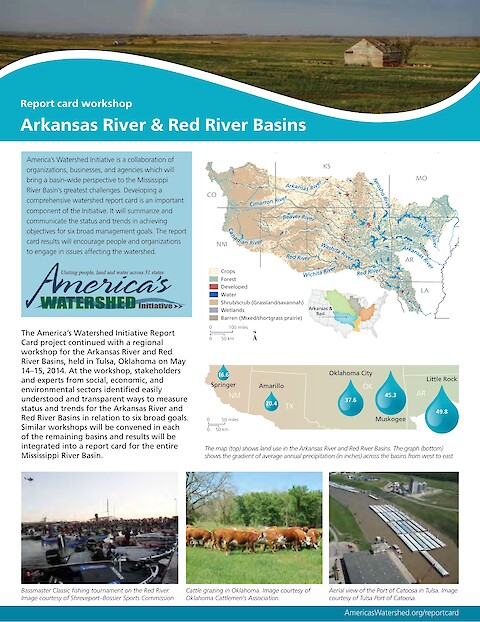
Arkansas River and Red River Basins report card workshop newsletter (Page 1)

Arkansas River and Red River Basins report card workshop newsletter

Bill Dennison, Heath Kelsey, Jane Thomas, Caroline Donovan, Bill Nuttle ·

The America's Watershed Initiative Report Card project continued with a regional workshop for the Arkansas River and Red River Basins, held in Tulsa, Oklahoma, on May 14–15, 2014. At the workshop, stakeholders and experts from social, economic, and environmental sectors identified easily understood and transparent ways to measure status and trends for the Arkansas River and Red River Basins in relation to six broad goals.