Publications by Simon Costanzo

IAN is committed to producing practical, user-centered communications that foster a better understanding of science and enable readers to pursue new opportunities in research, education, and environmental problem-solving. Our publications synthesize scientific findings using effective science communication techniques.
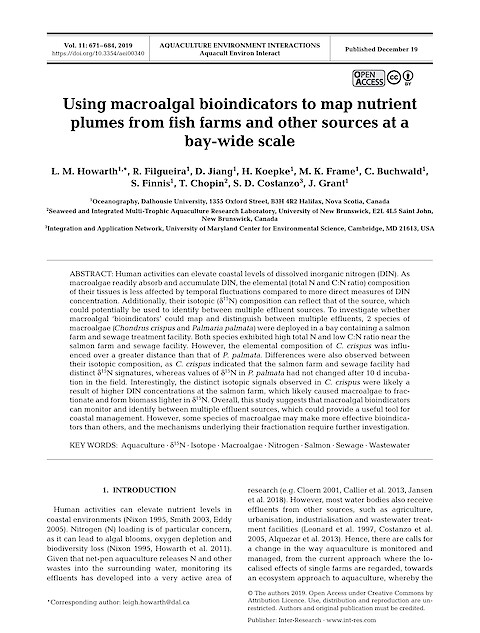
Using macroalgal bioindicators to map nutrient plumes from fish farms and other sources at a bay-wide scale (Page 1)

Using macroalgal bioindicators to map nutrient plumes from fish farms and other sources at a bay-wide scale

Howarth LM, Filgueira R, Jiang D, Koepke H, Frame MK, Buchwald C, Finnis S, Chopin T, Costanzo SD, Grant J ·

Human activities can elevate coastal levels of dissolved inorganic nitrogen (DIN). As macroalgae readily absorb and accumulate DIN, the elemental (total N and C:N ratio) composition of their tissues is less affected by temporal fluctuations compared to more direct measures of DIN concentration. Additionally, their isotopic (δ15N) composition can reflect that of the source, which could potentially be used to identify between multiple effluent sources.

Ecological Drought Across the United States (Page 1)

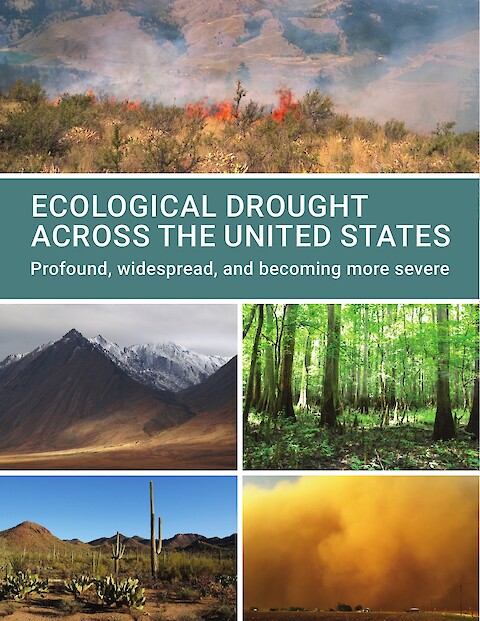
Ecological Drought Across the United States

Profound, widespread, and becoming more severe

Carter S, Donahue K, Myers B, Rubenstein M, Dennison WC, Lentz R, Blackband J, Malpeli K, Costanzo S, and Walsh B ·

Across the United States, ecological drought is ubiquitous, profound, and has become more severe. This newsletter summarizes the findings of a three-year synthesis on the current status of drought research across the United States. The ecological drought synthesis project involved workshops at each of the eight regional Climate Adaptation Science Centers.

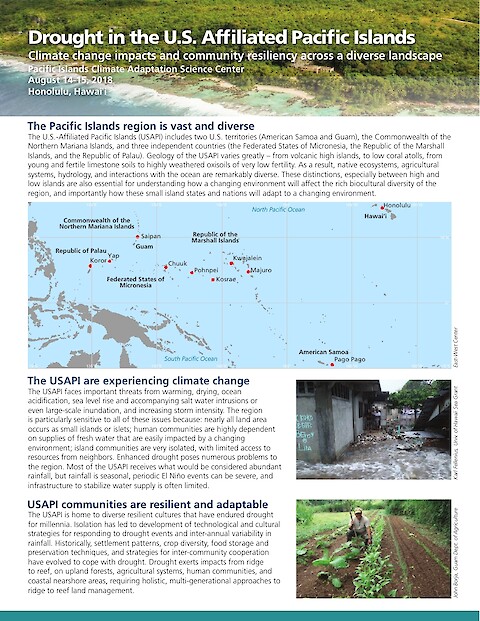
Drought in the U.S. Affiliated Pacific Islands (Page 1)

Drought in the U.S. Affiliated Pacific Islands

Brianne Walsh, Simon Costanzo ·

The Department of the Interior Climate Science Centers (CSCs) and their managing organization, the National Climate Change and Wildlife Science Center at the U.S. Geological Survey, have chosen the emerging climate science field of Ecological Drought as a research focus area. This newsletter highlights the outcomes of a two-day workshop held in Honolulu, Hawaii as part of a series of meetings at each of the nation’s eight CSCs.

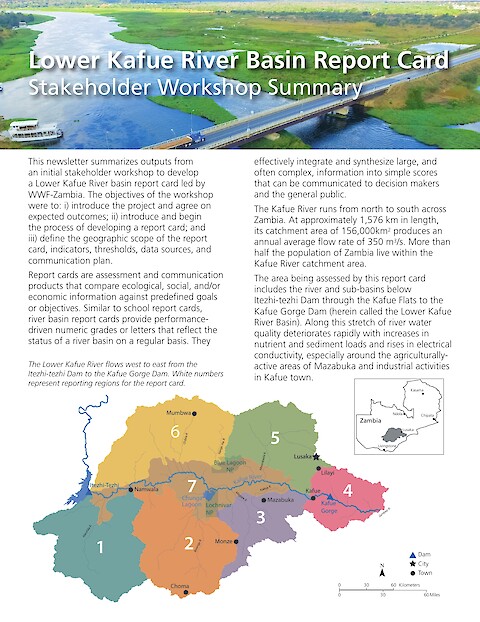
Bhitarkanika Conservation Area Report Card Workshop Newsletter (Page 1)

Bhitarkanika Conservation Area Report Card Workshop Newsletter

February 6–7, 2019 Stakeholder workshop summary

Katie May Laumann, Emily Nastase, Simon Costanzo, Kiri Carini ·

This newsletter summarizes outputs from the initial stakeholder workshop to develop the Bhitarkanika Conservation Area Report Card. The workshop took place between 6–7 February in Bhubaneswar, Odisha, India. More than 40 diverse stakeholders came together at this workshop to define the scope of the Bhitarkanika Conservation Area Report Card, create a shared vision for the future of Bhitarkanika, and discuss indicators, thresholds, and data sources for the report card.

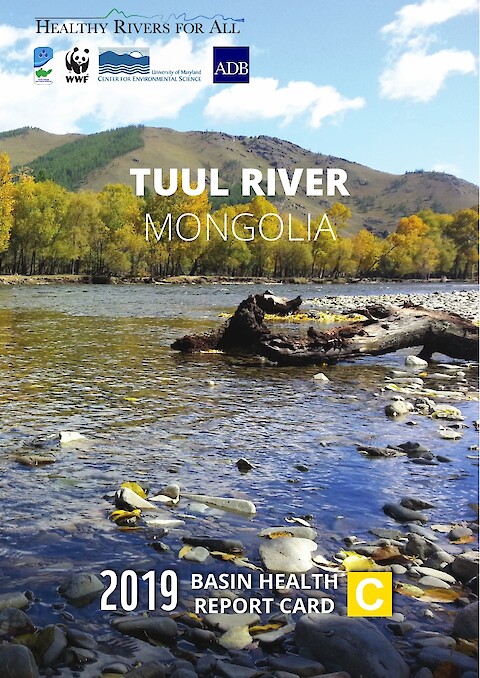
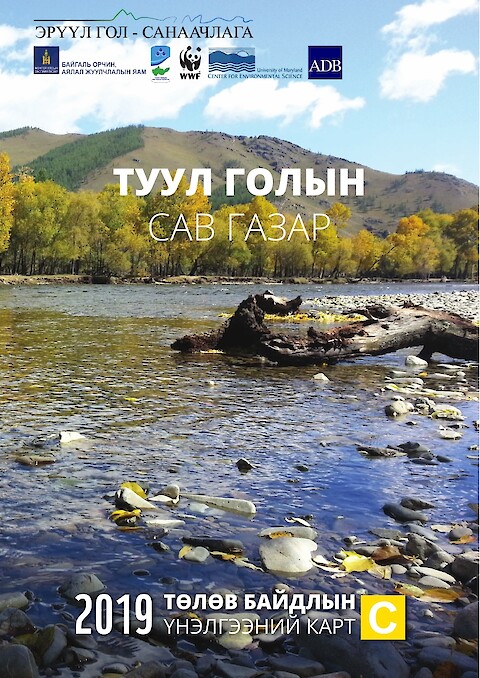
Tuul River Basin Report Card 2019 (Page 1)

Tuul River Basin Report Card 2019

Simon Costanzo, Dylan Taillie ·

The Tuul River Basin Report Card—the first of its kind in Mongolia—assesses the basin's health through social, environmental and economic values that can be tracked over time in response to management actions and/or external pressures. The Tuul River Basin has been evaluated in this assessment as “moderate” health or ‘C’, meaning urgent management interventions are required to maintain the health of the river.

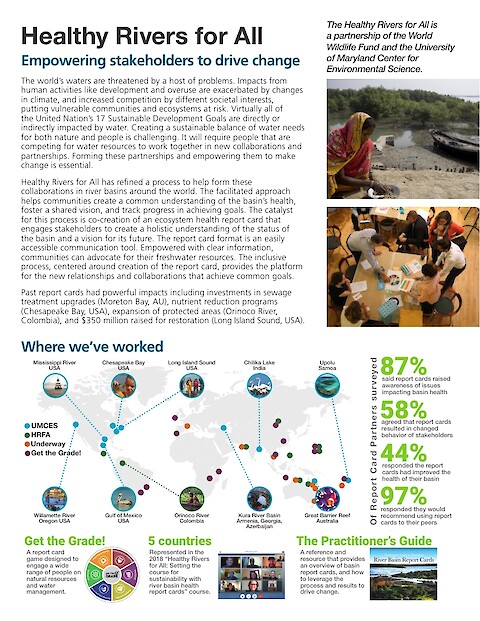
Healthy Rivers for All (Page 1)

Healthy Rivers for All

Brianne Walsh, Alexandra Fries, Simon Costanzo, Heath Kelsey, Bill Dennison ·

The world’s waters are threatened by a host of problems. Impacts from human activities like development and overuse are exacerbated by changes in climate, and increased competition by different societal interests, putting vulnerable communities and ecosystems at risk. Creating a sustainable balance of water needs for both nature and people is challenging. It will require people that are competing for water resources to work together in new collaborations and partnerships.

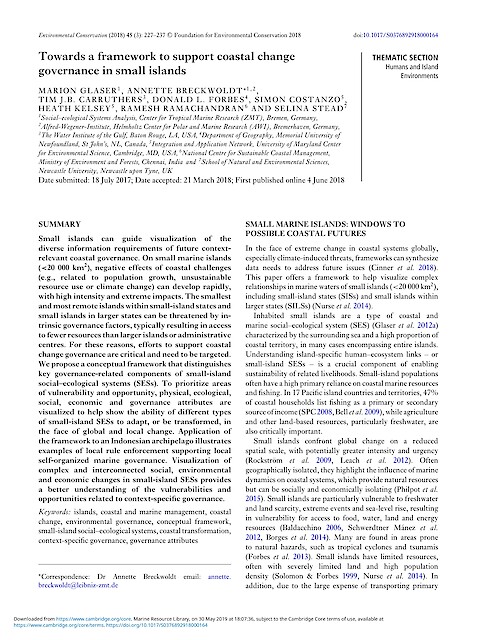
Towards a framework to support coastal change governance in small islands (Page 1)

Towards a framework to support coastal change governance in small islands

Glaser M, Breckwoldt A, Carruthers T, Forbes DL, Costanzo S, Kelsey RH, Ramachandran R, and Stead S ·

Small islands can guide visualization of the diverse information requirements of future context-relevant coastal governance. On small marine islands (<20 000 km2), negative effects of coastal challenges (e.g., related to population growth, unsustainable resource use or climate change) can develop rapidly, with high intensity and extreme impacts.