IAN is committed to producing practical, user-centered communications that foster a better understanding of science and enable readers to pursue new opportunities in research, education, and environmental problem-solving. Our publications synthesize scientific findings using effective science communication techniques.
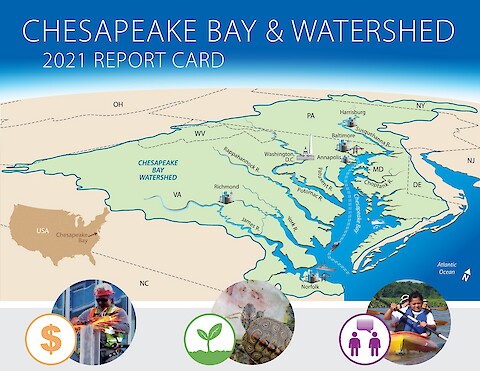
This report card provides a transparent, timely, and geographically detailed assessment of Chesapeake Bay and its Watershed. Since 2016, UMCES has engaged stakeholders throughout the watershed to transform the report card into an evaluation of the Chesapeake Watershed health. Watershed health includes traditional ecological indicators, but also economic and societal indicators. This is the fourth year the watershed has been scored, and one new ecological indicator has been added.
The first-ever Potomac River and Watershed Report Card was released in tandem with the 2022 Chesapeake Bay and Watershed Report Card this year. Every year, the Chesapeake Bay and Watershed are graded on a variety of ecological, social, and economic indicators. For 2022, the COAST Card Project took a closer look at the Potomac Watershed, a sub-watershed of the Chesapeake, to help inform decision-making in more focused areas throughout the watershed.
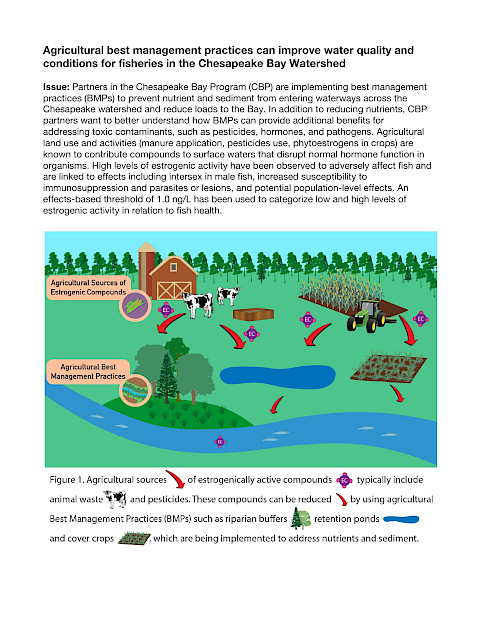
This publication serves as a summary of Gordon et al. (2022) and was prepared in collaboration between the USGS and the University of Maryland Center for Environmental Science, Integration and Application Network. The summary touches on key findings of the study along with management implications and applications. Please feel free to download the summary here or check it out on the USGS website:
Advancing the Coastal Ocean Assessment for Sustainability and Transformation Project in the Chesapeake Bay
Vanessa Vargas-Nguyen, Sidney Anderson, Lili Badri, and Bill Dennison ·
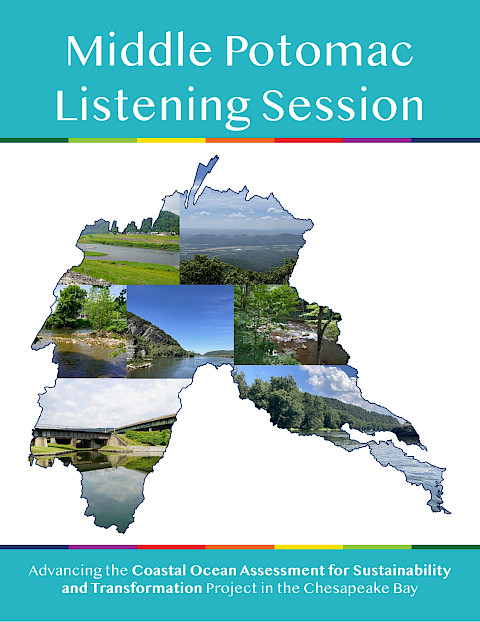
IAN Staff and the visiting Global Sustainability Scholars hosted a Middle Potomac Listening Session in July 2022 to begin developing the upcoming Potomac Watershed COAST Card.
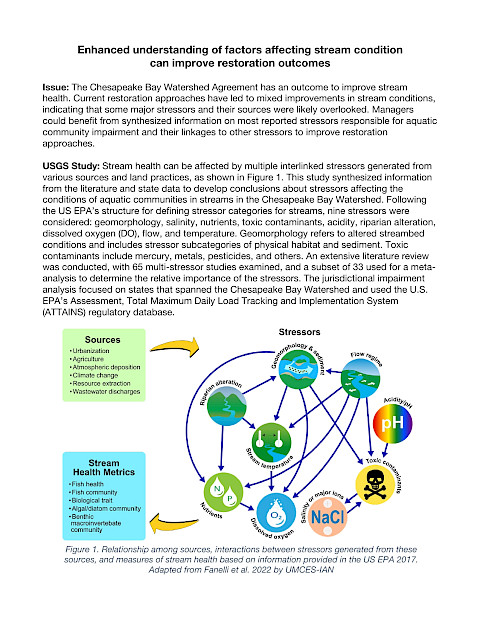
This publication serves as a summary of Fanelli et al. (2022) and was prepared in collaboration between the USGS and the University of Maryland Center for Environmental Science, Integration and Application Network. The summary touches on key findings of the study along with management, monitoring, and reseach applications. Please feel free to download the summary here or check it out on the USGS website:
This report card provides a transparent, timely, and geographically detailed assessment of Chesapeake Bay and its Watershed. Since 2016, UMCES has engaged stakeholders throughout the watershed to transform the report card into an evaluation of the Chesapeake Watershed health. Watershed health includes traditional ecological indicators, but also economic and societal indicators. This is the third year the watershed has been scored, and four new economic indicators have been added.
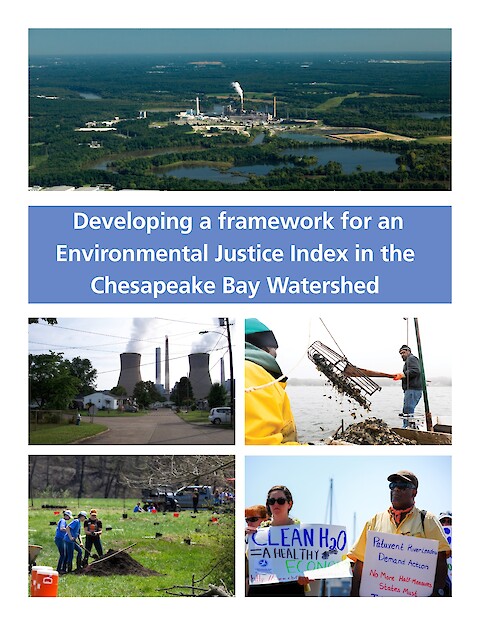
This newsletter summarizes the findings of a MEES course entitled “Developing an Environmental Justice Index for the Chesapeake Bay Watershed Report Card,” conducted in spring 2021. A video was also produced and can be found here: https://youtu.be/28siz8Eok4g
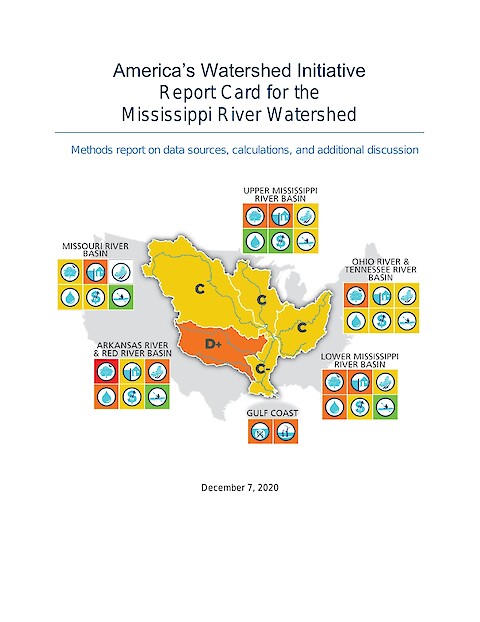
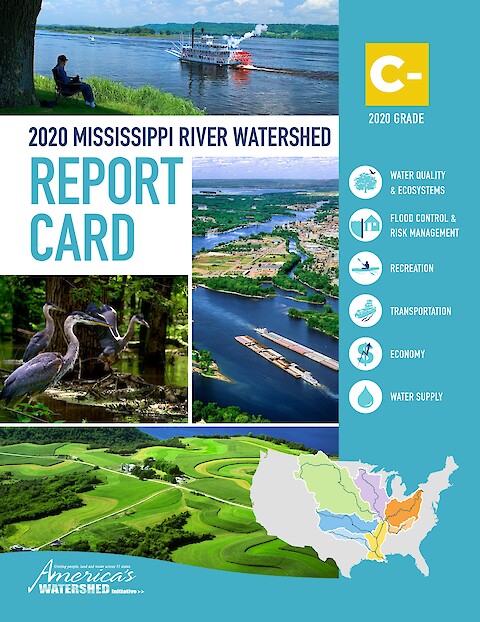
This companion document to the 2020 Mississippi River report card contains information about data sources for all indicators, summary of analysis methods, and scoring details for each of the six America’s Watershed Initiative goals, and for two watershed wide indicators. Additional information regarding the goals is included to provide greater detail and discussion than is possible in the report card document.
Kimberly Lutz, Frank Morton, Bob Beduhn, Joan Freitag, Stephen Gambrell, Steve Mathies, Dan Mecklenborg, Michael Reuter, David Simmons, Larry Weber (Chair), Heath Kelsey, Vanessa Vargas-Nguyen, Katie May Laumann, Steven Guinn, Sky Swanson, Jane Hawkey. and AWI Board of Directors: Kimberly Lutz, AWI Executive Director Bob Beduhn, HDR Inc. Sean Duffy Sr., Big River Coalition Joan C. Freitag, Hanson Professional Services Stephen Gambrell, Mississippi Valley Flood Control Association Teri Goodmann, City of Dubuque, Iowa Steve Mathies, Stantec Consulting Services Dan Mecklenborg, Ingram Barge Company Frank Morton, Turn Services LLC Rachel Orf, National Corn Growers Association Michael Reuter, The Nature Conservancy Rainy Shorey, Caterpillar, Inc. Robert “Bob” Sinkler, Streamside Systems Inc, and Dawson & Associates BG (Ret.) C. David Turner, American Water Military Services Group Kirsten Wallace, Upper Mississippi River Basin Association Larry Weber, University of Iowa ·
Stretching across 31 US states and 2 Canadian provinces, America’s Watershed benefits millions of people and thousands of communities. It supports our many economic activities while remaining a natural and recreational treasure of global importance.
The process of developing a socioenvironmental report card through transdisciplinary collaboration can be used in any system and can provide the foundation for collaborative solutions for sustainable resource management by creating a holistic assessment that balances environmental, economic, and social concerns that incorporates multiple perspectives from multisectoral actors.