IAN is committed to producing practical, user-centered communications that foster a better understanding of science and enable readers to pursue new opportunities in research, education, and environmental problem-solving. Our publications synthesize scientific findings using effective science communication techniques.
1925 Chesapeake Bay Report Card (Page 1)

1925 Chesapeake Bay Report Card

Ann Foo, Lili Badri, Conor Keitzer, Alexandra Fries, Heath Kelsey, Bill Dennison, Dave Nemazie ·

The 1925 Chesapeake Bay Report Card was produced to celebrate the UMCES Centennial. Inspired by 1920s design, this report card offers a glimpse of what a Chesapeake Bay Report Card might have been like in 1925, when UMCES was founded. The state of the Bay in 1925 is not an accurate scientific assessment, but an estimation based on informed opinions and broad historical generalizations.

2025 Chesapeake Bay & Watershed Report Card (Page 1)

2025 Chesapeake Bay & Watershed Report Card

Ann Foo, Conor Keitzer, Lili Badri, Heath Kelsey, Alexandra Fries ·

This report card provides a transparent, timely, and geographically detailed assessment of Chesapeake Bay and its Watershed. Since 2016, UMCES has engaged stakeholders throughout the watershed to transform the report card into an evaluation of the Chesapeake Watershed health. Watershed health includes traditional ecological indicators, but also economic and societal indicators.

Reporte de salud de 1925 sobre la bahía de Chesapeake (Page 1)

Reporte de salud de 1925 sobre la bahía de Chesapeake

Ann Foo, Lili Badri, Conor Keitzer, Alexandra Fries, Heath Kelsey, Bill Dennison, Dave Nemazie ·

El Reporte de Salud de la bahía de Chesapeake de 1925 se elaboró ​​para celebrar el centenario de la UMCES. Inspirado en el diseño de la década de 1920, este informe ofrece una visión de cómo habría sido un Reporte de salud sobre la bahía de Chesapeake en 1925, cuando se fundó la UMCES. El estado de la bahía en 1925 no es una evaluación científica precisa, sino una estimación basada en opiniones fundamentadas, y generalizaciones históricas generales.

Boletín informativo de 2025 sobre la bahía de Chesapeake y su cuenca hidrográfica (Page 1)

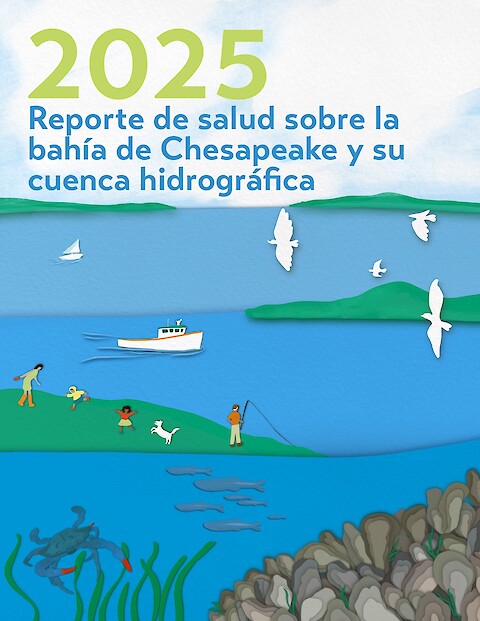
Reporte de salud de 2025 sobre la bahía de Chesapeake y su cuenca hidrográfica

Ann Foo, Conor Keitzer, Lili Badri, Heath Kelsey, Alexandra Fries ·

Este informe proporciona una evaluación transparente, oportuna, y geográficamente detallada de la bahía de Chesapeake y su cuenca. Desde 2016, UMCES ha involucrado a las partes interesadas de toda la cuenca para transformar el informe en una evaluación de la salud de la cuenca de Chesapeake. Los indicadores de la bahía evalúan la salud del ecosistema acuático, mientras que los indicadores de la cuenca hidrográfica cubren las condiciones ecológicas, sociales, y económicas.

Shaping the next generation of Chesapeake Bay report cards (Page 1)

Shaping the next generation of Chesapeake Bay report cards

Lili Badri, Vanessa Vargas-Nguyen ·

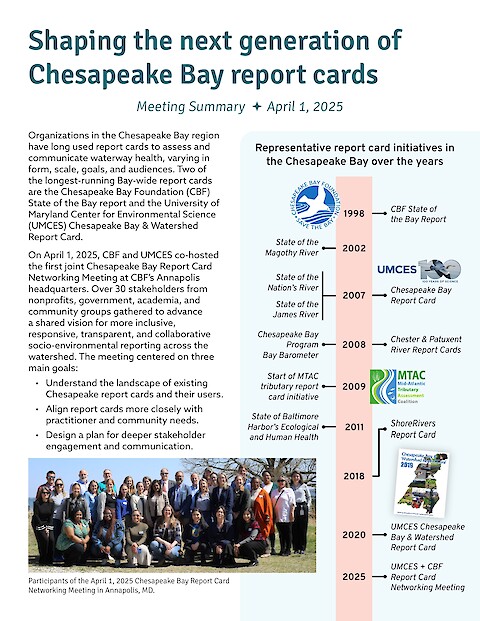
On April 1, 2025, the Chesapeake Bay Foundation (CBF) and University of Maryland Center for Environmental Science (UMCES) co-hosted the first joint Chesapeake Bay Report Card Networking Meeting at CBF’s Annapolis headquarters. Over 30 stakeholders from nonprofits, government, academia, and community groups gathered to advance a shared vision for more inclusive, responsive, transparent, and collaborative socio-environmental reporting across the watershed.

2023/2024 Chesapeake Bay & Watershed Report Card (Page 1)

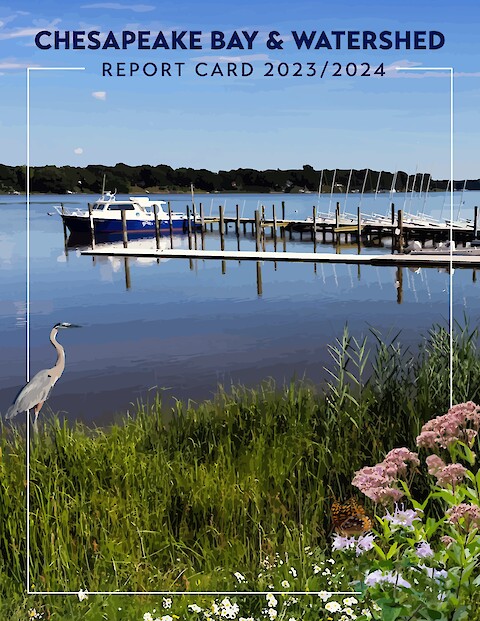
2023/2024 Chesapeake Bay & Watershed Report Card

Vargas-Nguyen V, Edgerton J, Nair R, Anderson S, Badri L, Lucchese V, Fife A, Kelsey H, Dennison B, Knauss C, Trenholm N ·

This report card provides a transparent, timely, and geographically detailed assessment of Chesapeake Bay and its Watershed. Since 2016, UMCES has engaged stakeholders throughout the watershed to transform the report card into an evaluation of the Chesapeake Watershed health. Watershed health includes traditional ecological indicators, but also economic and societal indicators.

Charting the Chesapeake: Uncovering the Mysteries of Microdebris (Page 1)

Charting the Chesapeake: Uncovering the Mysteries of Microdebris

Trenholm N, Knauss C ·

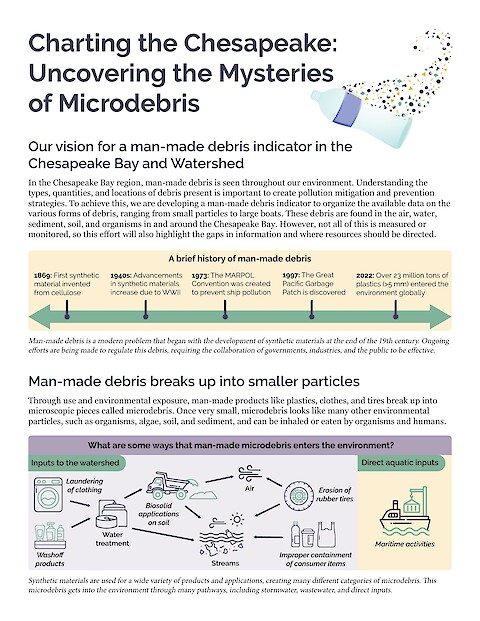
Man-made debris is found throughout the Chesapeake Bay and its watershed, but its status is largely unknown due to the lack of a monitoring framework. Recent research has aimed to collect data on this debris and develop methods for long-term monitoring. The goal is to use this data as an indicator in a future Chesapeake Bay & Watershed Report Card.

2022 Chesapeake Bay and Watershed Report Card (Page 1)

2022 Chesapeake Bay and Watershed Report Card

Vanessa Vargas-Nguyen, Alexandra Fries, Joe Edgerton, Bill Dennison, Sidney Anderson, Lili Badri, Veronica Malabanan Lucchese, Katie May Laumann, Heath Kelsey ·

This report card provides a transparent, timely, and geographically detailed assessment of Chesapeake Bay and its Watershed. Since 2016, UMCES has engaged stakeholders throughout the watershed to transform the report card into an evaluation of the Chesapeake Watershed health. Watershed health includes traditional ecological indicators, but also economic and societal indicators. This is the fourth year the watershed has been scored, and one new ecological indicator has been added.

2022 Potomac River and Watershed Report Card (Page 1)

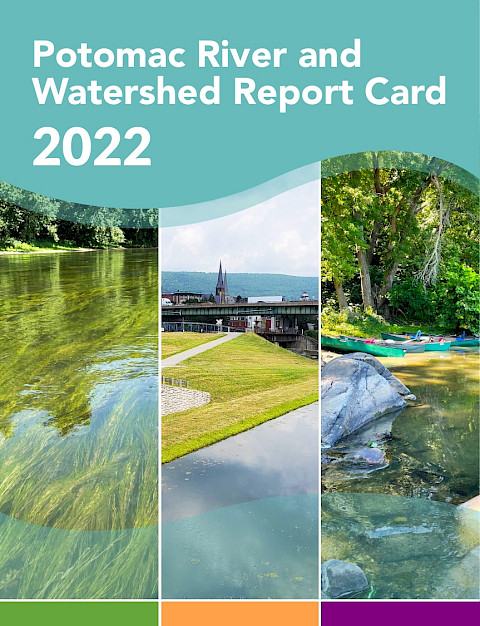
2022 Potomac River and Watershed Report Card

Vanessa Vargas-Nguyen, Bill Dennison, Lili Badri, Sidney Anderson, Joe Edgerton ·

The first-ever Potomac River and Watershed Report Card was released in tandem with the 2022 Chesapeake Bay and Watershed Report Card this year. Every year, the Chesapeake Bay and Watershed are graded on a variety of ecological, social, and economic indicators. For 2022, the COAST Card Project took a closer look at the Potomac Watershed, a sub-watershed of the Chesapeake, to help inform decision-making in more focused areas throughout the watershed.

Chesapeake Bay and Watershed 2021 Report Card (Page 1)

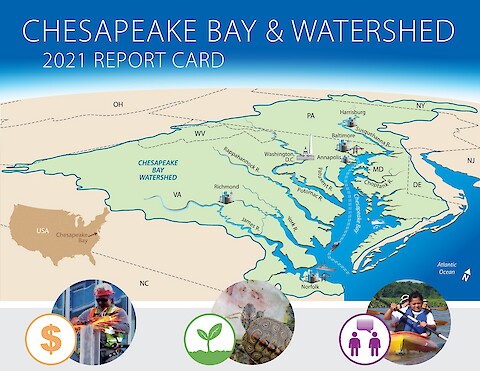
2021 Chesapeake Bay and Watershed Report Card

Vanessa Vargas-Nguyen, Sky Swanson, Annie Carew, Joe Edgerton, Heath Kelsey, Lili Badri, Lorena Villanueva-Almanza ·

This report card provides a transparent, timely, and geographically detailed assessment of Chesapeake Bay and its Watershed. Since 2016, UMCES has engaged stakeholders throughout the watershed to transform the report card into an evaluation of the Chesapeake Watershed health. Watershed health includes traditional ecological indicators, but also economic and societal indicators. This is the third year the watershed has been scored, and four new economic indicators have been added.