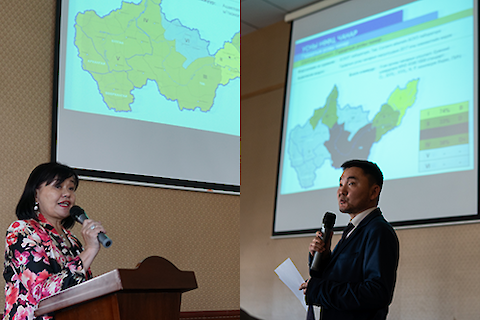
On October 28th, 2018 Simon Costanzo and I arrived in Ulaanbaatar, the capital city of Mongolia, for the beginning of a busy week of workshops and trainings. Healthy Rivers for All (a collaborative effort between the UMCES Integration and Application Network and the World Wildlife Fund) has been facilitating the creation of a river basin health report card for the Tuul River Basin, the major river running through the capital of Mongolia.
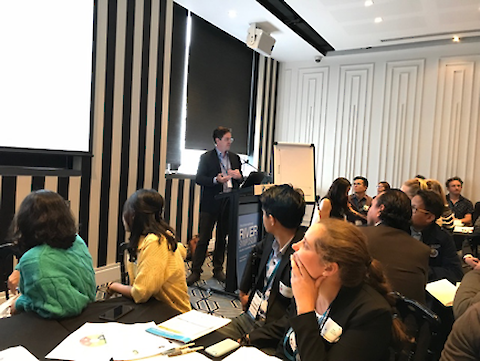
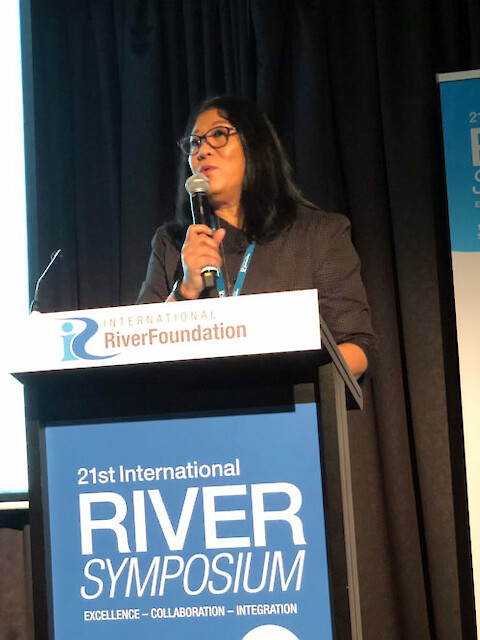
This October 2018, I attended the 21st International Riversymposium, continuing a long-standing tradition of presIANce at this meeting on river science and management. In fact, I recall the very first Riversymposium held in Brisbane in 1998 way back when I was still a student studying the very river system that is the namesake of the annual conference. Since those days much has changed for the conference, the Brisbane River, and Moreton Bay…. all for the better.
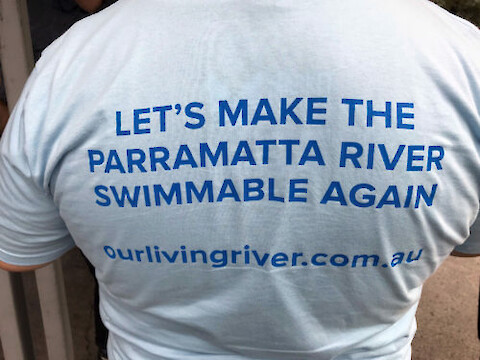
As part of the 21st International Riversymposium, a study tour of the Parramatta River was organized by the Parramatta River Catchment Group. The Parramatta River is the major river feeding into Sydney Harbour from the west. They were deserved finalists for the Bert and Vera Thiess Foundation Australasia Riverprize. Sarah Clift, Executive Director of the Parramatta River Catchment Group (PRCG), and her capable staff organized a great study tour.
The 21st annual International Riversymposium was held in Doltone House, Sydney, Australia 14-18 October 2018. I enjoyed the location right on the shore of Sydney Harbour and the food was superb. The theme of this year’s Riversymposium was ‘Embracing Innovation’.
Figure 1. The Bund area of Shanghai. Many of the buildings in this area are constructed on filled wetlands, much of which was built in the 1980’s. Photo credit: Heath Kelsey.
An annual highlight with the Chesapeake Bay Program (CBP) is the WebStock event that its Creative Team organizes. This year’s event was the largest ever, and was held at the beautiful headquarters of the Chesapeake Bay Foundation, overlooking Chesapeake Bay on 11 Oct 2018. WebStock is designed to communicate, collaborate, and educate the CBP staff and key partners about the activities of its Creative Team.
The Integration and Application Network (IAN) has been trying to evolve its work so that its societal impact can go beyond science communication and integration. Our recent delve into transdisciplinary science necessitates that we not only incorporate its concepts into our work but that we explore and adapt tools currently being used in the field.
At IAN we are constantly invested in various transdisciplinary projects. Transdisciplinary projects partner interdisciplinary research teams with stakeholders outside of academia to synthesize diverse knowledge and experience and generate novel insights on a particular topic. For example, when IAN develops report cards, our Science Integrators and Communicators work with partners to synthesize relevant information on a specific ecosystem and then communicate key messages to a targeted audience.
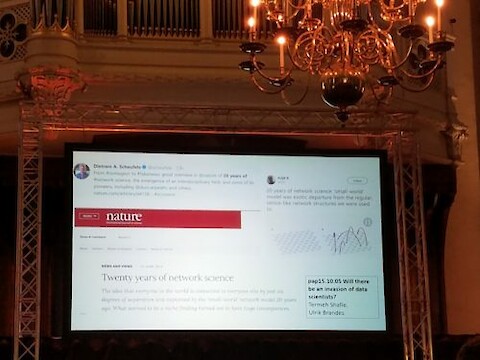
During the opening ceremony of the Sunbelt Social Network Conference that I attended last June (you can read my conference experience here), the article “Twenty years of Network Science” was mentioned. It emphasized the 20 years since Watts and Strogatz introduced the ‘small-world’ model of networks, which initially was viewed only as the explanation for the popular social network idea of Six degrees of Separation.
It makes me cringe a little to remember the debriefing that followed our May workshop on the Everglades report card project. The IAN team was complimented for keeping the project on track. “Great job at herding cats,” they said, referring to our ability keeping a meeting of scientists on track. There was just one loose thread that needed to be tidied up. But, then the “cats” got hold of it, and for a moment it seemed that things might unravel.