Let's take a trip around the world and look at five examples. I'm going to do two examples from North America that I have been working with; the Chesapeake Bay on the east coast, and coastal Louisiana--the mouth of the Mississippi River with marshes and the city of New Orleans. Let's look at the two major floods and how people have responded to those floods. They happened in 2003 for the Chesapeake and 2005 for Louisiana. In the Chesapeake there was a large hurricane called Isabel.
Another legacy of what happened here was the whole idea of healthy waterways, and how that relates to healthy catchments, and healthy parks. In Victoria, their whole catchphrase is healthy parks, healthy people. So they are making the connection between the health of the ecosystem, and human health. One of CSIRO's flagships is water for a healthy country.
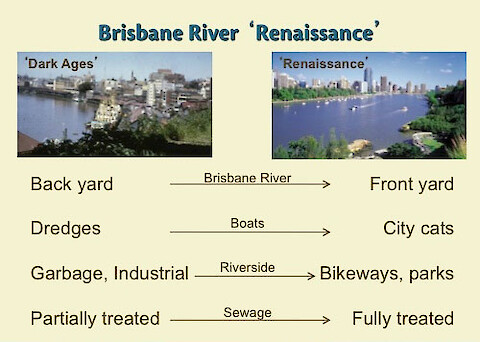
One of the issues that has presented itself is that we've had a renaissance of the Brisbane River. When I moved here in 1992, I call it the dark ages, because the Brisbane River was the back yard of the buildings. It was being dredged for sand and gravel. Every day there was a coral dredge that would go back and forth, and now we have the buildings facing the front yard, we have the CityCat ferries. There was garbage, it was industrial, and now we have bikeways and the South Bank parklands.
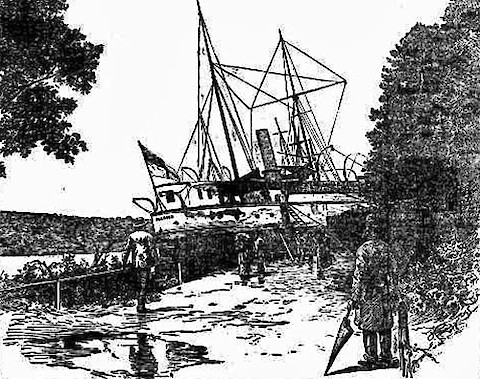
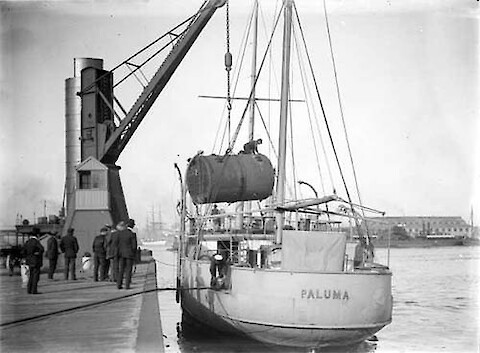
You can take a walk down the street to the Botanic Gardens; you can find a little park there; the Paluma Park. And that's to commemorate the location where a large gunship washed up into the Botanic Gardens in February, 1893. Interesting story, the Paluma was a gunship that was commissioned by the Queensland government. There were two gunships, the Gayundah and the Paluma, which were built because of the Russians.
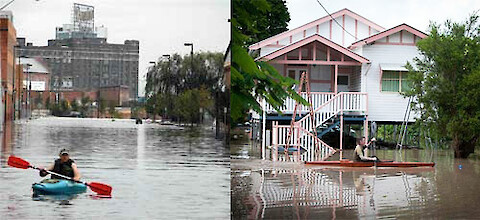
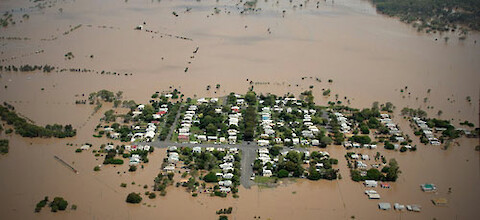
We really did have a learning moment. This is needed regarding the flooding and the impact of the flooding. We had two kinds of floods. We had the flash flooding that occurred up the Lockyer, and we had the riverine flooding that occurred in Ipswich and in Brisbane. The flash flooding, which is water coming down, was intense rainfall. We had two hundred millimeters in one hour, substantial amounts of rainfall leading to the rapid rise of water.
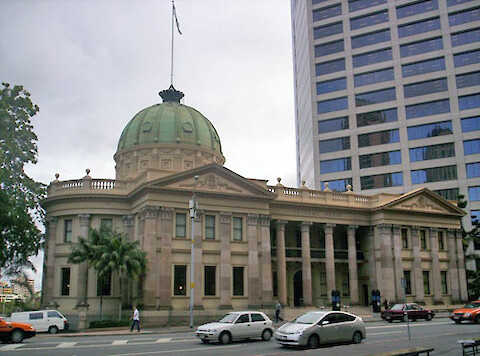
A seminar entitled 'Brisbane 2011: Living with Floods and Dancing with Dugongs' was presented on 8 July 2011. The seminar was sponsored by the University of Queensland Global Change Institute, and delivered at the historic Customs House in downtown Brisbane, situated along the shore of the Brisbane River. The following fifteen part blog series captures the talk, the question/answer section and the actual 'Dancing with Dugongs'. The Customs House in downtown Brisbane, Australia (Credit:
The story of the naval survey ship Paluma that was cast up into the Botanic Gardens in February 1893 and refloated two weeks later is part of Brisbane lore, and I decided to track down the story about how the Paluma was refloated. I went to the Queensland State Library archive section and was impressed with the beautiful library and helpful staff.
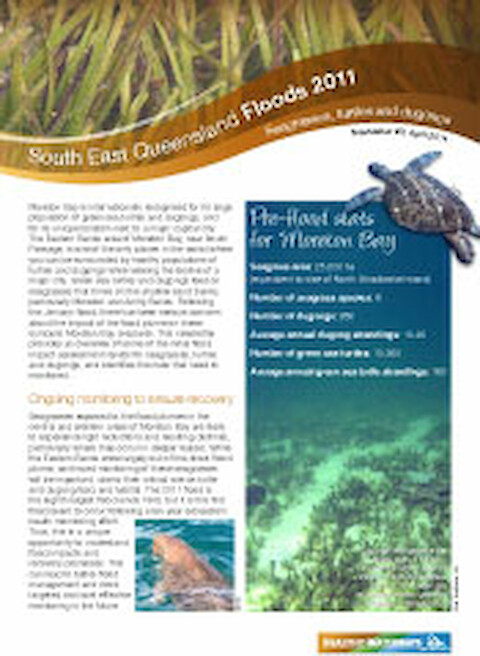
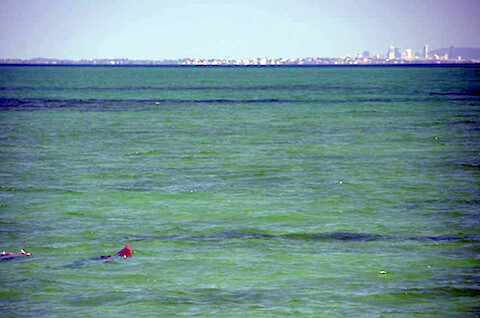
This newsletter was interesting to assemble, as it involved talking with lots of active scientists about their current knowledge of seagrasses, sea turtles and dugongs. The flood impacts on these Moreton Bay icons was of concern to everyone involved. I also made visits to eastern Moreton Bay where the densest concentrations of seagrasses, turtles and dugongs are found (see previous blogs: Feb. 16 & Apr. 6).
Moreton Bay, adjacent to Brisbane, the Capital of Queensland, Australia, supports large populations of green sea turtles (Chelonia mydas) and dugong (Dugong dugon). The turtles and dugong feed on seagrasses growing on the shallow sand banks of Eastern Moreton Bay. These shallow sand banks are flushed with clean ocean water that enters and exits Moreton Bay through an opening (South Passage) between the large sand islands, North Stradbroke and Moreton Islands.
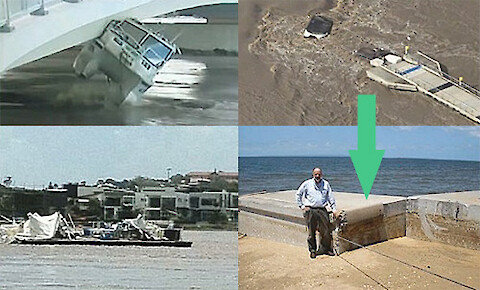
This newsletter was interesting to put together, as it involved looking through hundreds of photographs of flood damage in the Moreton Bay watershed. Some of the photos were staggering. There were photos of tractors and automobiles crushed like small tin cans, a time sequence of water rising over a farm shed within minutes, streambeds stripped down to the bedrock, and tree roots exposed instead of being buried deep in soil.