The Arctic Ocean, its surrounding land masses, and the people and animals that depend on arctic ecosystems are changing rapidly. Global climate change is particularly acute in the arctic, with large scale biophysical changes evident, leading to ecological and social impacts. One of the Collaborative Research Actions (CRA) initiatives by the Belmont Forum is addressing the changing arctic.
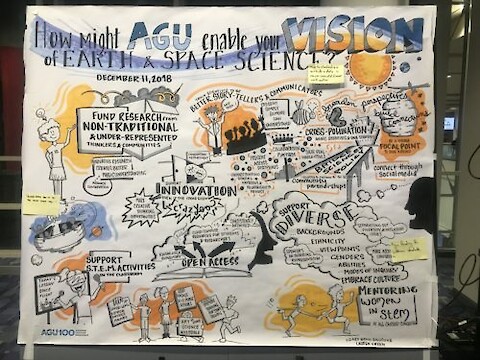
Every fall, the American Geophysical Union hosts the largest meeting of Earth and space scientists from around the world for a week of workshops, presentations, field trips, networking events, and so much more. Rumored to have had more than 27,000 attendees this year, it’s an impressively large and exciting conference, overflowing with opportunities to learn, share, and network.
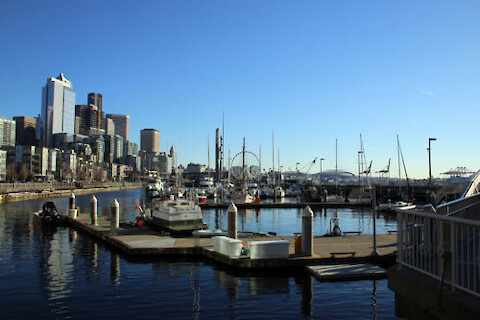
View of Downtown Seattle from the waterfront. Photo credit: Yesenia Valverde. Last month, the IPCC released its special report, Global Warming of 1.5°C , a report requested by the Paris Agreement to detail the projected impacts of a 1.5°C rise in global temperature. It is of crucial importance to note that, according to the report, we as a global society are not currently on track to maintain warming below 1.5°C. Sobering, the report is an immediate call to action.
The Integration and Application Network (IAN) teamed up with the Belmont Forum for a synthesis workshop on 8-10 Dec 2018 in Washington, D.C. IAN staff facilitated the workshop, which Belmont Forum calls a "valorization workshop" with three groups of projects, identified by the Belmont Forum as Collaborative Research Actions (CRAs). The three CRAs were 1) "Food security and land use change", 2) "Arctic observing and science for sustainability", 3) "Mountains as sentinels of change".
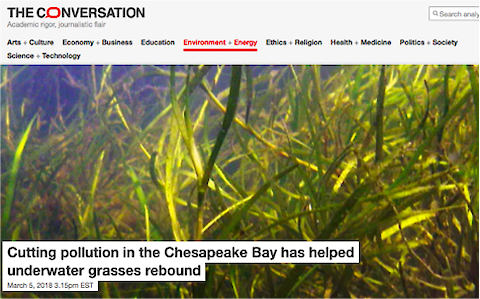
The Integration and Application Network (IAN) had an eventful and exciting year. We were able to report some really good news in the improvements in the health of Chesapeake Bay and Maryland Coastal Bays with our annual report cards. In addition, the publication of a scientific synthesis paper that IAN staff helped generate was able to reach a broad audience. This paper identified that the nutrient reductions into Chesapeake Bay were leading to ecosystem health improvements.
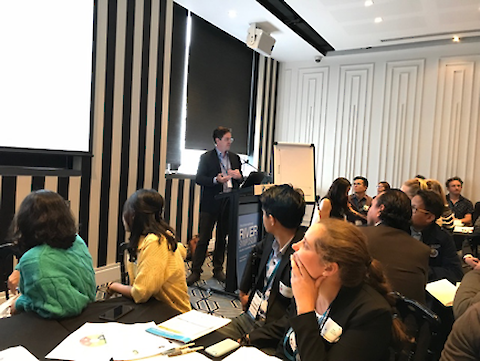
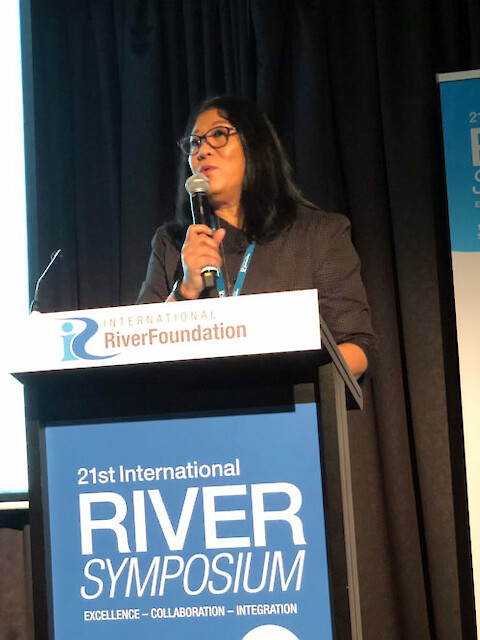
This October 2018, I attended the 21st International Riversymposium, continuing a long-standing tradition of presIANce at this meeting on river science and management. In fact, I recall the very first Riversymposium held in Brisbane in 1998 way back when I was still a student studying the very river system that is the namesake of the annual conference. Since those days much has changed for the conference, the Brisbane River, and Moreton Bay…. all for the better.
It was just before 8am on a Saturday, a phrase that should never be said out loud. I was standing in Starbucks, waiting for the employees to hand me a slice of lemon cake. Why I had to wait in a drink line for a piece of cake is one of the great mysteries in life that I will never know, but I had a bigger question on my mind:
The 21st annual International Riversymposium was held in Doltone House, Sydney, Australia 14-18 October 2018. I enjoyed the location right on the shore of Sydney Harbour and the food was superb. The theme of this year’s Riversymposium was ‘Embracing Innovation’.
Scott Fitzgerald once wrote that “the test of a first-rate intelligence is the ability to hold two opposed ideas in the mind at the same time, and still retain the ability to function.” When it comes to the environment, this is a test that many of us have not passed yet. On the one hand, humans introduce massive amounts of nitrogen into ecosystems (think fertilizers and animal manure). As a result, we see runaway algae production and low-oxygen dead-zones worldwide.
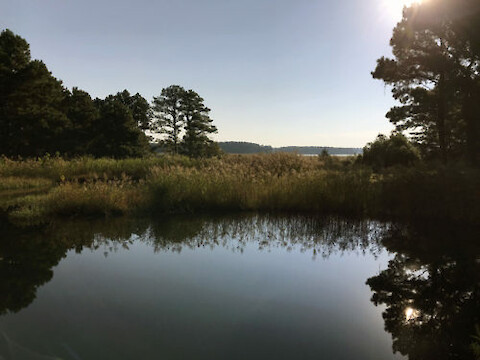
Just fifteen minutes past the Bay Bridge, nestled within the sanctuary of Prospect Bay on the Eastern Shore, lies the idyllic Chesapeake Bay Environmental Center--a perfect setting for this year’s IAN staff retreat. Last Wednesday, staff members--coming from Cambridge, Annapolis, and even Rochester, NY--made the trip to the CBEC for the annual tradition of team-building and workshopping as part of an ever-ongoing effort to improve IAN.