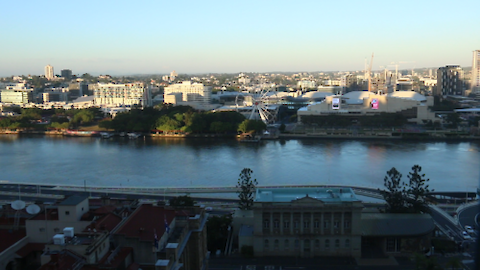
The Brisbane skyline, as seen from our hotel balcony. Image credit: James Currie … I recently had the opportunity to travel with Dr. Bill Dennison to Brisbane, Australia. We planned to conduct a variety of interviews with scientists, stakeholders, and policymakers on the Healthy Waterways Project. It was to be my first time ‘down under,’ and I was excited to glimpse the southern hemisphere. When we arrived, the first thing that struck me was the heat.
I recently had the opportunity to attend the International Science of Team Science Conference in Galveston, Texas, from May 21-23. This conference was unique in that it convened researchers and practitioners from all professions and academic backgrounds who share the goals of "understanding and enhancing the processes and outcomes of collaborative, team-based research." As an interdisciplinary scholar who is interested in collaborative learning and science engagement…
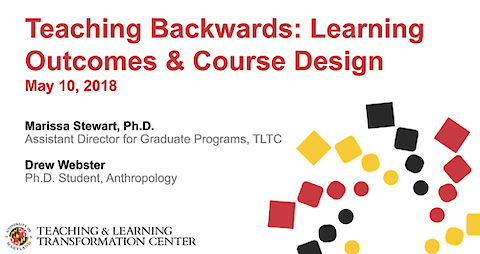
Science communication professionals at IAN regularly assume the roles of teachers when we develop semester-long courses, create science communication products intended to inform and engage diverse audiences, and facilitate collaborative workshops on a variety of topics all over the world.
One of my favorite quotes is by Wilbur Wright, from Dayton, Ohio. He said “If I were giving a young man advice as to how he might succeed in life, I would say to him, pick out a good father and mother, and begin life in Ohio.” I was incredibly fortunate to do exactly that.
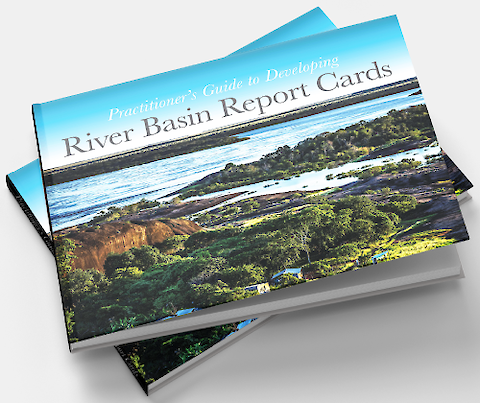
We recently completed our course entitled: "Healthy Rivers for All: Setting the course for sustainability with river basin health report cards". The course was co-taught by Heath Kelsey, Simon Costanzo and me, supported by Suzi Spitzer, our excellent teaching assistant. We used our recently completed book, "Practitioner's Guide to Developing River Basin Health Report Cards," as the textbook. Our lectures were based on content in our newly-published Practitioner's Guide.
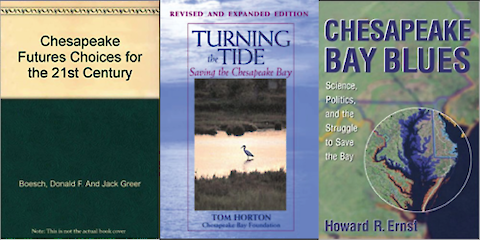
Sixteen years ago, in 2002, I returned to UMCES as Vice President for Science Application. I was shocked at how much the Chesapeake Bay had degraded in my ten-year absence. In addition to the “Pfiesteria Hysteria,” chronic dead zones occurred each summer, mahogany tides were recurrent, crab harvests were down, oysters were virtually gone, and the water was visibly turbid. In the following year, 2003, three books were published that chronicled the woes of Chesapeake Bay:
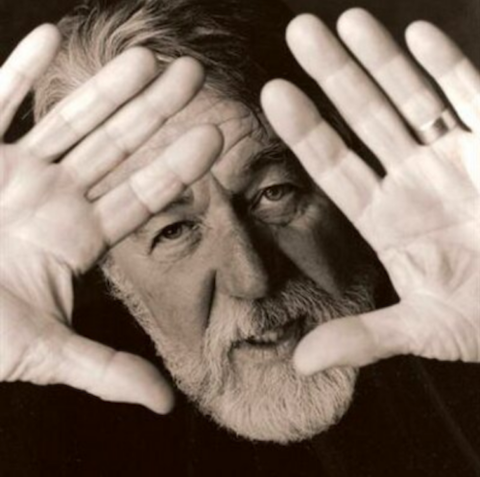
Love, fifteen, thirty, and forty are tennis scores, but they also represent my relationship with Chesapeake Bay. On November 29, 2017, I gave a presentation at the Chesapeake Bay Maritime Museum (CBMM) as part of a four-part series about the Chesapeake photographer Robert de Gast (1936-2016). Through April of this year, CBMM is exhibiting 80 photographs curated from more than 10,000 by de Gast in their collection. My talk was titled “After de Gast:
At the request of Kathy Stecker from the Maryland Department of Environment, Steve Raabe from Opinion Works and I partnered in a session at the annual Maryland Water Monitoring Council meeting held at the Maritime Conference Center in Linthicum, MD. We called our session “Communicating Challenges and Successes in a Changing World.” The Integration and Application Network has collaborated with Steve Raabe and Opinion Works for many years, so this partnership was a natural fit.
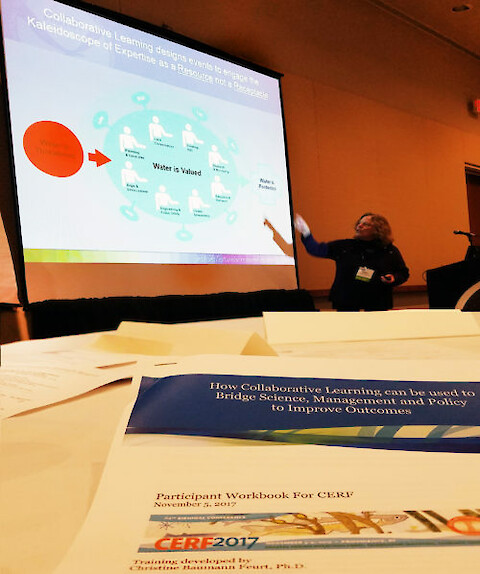
Last November 5, 2017, Suzi Spitzer and I attended a Collaborative Learning workshop during the 24th Coastal Estuarine Research Federation Conference in Providence, RI. The workshop was facilitated by Dr. Christine Baumann Feurt of the Wells National Estuarine Research Reserve Coastal Training Program. Attending this workshop was one of the highlights of my CERF experience.
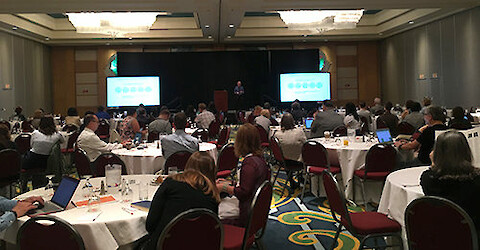
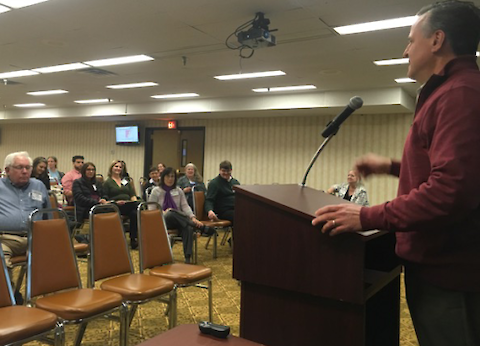
It was really encouraging to see the room fill up for my session at the Chesapeake Watershed Forum on the Friday afternoon of November 3rd. The room seated 46 people, and nearly every chair was taken. I was holding not only the first session of the conference, but the first session I’ve ever taught, at the first conference I’d ever visited. I really wasn’t sure what to expect.