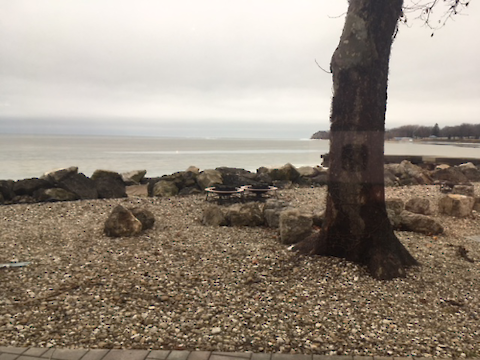
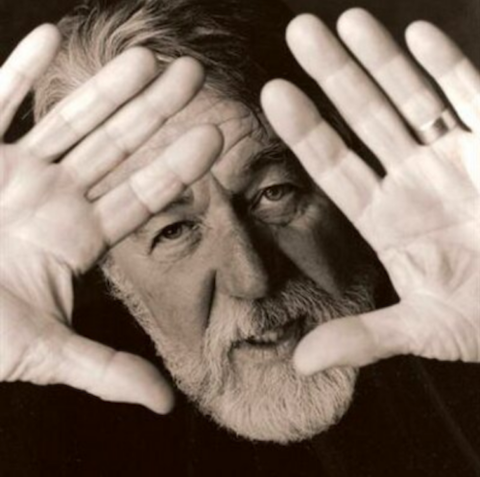
Robert De Gast. Photograph property of the Chesapeake Bay Maritime Museum.

A Long Love Affair With Chesapeake Bay Part I

Bill Dennison · Science Communication | 

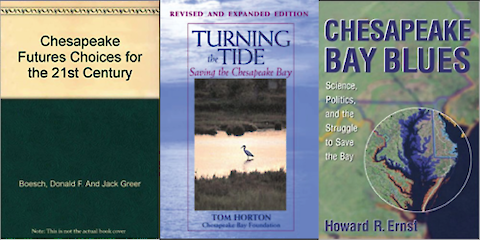
Love, fifteen, thirty, and forty are tennis scores, but they also represent my relationship with Chesapeake Bay. On November 29, 2017, I gave a presentation at the Chesapeake Bay Maritime Museum (CBMM) as part of a four-part series about the Chesapeake photographer Robert de Gast (1936-2016). Through April of this year, CBMM is exhibiting 80 photographs curated from more than 10,000 by de Gast in their collection. My talk was titled “After de Gast:

Group photo of Healthy Rivers for All team.

Healthy Rivers for All: December 2017 retreat

Bill Dennison ·    1 comments

Group photo of Healthy Rivers for All team. We held a two-day retreat with our WWF colleagues at Horn Point Laboratory in December 2017. This gathering was somewhat melancholy because it was our last retreat with Simon Costanzo and Karin Krchnak. Simon is no longer based in the US, having moved back to Australia. Karin left WWF in early January 2018 to join the World Bank as the Manager of the 2030 Water Resources Group.

Steve Raabe, Opinion Works, presenting at the Maryland Water Monitoring Council meeting. Image credit Bill Dennison.

Talk Less, Show More: Communicating Challenges and Successes in a Changing World

Bill Dennison · Science Communication | 

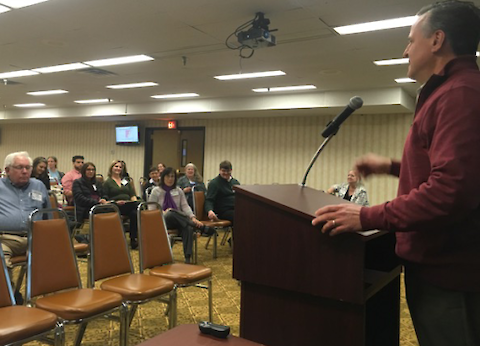
At the request of Kathy Stecker from the Maryland Department of Environment, Steve Raabe from Opinion Works and I partnered in a session at the annual Maryland Water Monitoring Council meeting held at the Maritime Conference Center in Linthicum, MD. We called our session “Communicating Challenges and Successes in a Changing World.” The Integration and Application Network has collaborated with Steve Raabe and Opinion Works for many years, so this partnership was a natural fit.

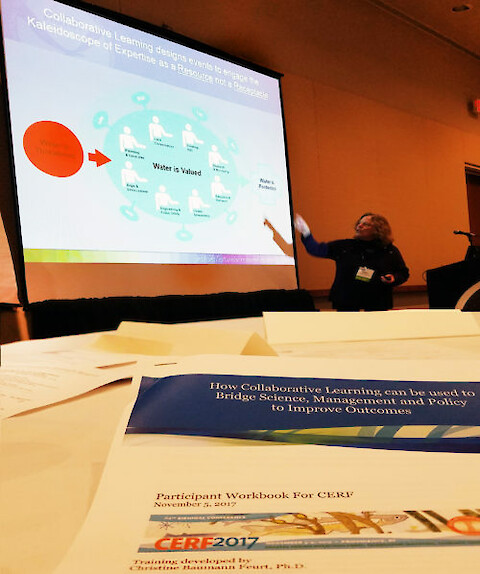
Dr. Chris Feurt facilitated the Collaborative Learning workshop during the CERF conference.

Using the Collaborative Learning framework to improve IAN’s report card development process and outcome

Vanessa Vargas-Nguyen · Science Communication | 

Last November 5, 2017, Suzi Spitzer and I attended a Collaborative Learning workshop during the 24th Coastal Estuarine Research Federation Conference in Providence, RI. The workshop was facilitated by Dr. Christine Baumann Feurt of the Wells National Estuarine Research Reserve Coastal Training Program. Attending this workshop was one of the highlights of my CERF experience.

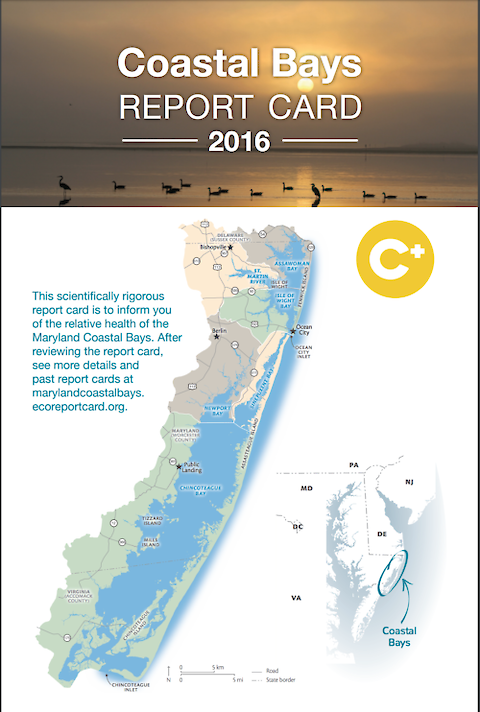
Cover of the 2016 Coastal Bays Report Card.

Maryland Coastal Bays Report Card 2016

Bill Dennison · Environmental Report Cards | 

The 2016 report card for the Maryland Coastal Bays was released on December 16th, 2017, at the Ocean City Marlin Club. The report card release was combined with the annual Gold Star Awards banquet. This event was scheduled a little later than usual due to some data processing holdups. In addition, aerial surveys of seagrasses could not be conducted in the summer of 2016 due to bad weather conditions.

Prehistoric cave painting of a cow. Image credit here

You Can’t Spell Earth Without Art

Emily Nastase · Science Communication |     1 comments

It was really encouraging to see the room fill up for my session at the Chesapeake Watershed Forum on the Friday afternoon of November 3rd. The room seated 46 people, and nearly every chair was taken. I was holding not only the first session of the conference, but the first session I’ve ever taught, at the first conference I’d ever visited. I really wasn’t sure what to expect.

A view of Providence from the Rhode Island Convention Center where CERF was held this year.

Mapping UMCES staff at CERF: A Fun Exercise in Networks and Impacts

Dylan Taillie ·

The bi-annual conference of the Coastal and Estuarine Research Federation (CERF) took place November 5-9, 2017, in Providence, Rhode Island. I was able to attend in order to present about a paper that I co-authored with multiple colleagues from the University of Maryland Center for Environmental Science (UMCES), as well collaborators from other institutions. This paper is called New York Harbor: Resilience in the Face of Four Centuries of Development.

IAN staff pose for a picture.

The Integration and Application Network in 2017

Bill Dennison ·

The Integration and Application Network (IAN) had an eventful and action-packed year. Several major transitions occurred during 2017: we moved into a new Annapolis office, developed our first IAN Strategic Plan and initiated our self-reflective IAN report cards. IAN staff taught or co-taught four courses:

Emily Nastase worked hard at the Knauss Course. Image credit Jamie Currie

Talking Science Communication With the Knauss Fellows

Bill Dennison · Science Communication | 

On 2-3 Dec 2017, fourteen Knauss Fellows had a science communication training retreat on the Horn Point Laboratory campus. The Integration and Application Network (IAN) has been training Knauss Fellows annually since 2013 and each year has been a lot of fun. The IAN team this year included Emily Nastase, Jamie Currie, Dylan Taillie, Caroline Donovan, and Bill Dennison. Emily Nastase worked hard at the Knauss Course.

Nick DiPasquale at the 2016 Chesapeake report card release. Maryland Senator Ben Cardin is listening.

Twas the Weeks Before Christmas: Saying Goodbye to Nick DiPasquale

Bill Dennison ·    1 comments

Nick DiPasquale, who served as the Chesapeake Bay Program Director for the past six and a half years, retired December 31st, 2017. Following retirement, Nick will be living in Chestertown, Maryland. He has promised to stay active and vocal regarding Chesapeake Bay issues. In fact, Nick’s last few talks have been very candid and heartfelt.