Riversymposium logo. Image credit here

Evolution of The Report Cards in Brisbane: Part One

Heath Kelsey · Environmental Report Cards | 

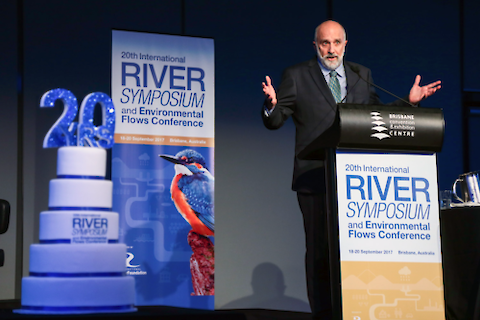
Bill Dennison, Simon Costanzo and I made our annual pilgrimage to Riversymposium in September 2017 for the 20th anniversary of the event. This year the conference was back in Brisbane, Australia (it was held in Delhi in 2016). This is one of my favorite conferences, maybe because the City of Brisbane has become so comfortable for me, but I think it’s really the quality of the content, the clear focus on practices that create real impact, and the wonderful people I get to meet.

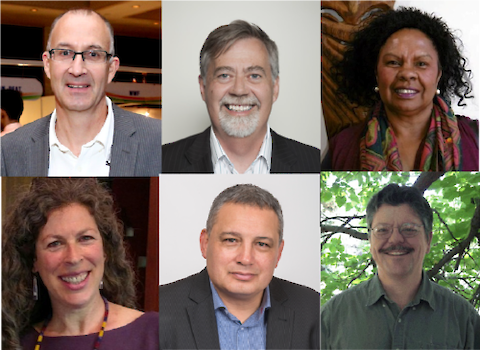
From top left to bottom right: Dr. Bill Young, Mr. David Papps, Dr. Anne Poelina, Dr. Eloise Kendy, Mr. Gerrard Albert, and Prof N Leroy Poff. Biographies found here.

The Twentieth Anniversary of the International Riversymposium

Bill Dennison ·

Heath Kelsey, Simon Costanzo and I traveled to Brisbane, Australia to participate in the International Riversymposium. One of the things I most appreciate about the Riversymposium is the overall quality of the plenary talks, and this year’s symposium was no exception. The major theme of this year’s Riversymposium was the ten-year anniversary of the Brisbane Declaration on the importance of environmental flows.

Bill Dennison talking at the River Symposium.

The Debut of the Riversymposium Club Band

Bill Dennison ·

As the 2017 Riversymposium approached, which is also the twentieth Riversymposium, I began to reminisce about the various symposia that I have attended ever since 1998. Bill Dennison talking at the River Symposium. The first line from the first album, Sgt. Peppers Lonely Hearts Club Band by the Beatles kept repeating in my mind: “It was twenty years ago today, Sgt. Pepper taught the Band to play . .

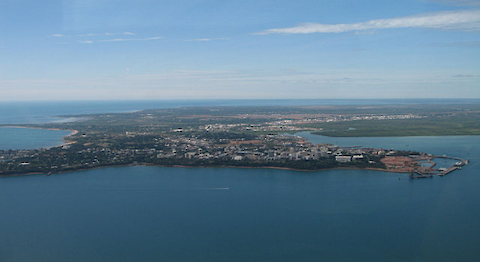
Darwin Harbour. Image credit here

Developing a vision for an integrated Darwin Harbour report card

Bill Dennison · Environmental Report Cards | Science Communication |     1 comments

I traveled to Darwin, the Capital city of the Northern Territory of Australia, in order to work with the Darwin Harbour Advisory Committee on developing a vision for an integrated report card for Darwin Harbour. Karen Gibb, Charles Darwin University professor and chair of the Darwin Harbour Advisory Committee, hosted my visit.

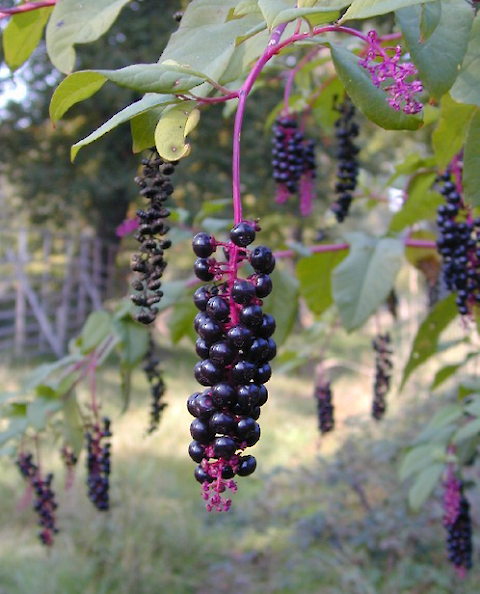
Pokeweed.

Walt Whitman and The Celebration of Nature

Claire Sbardella ·    2 comments

I celebrate myself, and sing myself, And what I assume you shall assume, For every atom belonging to me as good belongs to you. This is how Walt Whitman’s poem “Song of Myself” begins. With 52 sections, it is the longest poem in his book Leaves of Grass, and it is considered to be his most influential work. First published in 1855, critics consider both the poem and the overall books as American classics, and they remain extremely influential on poetry even today.

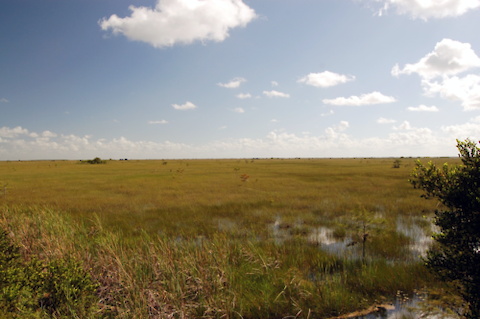
View over Shark River Slough from Pay-hay-okee overlook. Image credit Alexandra Fries

Exploring an Ecosystem in Transition: On the Road to Flamingo II

Bill Nuttle · Environmental Report Cards | 

View over Shark River Slough from Pay-hay-okee overlook. Image credit Alexandra Fries … We saw possible signs of the Everglades’ response to accelerated sea level rise at our next stop, the Pay-hay-okee overlook. Beyond Taylor Slough the road continues west through rocky pineland upland habitat before heading south through freshwater marl prairie. The overlook is built on the edge of Shark River Slough, the park’s other, larger flow way.

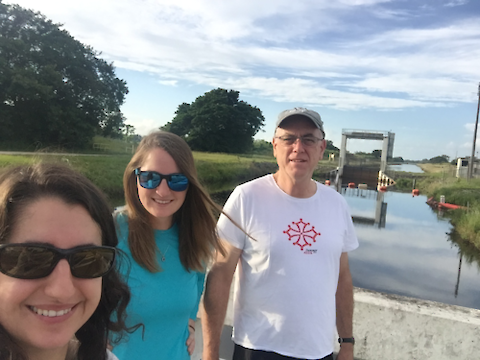
The IAN team at the C111 Canal - Alex Fries, Emily Nastase, and Bill Nuttle. Image credit Alexandra Fries

Exploring an Ecosystem in Transition: The Road to Flamingo

Bill Nuttle · Environmental Report Cards | 

The IAN team at the C111 Canal - Alex Fries, Emily Nastase, and Bill Nuttle. Image credit Alexandra Fries … The Florida Everglades is an ecosystem in transition, but is it transitioning toward a condition that people find desirable? This is a question that the Everglades report card may be able to answer. Currently, the Integration and Application Network is working with water managers and ecologists to incorporate an environmental report card into the Everglades 2019 System Status Report.

The Manhattan skyline as we approached our destination. Image credit Dylan Taillie

What Makes a Good Data Visualization?

Dylan Taillie · Learning Science | 

As the only two Science Communication Assistants on the Integration and Application Network’s little team, it was a great feeling for Emily Nastase and I to venture out on our own and attend a workshop in New York City in search of new ways to present data and expand our science visualization toolboxes. The workshop fell on Monday, August 21st - the same day as the eclipse! - down in Midtown Manhattan, at the Dolby Theatre on 54th St.

At the foot of the World Trade Center. Image credit James Currie

Billion Oyster Conference and New York City Part 2: Shifting Baselines in America

Jamie Currie · Science Communication | 

In late June, I accompanied Dr. Judy O’Neil into New York City for the Billion Oyster Project’s annual symposium. Before attending the conference, which I wrote about in another blog, I spent part of an afternoon exploring Manhattan. I spent most of my time wandering past the 9/11 memorials and new buildings. I ate cheap (but shockingly good) pizza, visited Wall Street, and even took the time to write a quick note to myself: At the foot of the World Trade Center.