IAN is committed to producing practical, user-centered communications that foster a better understanding of science and enable readers to pursue new opportunities in research, education, and environmental problem-solving. Our publications synthesize scientific findings using effective science communication techniques.
Dennison WC, Furukawa K, Nadaoka K, Vargas-Nguyen V, Anderson S ·
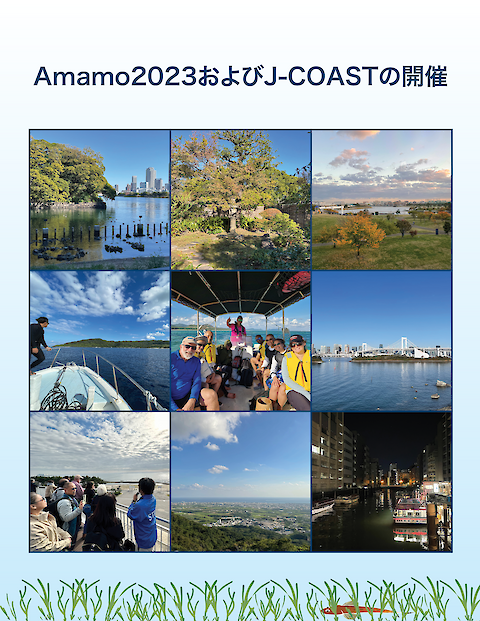
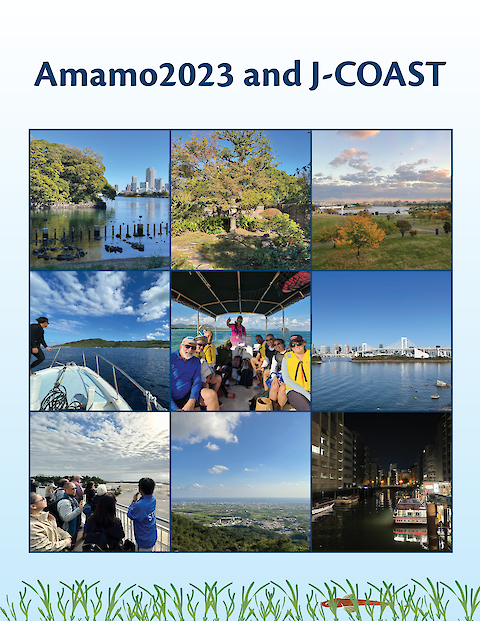
From November 17th to 22nd, the COAST Card team met in Tokyo, Japan for the Amamo2023 and JCOAST conference and meeting hosted at the Sasikawa Peace Foundation. While there, team members listened to and presented talks on seagrass, blue carbon, science communication, and the COAST Card Project. They visited various places around Tokyo that are of interest to the COAST Card Project or serve as sites of engagement and restoration events.
Dennison WC, Furukawa K, Nadaoka K, Vargas-Nguyen V, Anderson S ·
From November 17th to 22nd, the COAST Card team met in Tokyo, Japan for the Amamo2023 and JCOAST conference and meeting hosted at the Sasikawa Peace Foundation. While there, team members listened to and presented talks on seagrass, blue carbon, science communication, and the COAST Card Project. They visited various places around Tokyo that are of interest to the COAST Card Project or serve as sites of engagement and restoration events.
Vargas-Nguyen V, Edgerton J, Nair R, Anderson S, Badri L, Lucchese V, Fife A, Kelsey H, Dennison B, Knauss C, Trenholm N ·
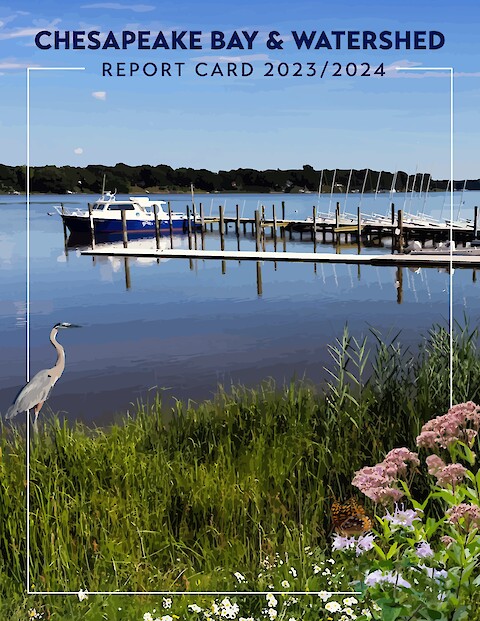
This report card provides a transparent, timely, and geographically detailed assessment of Chesapeake Bay and its Watershed. Since 2016, UMCES has engaged stakeholders throughout the watershed to transform the report card into an evaluation of the Chesapeake Watershed health. Watershed health includes traditional ecological indicators, but also economic and societal indicators.
Man-made debris is found throughout the Chesapeake Bay and its watershed, but its status is largely unknown due to the lack of a monitoring framework. Recent research has aimed to collect data on this debris and develop methods for long-term monitoring. The goal is to use this data as an indicator in a future Chesapeake Bay & Watershed Report Card.
Stakeholder Engagement is Key to Creating a Vision for the Future
William C. Dennison, Vanessa Vargas-Nguyen, Keita Furukawa, Sidney Anderson, Roshni Nair, Arga C. Anil, Rhodora V. Azanza, S. Lili Badri, Lourdes J. Cruz, Pål I. Davidsen, Dattesh V. Desai, Charissa Ferrera, Tom Gerald Genovia, Gil Jacinto, Lidita Khandeparker, Midori Kawabe, Masashi Kodama, Pheng Lor, Veronica M. Lucchese, Yasumasa Miyazawa, Yushi Morioka, Hilde Maria Nacorda, Kazuo Nadaoka, Takashi Nakamura, Aklilu Tilahun Tadesse, Hiroshi Yagi ·
To learn more about best practices for organizing, facilitating, and interpreting the responses from stakeholder engagement events, download our Tool Guide for Stakeholder Engagement in Coastal Communities here.
In the annual IAN Report Card, IAN staff reflect on accomplishments from 2023. The self-assessment is based on indicators in four categories: socio-environmental impacts, education and outreach, DEIJ (diversity, equity, inclusion, and justice) and partner engagement. IAN received an overall grade of C- (71%), a moderate score.
Las boletas de calificaciones de cuencas hidrográficas son herramientas poderosas que se utilizan en todo el mundo para describir el estado del ecosistema, aumentar la conciencia pública e informar a los responsables de la toma de decisiones. Esta es la primera iteración de boletas de calificaciones holísticas en el sudeste de Michigan. Estos documentos evalúan el estado de los propios ríos y de las cuencas circundantes.