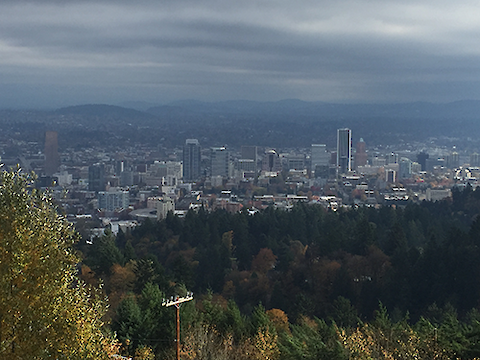
I had the privilege of attending the CERF Conference this year in Portland, Oregon. It was my first trip to Oregon, and visiting the Pacific Northwest was a really great experience. Before the Conference I had a few days to explore Portland including hiking in the Hoyt Arboretum, and visiting the Pittock Mansion.
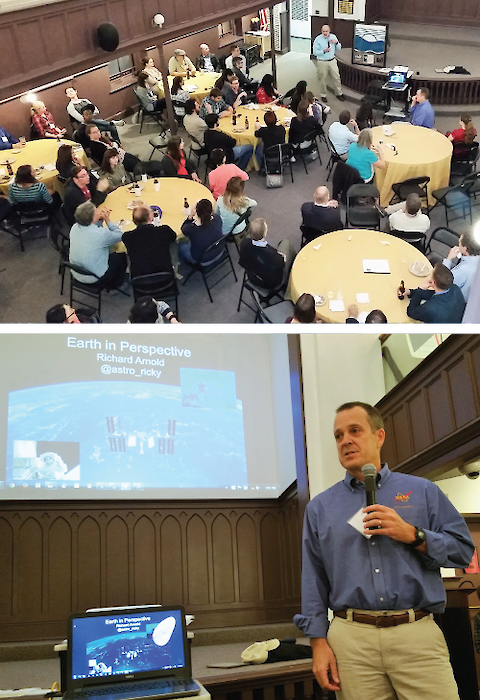
IAN hosted this year’s MEES Colloquium, offering students and faculty an opportunity to network and sharpen our science application and communication skills. The Colloquium sessions were previously described in more detail in the form of a poem blog post, written by Bill Dennison. NASA astronaut and MEES alumnus, Richard Arnold, served as our special guest speaker following the poster session and dinner on October 30th at the Banneker-Douglas Museum in historic downtown Annapolis.
This poem was written on the last day of the 2015 Marine, Estuarine, and Environmental Sciences (MEES) Colloquium held at Crowne Plaza Hotel in Annapolis, October 30-31, 2015, and hosted by the MEES goes to Annapolis … William C. Dennison … 31 October 2015 … A gathering of scientists of the MEES brand … From all over the state of Maryland … They developed a passion for understanding nature … For which there really is no cure.
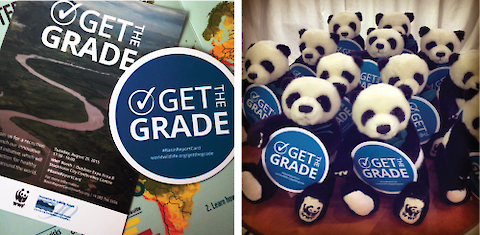
This blog is part of the Basin Report Card Initiative: a partnership between the World Wildlife Fund (WWF) and the University of Maryland Center for Environmental Science (UMCES) Our partnership with the World Wildlife Fund (WWF) was officially launched at World Water Week this past August 2015. This new partnership aims to widen the audience and uptake of report cards as an environmental management tool for river basins around the world.
In September, Simon Costanzo, Bill Dennison, and I had the opportunity to travel to Fairbanks, Alaska for a workshop focusing on the topic of ecological drought in the State of Alaska. The Department of the Interior Climate Science Centers (CSCs) and their managing organization, the National Climate Change and Wildlife Science Center at the U.S. Geological Survey, have chosen the emerging climate science field of ecological drought as a research focus area.
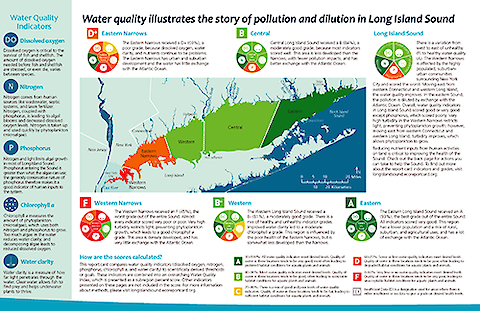
Caroline Donovan and I were invited to speak at the joint meeting of the Long Island Sound’s Citizens Advisory (CAC) and Science and Technical Advisory Committees (STAC). After completing the Long Island Sound Report Card in June, they asked us to give some wrap up and next steps information for where the report card is going in the future. Overall, the Long Island Sound report card included water quality, human health, and ecosystem/habitat indicators.
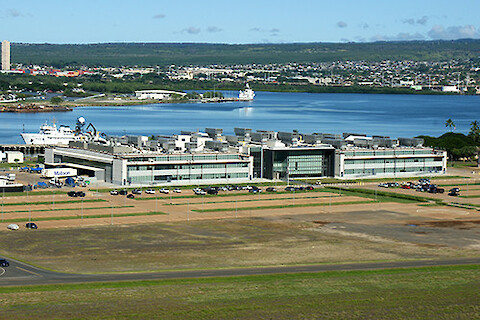
Heath Kelsey, Caroline Donovan, and I traveled to Honolulu, Hawaii to conduct a workshop to kick off the development of a report card for the coral reefs of American Samoa.
Coastal scientists have an important role helping communities become more resilient by telling people what changes can be expected from climate change and sea level rise. But, how can you tell people about change that is coming, in a way that makes it tangible for people and motivates them to act, when the extent of that change goes beyond what many can even imagine.
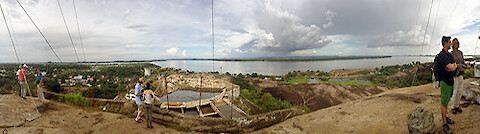
This blog is part of the Basin Report Card Initiative: a partnership between the World Wildlife Fund (WWF) and the University of Maryland Center for Environmental Science (UMCES) On August 9th, 2015, Simon Costanzo and I traveled from Bogota, Colombia to Puerto Carreño, Vichada, Colombia for the Bita River Report Card Workshop. This was the second of three workshops that will occur in Colombia, to develop report cards for three tributaries of the Orinoco River.
Caroline Donovan and I participated in the Mid-Atlantic Volunteer Monitoring Conference in Winchester, Virginia last month. This conference focused on volunteer monitoring efforts in Virginia, Maryland, Pennsylvania, Delaware and West Virginia. The theme was bridging the water quality data gap, and the way to do this proposed as expansion and improvement of volunteer monitoring efforts.