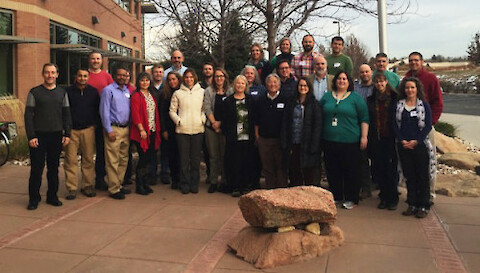
Participants at the North Central Climate Science Center ecological drought workshop.

From the mountains to the prairies—discussing ecological drought in the North Central United States

Brianne Walsh · Science Communication | Applying Science | 

In December, Simon Costanzo, Bill Dennison, and I traveled to Fort Collins, Colorado for a workshop on ecological drought - part of an ongoing project with the USGS National Climate Change and Wildlife Science Center. This was the second in a series of eight workshops to be held at each of the nation’s eight Climate Science Centers, aimed at collating our existing knowledge of the ecological impacts, resistance, and recovery from drought.

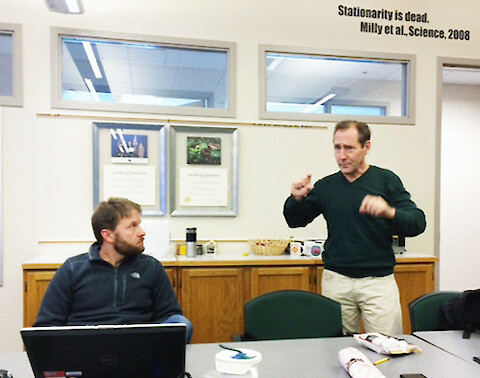
Colin Talbert and Jeff Morisette in the Resource for Advanced Modeling facility.

Viewing data on a VisWall and in an immersive dome in Fort Collins, Colorado

Bill Dennison · Science Communication | Applying Science | Learning Science |     2 comments

Jeff Morisette, Director of the North Central Climate Science Center, provided us with two amazing opportunities following our workshop on climate issues in the North Central region of the United States. First, we were treated to demonstrations of the VisWall, a bank of 24 computer monitors run by a series of networked computers. The VisWall facility was in the USGS Fort Collins Science Center adjacent to the Colorado State University campus.

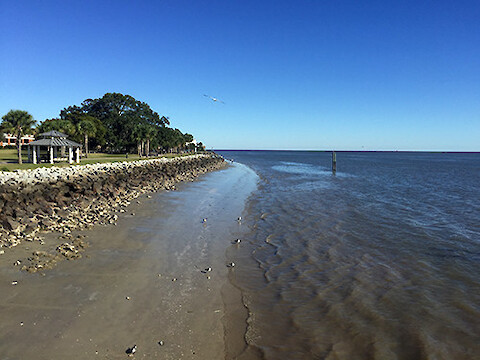
Coastal Georgia has a huge tidal range, as seen in this photo from St. Simon’s Island. This was one of the many things discussed in production of the report card.

Know the connection, know your coast: Coastal Georgia's first ecosystem report card

Alexandra Fries · Environmental Report Cards | Science Communication | 

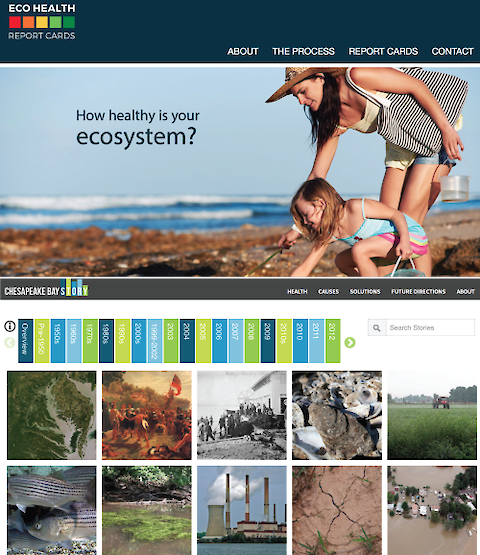
The Coastal Georgia Ecosystem Report Card was released November 13th, in Brunswick, Georgia. Heath Kelsey and I traveled to Georgia for the release event, which included both a media talk and a more detailed technical talk on the report card results. Coastal Georgia has a huge tidal range, as seen in this photo from St. Simon’s Island. This was one of the many things discussed in production of the report card.

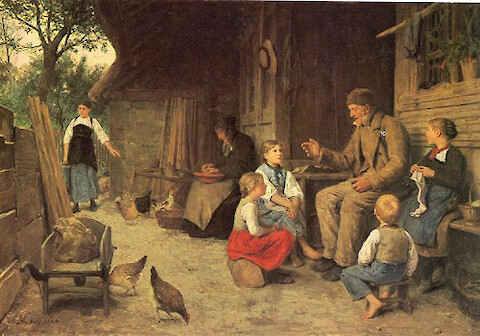
Albert Anker's Der Grossvater erzählt eine Geschichte, 1884 (The Grandfather tells a story). Image: Wikimedia Commons

Modern cave drawings and story-telling using PowerPoint

Bill Dennison ·

I made a presentation in the CERF 2015 session entitled "Successful Science Story-Telling for Coastal Resilience". My presentation was titled "Telling new stories about resiliences of Chesapeake Bay, Mississippi River and the Great Barrier Reef". My initial slide contrasted story-telling vs.

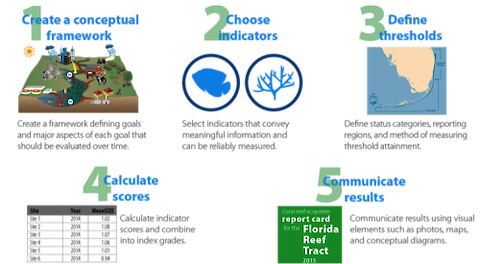
The five step process for creating a report card used by the Integration and Application Network.

Developing a report card for the Florida Reef Tract

Heath Kelsey · Environmental Report Cards | 

Jane Thomas, Caroline Donovan, and I visited Ft. Lauderdale, FL to facilitate a workshop for the development of the Pilot Report Card for the Florida Reef Tract with our partners from NOAA's Coral Reef Conservation Program. The workshop and report card was a follow-up to the workshop for creation of the pilot report card for American Samoa.

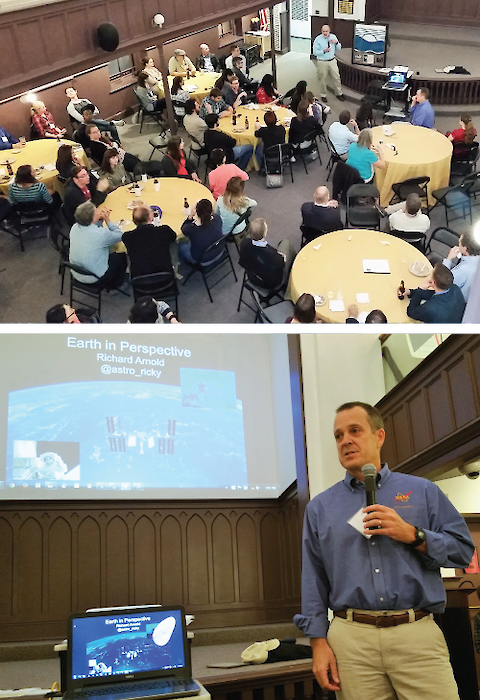
Top: Bill introduces Ricky Arnold to MEES students and faculty. Photo by Brianne Walsh. Bottom: Ricky addresses his audience. Photo by Vanessa Vargas.

A look at the "Earth in Perspective" with Ricky Arnold

Suzanne Webster · Science Communication | Applying Science | 

IAN hosted this year’s MEES Colloquium, offering students and faculty an opportunity to network and sharpen our science application and communication skills. The Colloquium sessions were previously described in more detail in the form of a poem blog post, written by Bill Dennison. NASA astronaut and MEES alumnus, Richard Arnold, served as our special guest speaker following the poster session and dinner on October 30th at the Banneker-Douglas Museum in historic downtown Annapolis.

MEES goes to Annapolis

Bill Dennison · Science Communication | Applying Science | Learning Science | 

This poem was written on the last day of the 2015 Marine, Estuarine, and Environmental Sciences (MEES) Colloquium held at Crowne Plaza Hotel in Annapolis, October 30-31, 2015, and hosted by the MEES goes to Annapolis … William C. Dennison … 31 October 2015 … A gathering of scientists of the MEES brand … From all over the state of Maryland … They developed a passion for understanding nature … For which there really is no cure.

Participants at the Mississippi River Watershed Report Card release. Photo credit: Mike Smith

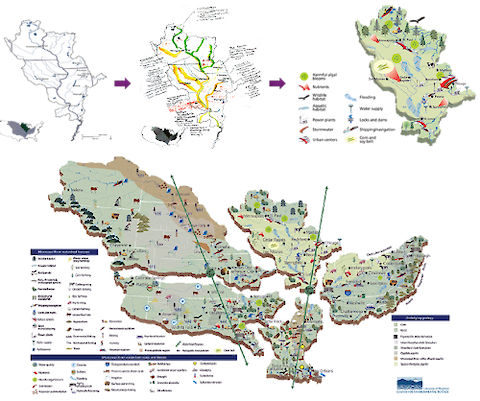
The Mississippi River Watershed Report Card is released

Heath Kelsey · Environmental Report Cards | Applying Science | 

On October 14, 2015, in St. Louis, Missouri, I unveiled the Report Card for the Mississippi River Watershed, a project that almost everyone on the IAN Science Communication team has worked on at some point since 2012. The event was on the roof top patio of at the Hyatt Regency at the Arch in Downtown St. Louis, with great views of the river and the St. Louis Arch.

WWF booth. Photo credit: Catherine Blancard

Get the grade - Worldwide WWF-IAN partnership launches in Stockholm

Simon Costanzo · Environmental Report Cards | Science Communication | 

This blog is part of the Basin Report Card Initiative: a partnership between the World Wildlife Fund (WWF) and the University of Maryland Center for Environmental Science (UMCES) Our partnership with the World Wildlife Fund (WWF) was officially launched at World Water Week this past August 2015. This new partnership aims to widen the audience and uptake of report cards as an environmental management tool for river basins around the world.