IAN is committed to producing practical, user-centered communications that foster a better understanding of science and enable readers to pursue new opportunities in research, education, and environmental problem-solving. Our publications synthesize scientific findings using effective science communication techniques.
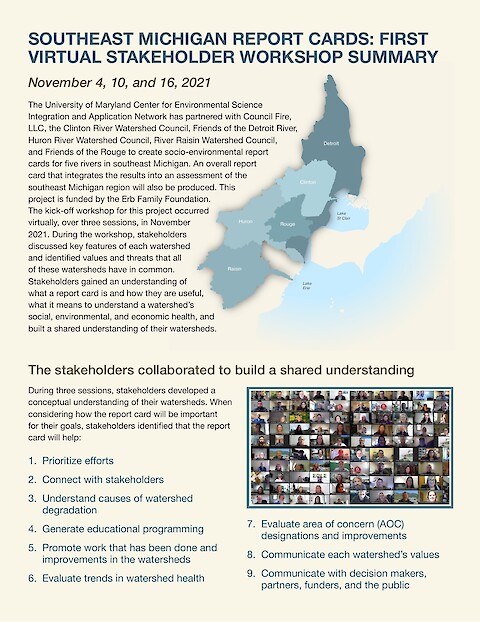
The University of Maryland Center for Environmental Science Integration and Application Network has partnered with Council Fire, LLC, the Clinton River Watershed Council, Friends of the Detroit River, Huron River Watershed Council, River Raisin Watershed Council, and Friends of the Rouge to create socio-environmental report cards for five rivers in southeast Michigan. An overall report card that integrates the results into an assessment of the southeast Michigan region will also be produced.
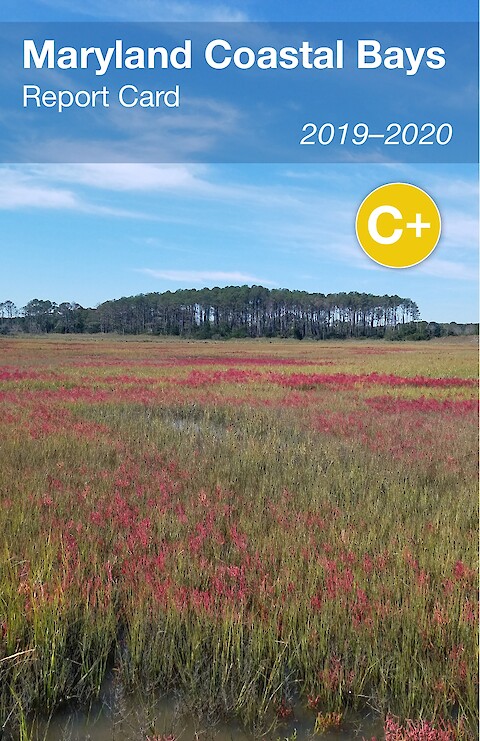
The aim of this report card is to provide a transparent, timely, and geographically detailed assessment of 2019-2020 Coastal Bays health. Coastal Bays health is defined as the progress of four water quality indicators (total nitrogen, total phosphorus, chlorophyll a, dissolved oxygen) and two biotic indicators (seagrass, hard clams) toward scientifically derived ecological thresholds or goals.
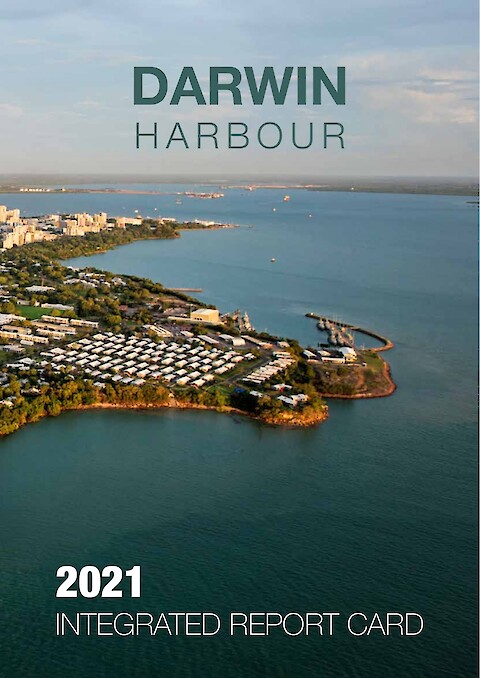
The Darwin Harbour Integrated Report Card has been developed through extensive consultation with stakeholders from the Darwin Harbour region and relies heavily on their knowledge and expertise. Initiated by the Darwin Harbour Advisory Committee, a series of workshops were held in March 2020, representing the first step in this report card journey.
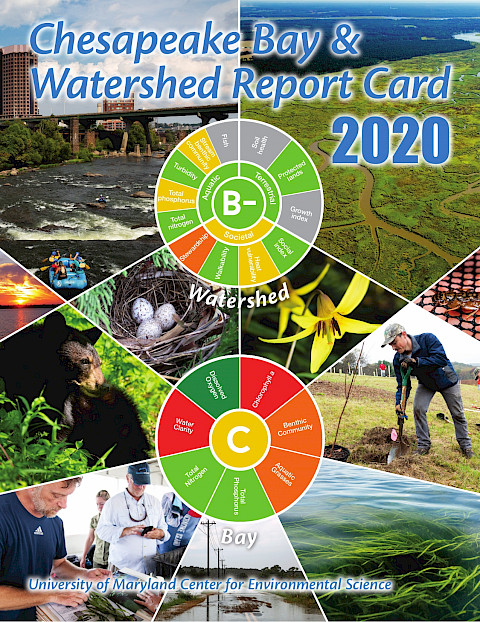
This report card provides a transparent, timely, and geographically detailed assessment of Chesapeake Bay. Since 2016, UMCES has engaged stakeholders throughout the watershed to transform the report card into an evaluation of the Chesapeake Watershed health. Watershed health includes traditional ecosystem indicators, but also social, economic, and cultural indicators. This is the second year the watershed has been scored, and four new indicators have been added.
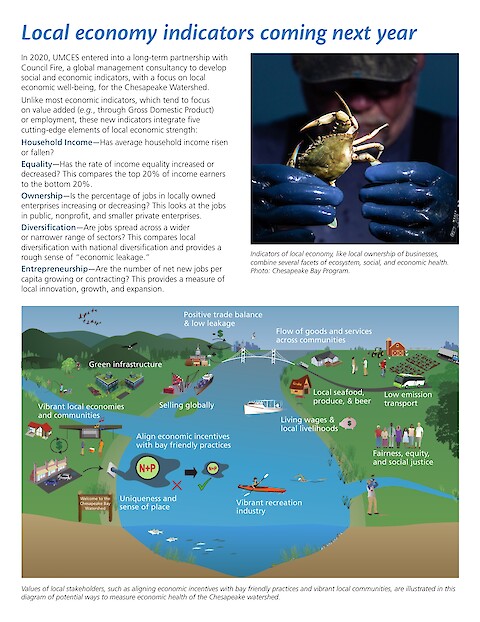
This newsletter highlights synthesis outcomes from the Fall 2020 Economic Indicators workshop. Five new economic indicators were generated that will eventually be incorporated into future iterations of the Chesapeake Bay Report Card.
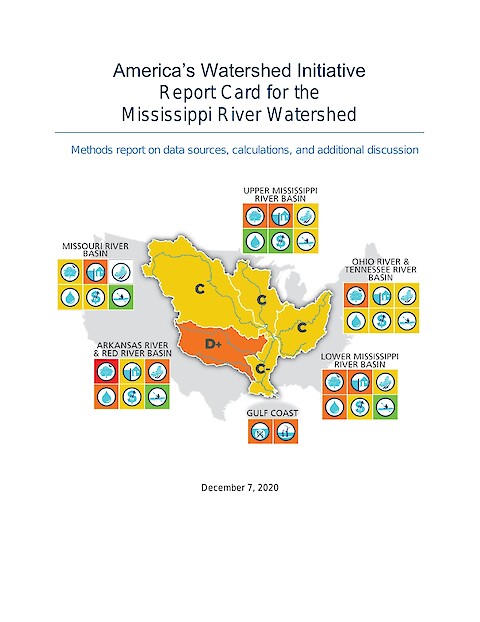
This companion document to the 2020 Mississippi River report card contains information about data sources for all indicators, summary of analysis methods, and scoring details for each of the six America’s Watershed Initiative goals, and for two watershed wide indicators. Additional information regarding the goals is included to provide greater detail and discussion than is possible in the report card document.
El presente documento contiene los principales conceptos, notas, procesos y consideraciones necesarias para emprender una tarjeta de reporte. Debido a que las tarjetas de reporte involucran diversas etapas y actividades, resulta necesario conocer cada una de ellas a profundidad para tener claridad en este proceso.
Kimberly Lutz, Frank Morton, Bob Beduhn, Joan Freitag, Stephen Gambrell, Steve Mathies, Dan Mecklenborg, Michael Reuter, David Simmons, Larry Weber (Chair), Heath Kelsey, Vanessa Vargas-Nguyen, Katie May Laumann, Steven Guinn, Sky Swanson, Jane Hawkey. and AWI Board of Directors: Kimberly Lutz, AWI Executive Director Bob Beduhn, HDR Inc. Sean Duffy Sr., Big River Coalition Joan C. Freitag, Hanson Professional Services Stephen Gambrell, Mississippi Valley Flood Control Association Teri Goodmann, City of Dubuque, Iowa Steve Mathies, Stantec Consulting Services Dan Mecklenborg, Ingram Barge Company Frank Morton, Turn Services LLC Rachel Orf, National Corn Growers Association Michael Reuter, The Nature Conservancy Rainy Shorey, Caterpillar, Inc. Robert “Bob” Sinkler, Streamside Systems Inc, and Dawson & Associates BG (Ret.) C. David Turner, American Water Military Services Group Kirsten Wallace, Upper Mississippi River Basin Association Larry Weber, University of Iowa ·
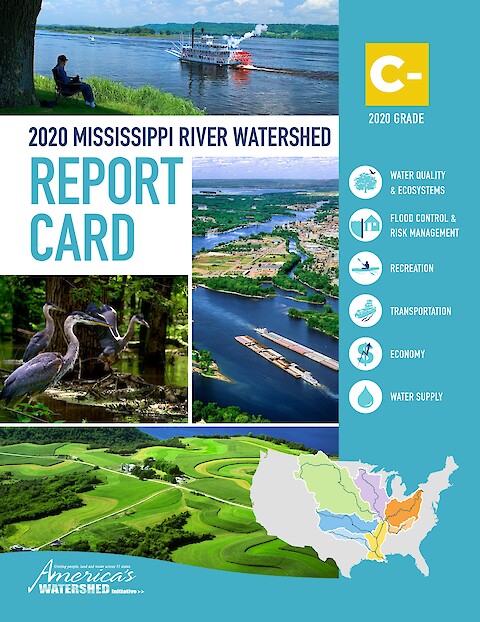
Stretching across 31 US states and 2 Canadian provinces, America’s Watershed benefits millions of people and thousands of communities. It supports our many economic activities while remaining a natural and recreational treasure of global importance.
Donovan EC, Towle E, Kelsey RH, Allen M, Barkley H, Besemer N, Blondeau J, Eakin M, Edwards K, Enochs I, Fleming C, Geiger E, Grove LJ, Groves S, Johnson M, Johnston M, Kindinger T, Manzello D, Miller M, Oliver T, Samson J, and Viehman S. ·
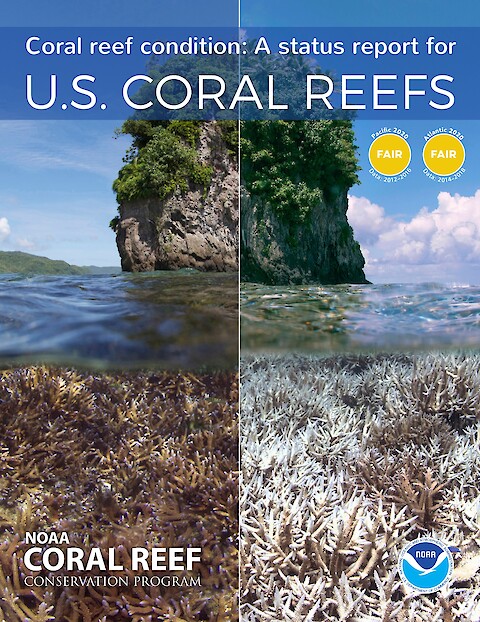
Pacific and Atlantic data from 2012–2018 indicate that U.S. coral reefs are in fair condition. Most themes did not meet their historical references, meaning they are moderately to very impacted. There are exceptions, but overall, the data suggest that reefs are vulnerable to further decline due to threats from ocean warming and acidification, coral disease, and fishing impacts. Download the document to learn more about U.S. Coral Reef condition.