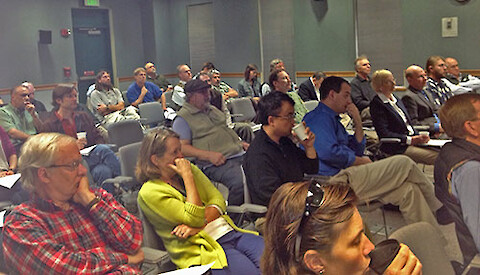
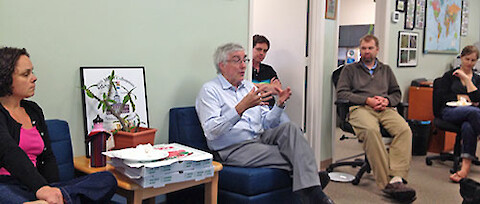
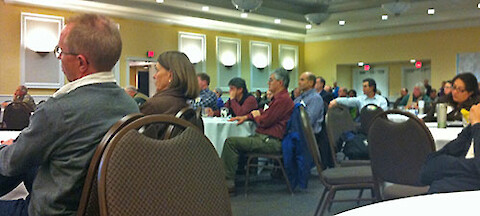
This post is part two of a four part series on scientific synthesis. At our annual UMCES Faculty Convocation organized by the Appalachian Laboratory faculty senators Drs. Katia Englehardt and Matt Fitzpatrick, we discussed scientific synthesis and asked ourselves the following 4 questions: 1) How do we approach synthesis?, 2) How does UMCES facilitate synthesis?, 3) What are the challenges to doing synthesis within UMCES? and 4) What needs to change to become better in synthesis? We had Drs.
This post is part one of a four part series on scientific synthesis. The word synthesis is derived from the Greek word, syntithenai meaning 'to put together', and was first used in the latter part of the 1500s. The word integration is derived from the Latin word, integratus meaning 'to render whole', and was first used in the early 1600s. In the context of scientific synthesis or integration, the definition of these two words converge.
Professor Paul Greenfield was my mentor both at the University of Queensland and in the Healthy Waterways campaign. Paul recently retired from his role as Vice Chancellor of the University of Queensland and I would like to provide my perspective on his role as a human catalyst. Sometimes the most difficult thing to measure is the most important thing, for example, the action of a catalyst is absolutely critical for a reaction to take place, but it is difficult to measure.
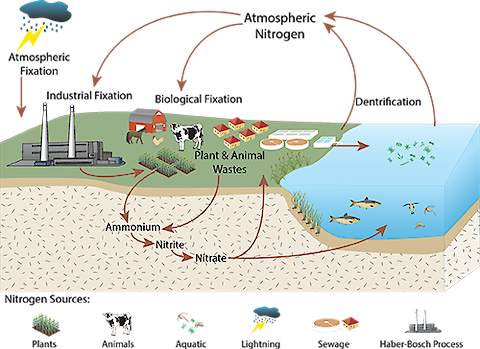
People are part of a hybrid socio-environmental ecosystem. The debate over whether people should start geoengineering the atmosphere in order to prevent the worst effects of global warming ignores one essential fact - we already are geoengineering the atmosphere. Geoengineering is the deliberate effort to manipulate processes that control conditions in the atmosphere on a global scale.
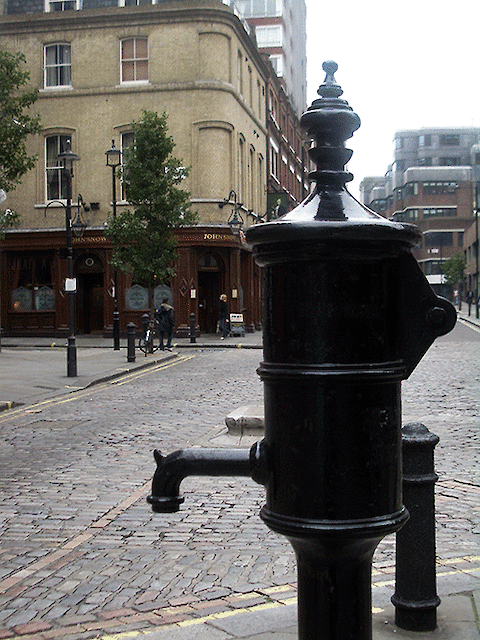
Is it time to rethink our 19th century approach to dealing with human waste? The discovery of the cause of a cholera epidemic in London, in the mid 19th century, unleashed an international movement that improved sanitation in cities, and also altered the relationship between people and the environment. The result has been an increase in living standards.
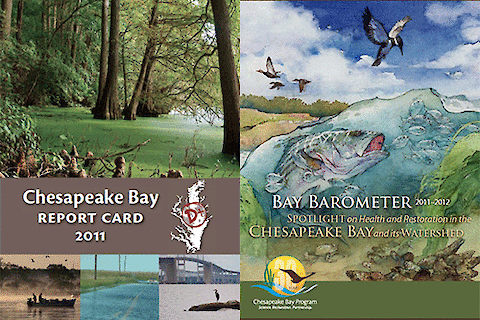
New ways of looking at data promise to give a clearer picture of the effects of restoration in the ecosystem. People have worked hard to bring the Chesapeake Bay back to health. Yet, why is it so difficult to see the results? The IAN program’s Chesapeake Bay Report Card for 2011 gives the bay a D+.
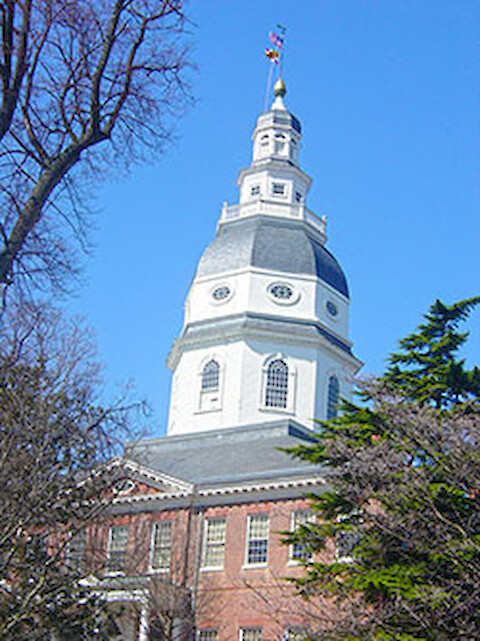
Yesterday, I provided testimony to the Maryland General Assembly in support of a bill that would require Maryland farmers to conduct soil testing for phosphorus levels and to report their findings. The bill was sponsored by Senator Pinsky and my testimony was to the Education, Health, and Environmental Affairs committee, chaired by Senator Joan Carter Conway. My written submission follows:
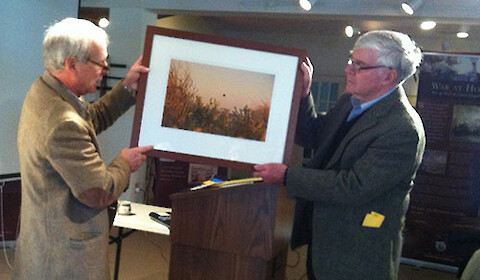
I attended the 6th Annual Dorchester Citizens for Planned Growth meeting at the Dorchester County Historical Society on January 27. It was a good gathering of people who live on or near the streams, rivers and Chesapeake Bay of Dorchester County. Dorchester County has a lot of wetlands and streams, with abundant wildlife. The event featured local oysters on the half shell and goose meat. There were two skipjack captains in the audience as well.
One of my favorite things to do in the world is to share these stories of people on convergent journeys, journeys like the one you are on with the Willamette River. The International RiverFoundation (IRF) promotes river restoration, protection and sustainable management of rivers and watersheds. Our vision is a world in which the rivers and watersheds are healthy and sustainably managed.
The 'Within Our Reach' conference held in Corvallis, Oregon and focused on the Willamette River, did several things extremely well. One thing was the 'book ending' of the science and technical aspects with more socially relevant aspects; the film night at the beginning and the poetic reflections of Kathleen Dean Moore at the end. Kathleen provided one of the most compelling verbal nature essays I have ever heard.