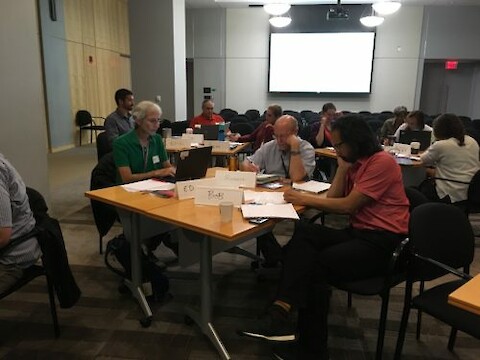
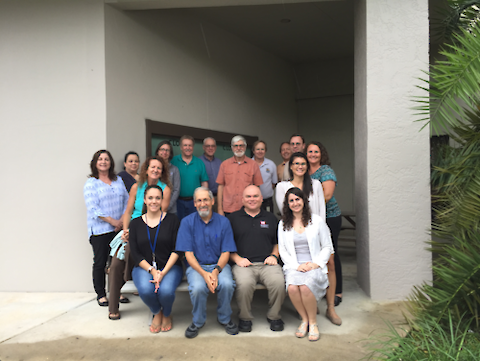
Participants at the one-day course held at U.S. EPA Region 1. Photo: Brianne Walsh.

Communicating science effectively: one-day course with EPA Region 1

Brianne Walsh ·

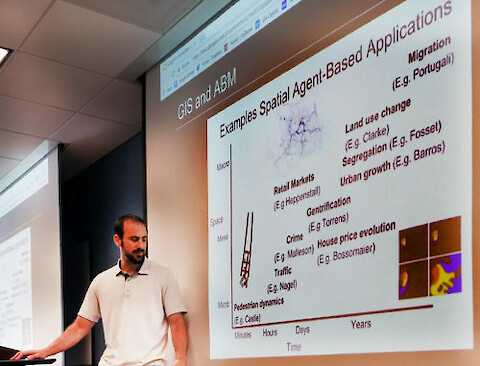
Bill Dennison and I traveled to Boston, Massachusetts on September 12-14 to teach a one-day course, titled “Communicating Science Effectively”, for U.S. EPA Region 1 staff at their office in downtown Boston. There were about 25 participants. All were EPA employees, but their specialties and roles ranged from environmental scientist, drinking water specialist, biologist, physical scientist, risk assessor, enforcement officer to environmental engineer.

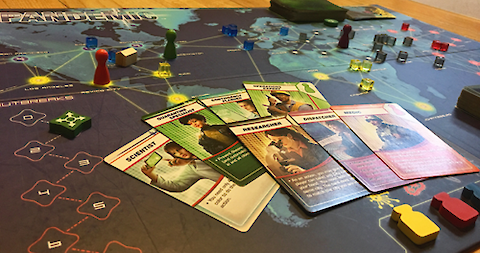
Pandemic requires teams to strategically make use of each player's unique talents.

It’s game time! Board games that can help people ‘level up’ their capacity for transdisciplinary work

Suzanne Webster · Applying Science | 

At IAN we are constantly invested in various transdisciplinary projects. Transdisciplinary projects partner interdisciplinary research teams with stakeholders outside of academia to synthesize diverse knowledge and experience and generate novel insights on a particular topic. For example, when IAN develops report cards, our Science Integrators and Communicators work with partners to synthesize relevant information on a specific ecosystem and then communicate key messages to a targeted audience.

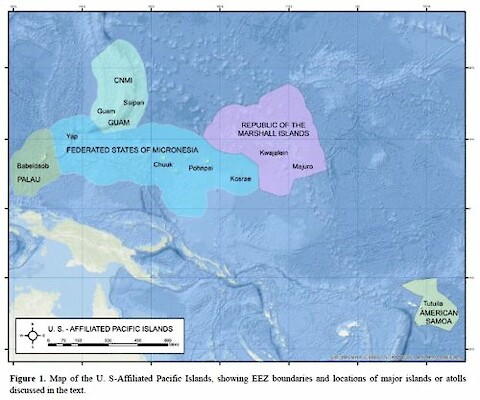
Map of the U.S.- Affiliated Islands. Source: Don A. Polhemus, U.S. Fish and Wildlife Service Pacific Islands Fish and Wildlife Office.

Drought in the U.S.- Affiliated Pacific Islands

Brianne Walsh · Learning Science | 

Three years ago, IAN began a national-scale effort with the USGS National Climate Adaptation Science Center (NCASC) to synthesize the impacts of ecological drought across the country. Workshops were held at each of the nation's eight regional Climate Adaptation Science Centers covering the following regions: Alaska, Pacific Islands, Northwest, Southwest, North Central, South Central, Northeast, and Southeast.

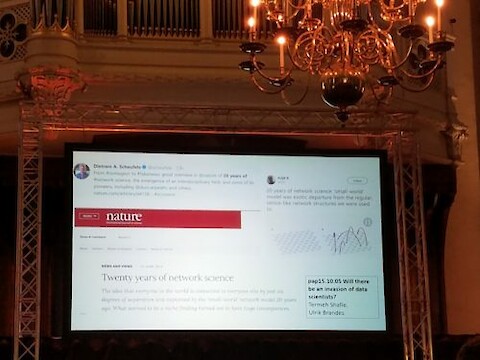
Commemorating twenty years of Network Science during the Sunbelt Conference.

Lessons learned from the Sunbelt Social Network Conference

Vanessa Vargas-Nguyen · Applying Science | Learning Science | 

During the opening ceremony of the Sunbelt Social Network Conference that I attended last June (you can read my conference experience here), the article “Twenty years of Network Science” was mentioned. It emphasized the 20 years since Watts and Strogatz introduced the ‘small-world’ model of networks, which initially was viewed only as the explanation for the popular social network idea of Six degrees of Separation.

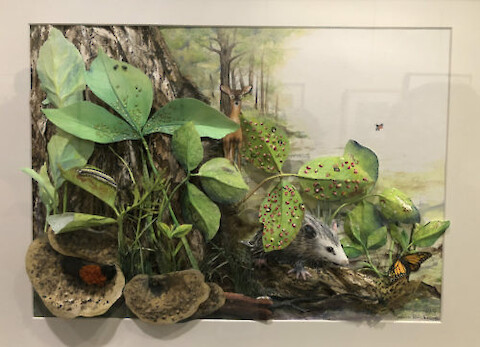
Insects and Opossum in Poison Ivy, by Robin Brickman.

Guild of Natural Science Illustrators 2018 Annual Conference

Emily Nastase · Environmental Literacy | Science Communication |     3 comments

Scientific illustration is a beautiful form of science communication. The goal of scientific illustration is to accurately depict and teach scientific concepts. Illustrations can be created traditionally or digitally and are generally highly rendered – not to mention stunning – works of scientific art. These images are as informative as they are captivating. Insects and Opossum in Poison Ivy, by Robin Brickman.

Participants in the Everglades report card workshop in Vero Beach, Florida.

When herding cats it helps to have a map

Bill Nuttle · Environmental Report Cards | Science Communication | Applying Science | 

It makes me cringe a little to remember the debriefing that followed our May workshop on the Everglades report card project. The IAN team was complimented for keeping the project on track. “Great job at herding cats,” they said, referring to our ability keeping a meeting of scientists on track. There was just one loose thread that needed to be tidied up. But, then the “cats” got hold of it, and for a moment it seemed that things might unravel.

The Tennessee River Report Card was released in February 2018

Next steps for the Tennessee River Basin Report Card

Heath Kelsey · Environmental Report Cards | Science Communication | 

The Tennessee River Basin Report Card was released in February this year. It was made possible in large part because of feedback the IAN team solicited during the Tennessee River Basin Planning Network (TRBN) meeting in Chattanooga, Tennessee in August, 2017. Discussions we had at that meeting decided several issues related to the report card scope and detail that carried through to the finished product.

The 38th Sunbelt Conference was held at the DOM square in Utrecht.

Attending the International Sunbelt Social Network Conference

Vanessa Vargas-Nguyen · Applying Science | 

Last June 26th-July 1st, 2018, I had the opportunity to attend and present at the 38th International Sunbelt Social Network Conference in Utrecht, the Netherlands. The Sunbelt Conference is the official conference of the International Network for Social Network Analysis (INSNA), the foremost professional academic association of researchers and practitioners of social network analysis (SNA).

Positive outcomes are documented through a comprehensive survey of groups that have completed a report card process.

Focusing on outcomes: What are we really shooting for?

Heath Kelsey · Environmental Report Cards | Science Communication | 

The Healthy Rivers for All Partnership spent some quality time last week brainstorming about how our report card projects are perceived. We take it for granted that the report card process increases engagement and leads to great outcomes. We talk about how great report cards are all the time, and we believe it! Positive outcomes are documented through a comprehensive survey of groups that have completed a report card process.

Participants at the August 2016 Report Card Workshop.

Coastal Yucatán Report Card Completed!

Heath Kelsey · Environmental Report Cards | Science Communication | 

The first Yucatán Coast Report Card was released in April 2018, the culmination of almost 2 years of work by our colleagues at Laboratorio Nacional de Resiliencia Costera (LANRESC), in Sisal, Yucatán Mexico. The project kicked off with a stakeholder workshop that Jane Hawkey and I helped facilitate in August 2016. The long-term collaboration has made this report card release especially exciting.