IAN is committed to producing practical, user-centered communications that foster a better understanding of science and enable readers to pursue new opportunities in research, education, and environmental problem-solving. Our publications synthesize scientific findings using effective science communication techniques.

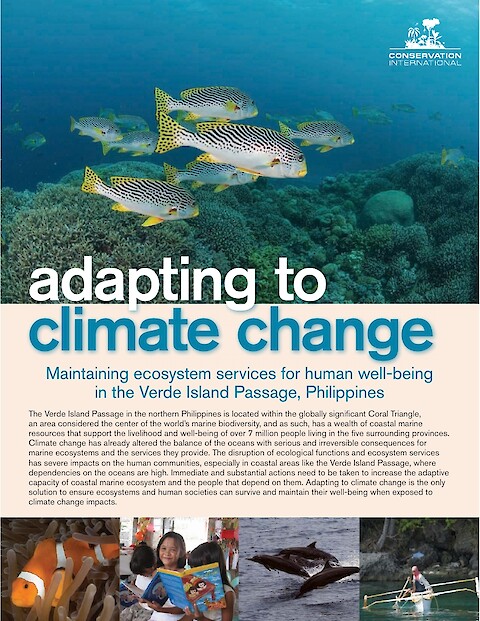
Adapting to climate change (Page 1)

Adapting to climate change

Jane Hawkey, Tim Carruthers ·

This newsletter summarizes the report by the same name that represents the climate change vulnerability assessment project conducted by Conservation International in the Verde Island Passage in 2009. It reviews the multiple impacts that threaten the natural resources of this area, while focusing on climate change effects in particular.

Nitrogen in the Chesapeake Bay: A Retrospective (Page 1)

Nitrogen in the Chesapeake Bay: A Retrospective

Emily Benson, Heath Kelsey, Jane Hawkey ·

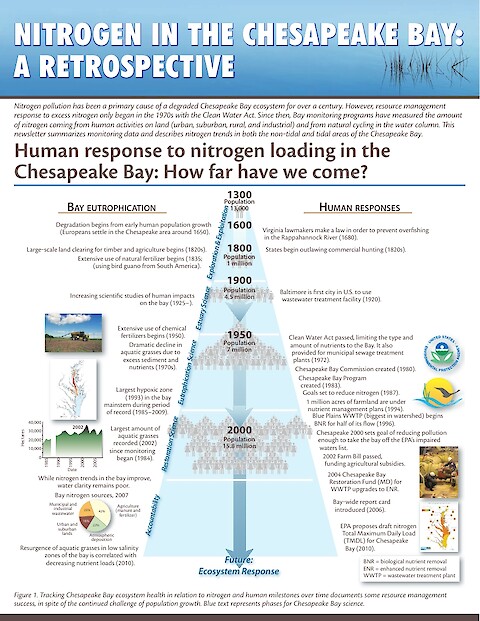
Nitrogen pollution has been a primary cause of a degraded Chesapeake Bay ecosystem for over a century. Since the Clean Water Act of 1972, Bay monitoring programs have measured the amount of nitrogen coming from human activities and on land (urban, suburban, rural, and industrial) and from natural cycling in the water column. This information is used to evaluate management actions for nutrient reduction.

A Guide to the Mid-Atlantic Tributary Report Cards (Page 1)

A Guide to the Mid-Atlantic Tributary Report Cards

Heath Kelsey, Emily Nauman, Sara Powell, Christine Thurber, Caroline Donovan ·

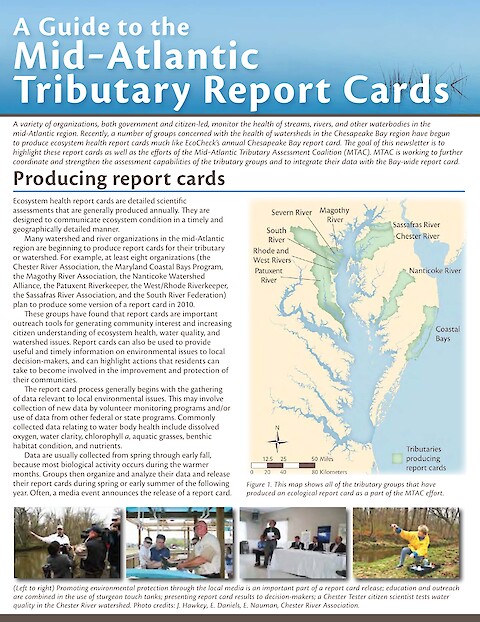
A variety of organizations, both government and citizen-led, monitor the health of streams, rivers, and other waterbodies in the mid-Atlantic region. Recently, a number of groups concerned with the health of watersheds in the Chesapeake Bay region have begun to produce ecosystem health report cards much like EcoCheck’s annual Chesapeake Bay report card.

Toxic cyanobacteria blooms degrade ecosystem in coastal Florida (Page 1)

Toxic cyanobacteria blooms degrade ecosystem in coastal Florida

Kris Beckert ·

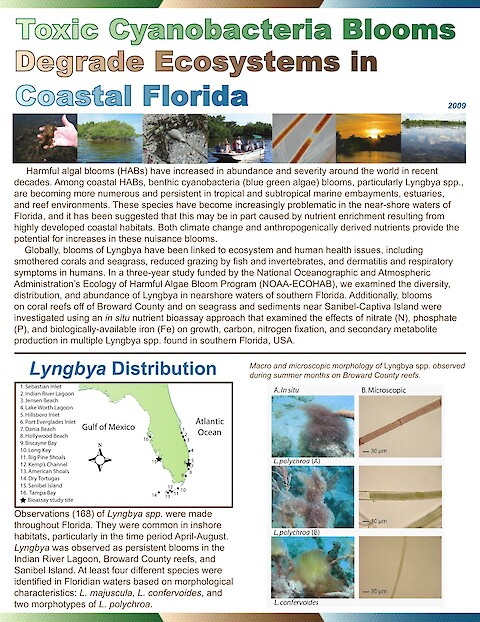
Harmful algal blooms (HABs) have increased in abundance and severity around the world in recent decades. Among coastal HABs, benthic cyanobacteria blooms, particularly Lyngbya spp., are becoming more numerous and persistent in tropical and subtropical environments. These species have become increasingly problematic in the near-shore waters of Florida, and it has been suggested that this may be in part caused by nutrient enrichment resulting from highly developed coastal habitats.

Research findings for key bay fisheries species (Page 1)

Research findings for key bay fisheries species

Emily Nauman, Heath Kelsey, Jane Hawkey, Howard Townsend ·

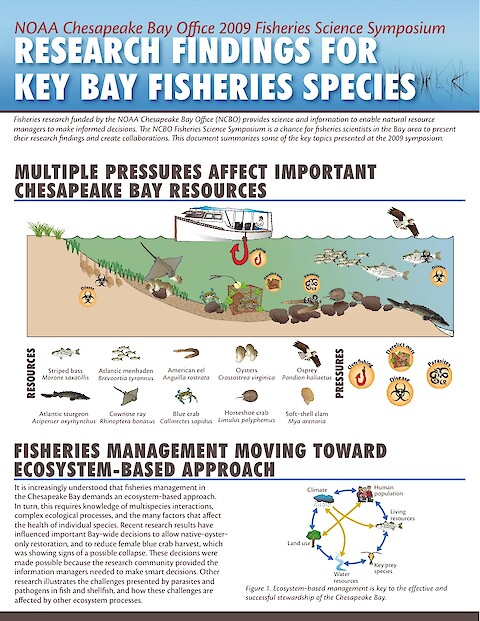
Fisheries research funded by the NOAA Chesapeake Bay Office (NCBO) provides science and information to enable natural resource managers to make informed decisions. The NCBO Fisheries Science Symposium is a chance for fisheries scientists in the Bay area to present their research findings and create collaborations. This document is an EcoCheck/NCBO collaboration and summarizes some of the key topics presented at the 2009 symposium.

Development of water transparency criteria for Florida seagrasses (Page 1)

Development of water transparency criteria for Florida seagrasses

Bill Dennison, Caroline Donovan ·

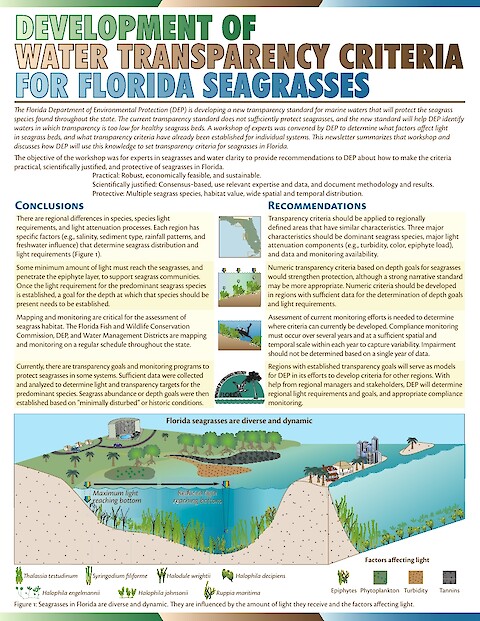
The Florida Department of Environmental Protection (DEP) is developing a new transparency standard for marine waters that will protect the seagrass species found throughout the state. The current transparency standard does not sufficiently protect seagrasses, and the new standard will help DEP identify waters in which transparency is too low for healthy seagrass beds.

New Stream Health Indicator Being Developed (Page 1)

New Stream Health Indicator Being Developed

Katie Foreman, Caroline Donovan, Emily Nauman, Bill Dennison ·

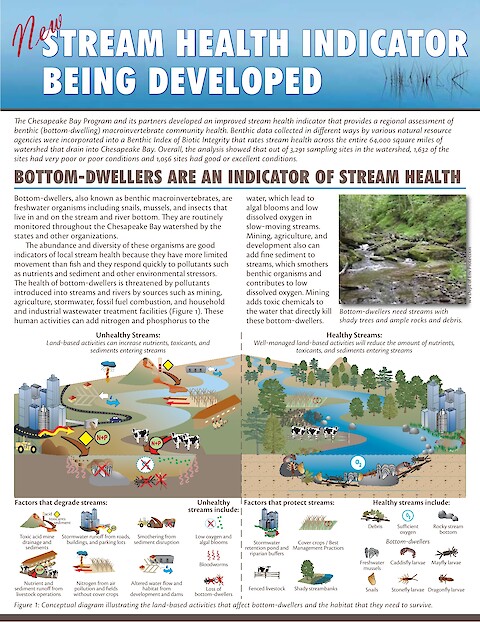
The Chesapeake Bay Program and its partners developed an improved stream health indicator that provides a regional assessment of benthic (bottom-dwelling) macroinvertebrate community health. Benthic data collected in different ways by various natural resource agencies were incorporated into a Benthic Index of Biotic Integrity that rates stream health across the entire 64,000 square miles of watershed that drain into Chesapeake Bay.

Northern Great Plains Network: Using conceptual diagrams to aid communication (Page 1)

Northern Great Plains Network: Using conceptual diagrams to aid communication

Jane Hawkey, Ben Longstaff, Bill Dennison ·

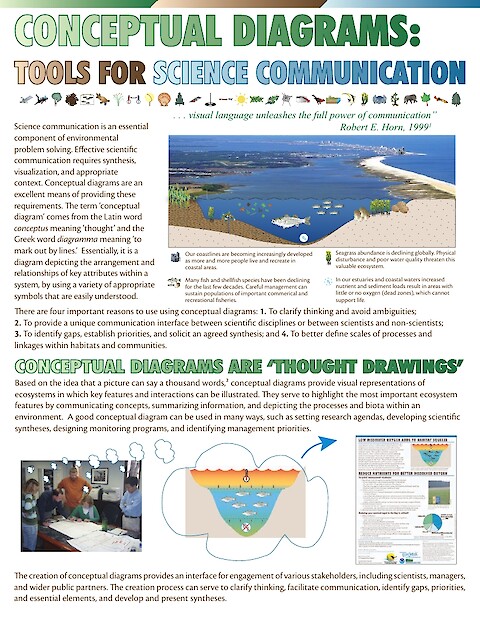
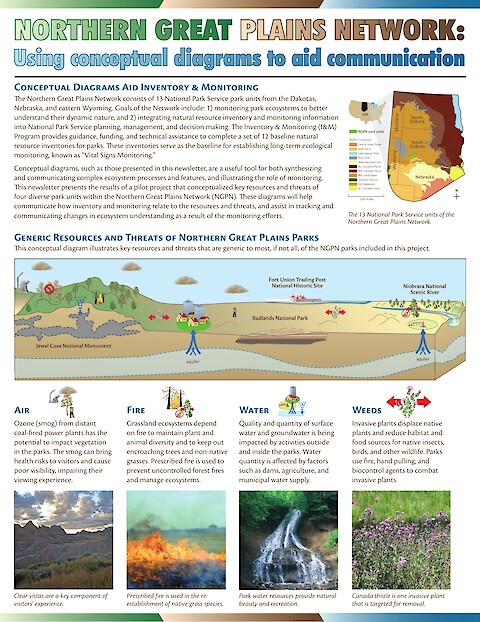
Conceptual diagrams are effective tools in identifying resource condition trends and for communicating inventory and monitoring data back to national park management and the general public. This newsletter presents the project results from an IAN collaboration with four National Park Service (NPS) Northern Great Plains Network (NGPN) park units and the NGPN Inventory & Monitoring (I&M) Program.

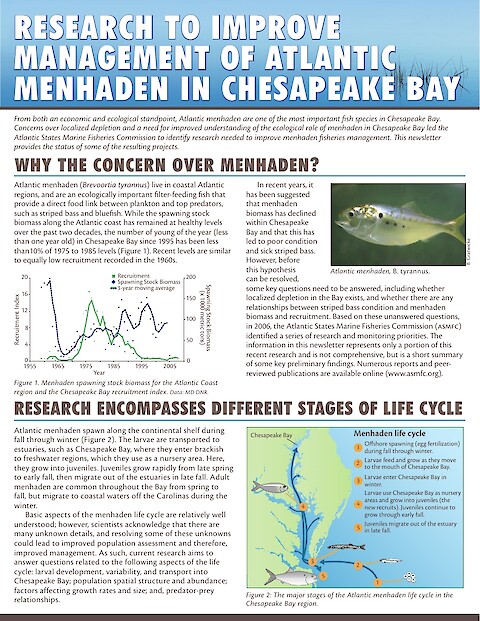
Research to improve management of Atlantic menhaden in Chesapeake Bay (Page 1)

Research to improve management of Atlantic menhaden in Chesapeake Bay

Ben Longstaff, Caroline Donovan, Emily Nauman ·

From both an economic and ecological standpoint, Atlantic menhaden are one of the most important fish species in Chesapeake Bay. Concerns over localized depletion and a need for improved understanding of the ecological role of menhaden in Chesapeake Bay led the Atlantic States Marine Fisheries Commission to identify research needed to improve menhaden fisheries management. This newsletter provides the status of some of the resulting projects.