Publications by Caroline Donovan

IAN is committed to producing practical, user-centered communications that foster a better understanding of science and enable readers to pursue new opportunities in research, education, and environmental problem-solving. Our publications synthesize scientific findings using effective science communication techniques.
Lower Mississippi River Basin report card workshop newsletter (Page 1)

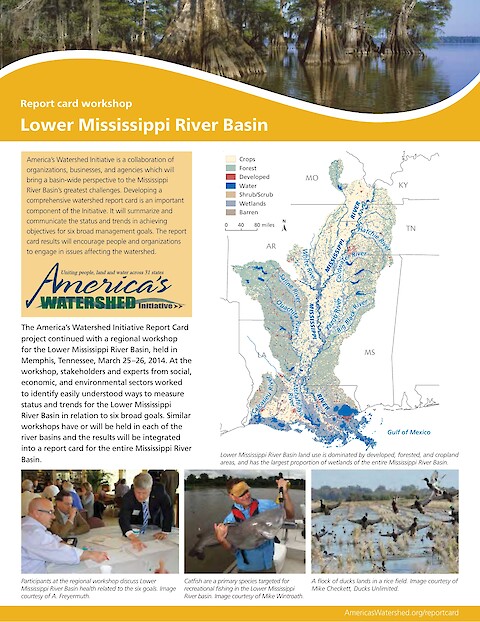
Lower Mississippi River Basin report card workshop newsletter

Bill Dennison, Heath Kelsey, Jane Thomas, Caroline Donovan, Brianne Walsh, Bill Nuttle ·

The America's Watershed Initiative Report Card project continued with a regional workshop for the Lower Mississippi River Basin, held in Memphis, Tennessee, on March 25-26, 2014. At the workshop, stakeholders and experts from social, economic, and environmental sectors identified easily understood and transparent ways to measure status and trends for the Lower Mississippi River Basin in relation to six broad goals.

Ohio River Basin report card workshop newsletter (Page 1)

Ohio River Basin report card workshop newsletter

Bill Dennison, Heath Kelsey, Jane Thomas, Caroline Donovan, Brianne Walsh, Bill Nuttle ·

The America's Watershed Initiative Report Card project continued with a regional workshop for the Ohio River Basin, held near Cincinnati, Ohio, on December 12–13, 2013. At the workshop, stakeholders and experts from social, economic, and environmental sectors identified easily understood and transparent ways to measure status and trends for the Ohio River Basin in relation to six broad goals.

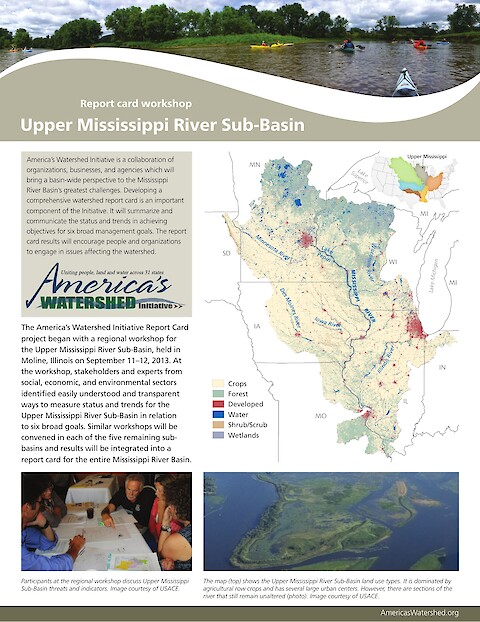
Upper Mississippi River Sub-Basin report card workshop newsletter (Page 1)

Upper Mississippi River Sub-Basin report card workshop newsletter

Bill Dennison, Heath Kelsey, Caroline Donovan, Tracey Saxby, Jane Thomas, Bill Nuttle ·

The America's Watershed Initiative Report Card project began with a regional workshop for the Upper Mississippi River Sub-Basin, held in Moline, Illinois on September 11–12, 2013. At the workshop, stakeholders and experts from social, economic, and environmental sectors identified easily understood and transparent ways to measure status and trends for the Upper Mississippi River Sub-Basin in relation to six broad goals.

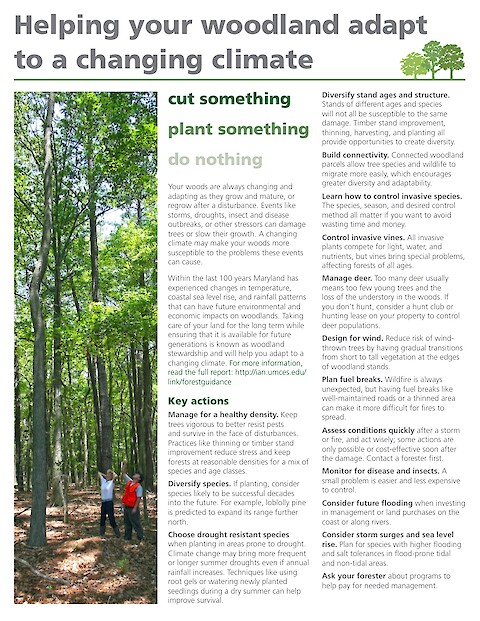
Helping your woodland adapt to a changing climate (Page 1)

Helping your woodland adapt to a changing climate

Tracey Saxby, Marcus Griswold, Caroline Donovan, Jane Hawkey ·

As Maryland's climate changes, your woodland may be more susceptible to natural disturbances such as storms, droughts, insect and disease outbreaks, or other stressors that can damage trees or slow their growth. As a good woodland steward, now is the time to make smart environmental and economic decisions, and implement the most effective strategies to help your woodlands adapt to climate change.

Greenhouse Gas Reduction Plan: Chapter 8 Adaptation (Page 1)

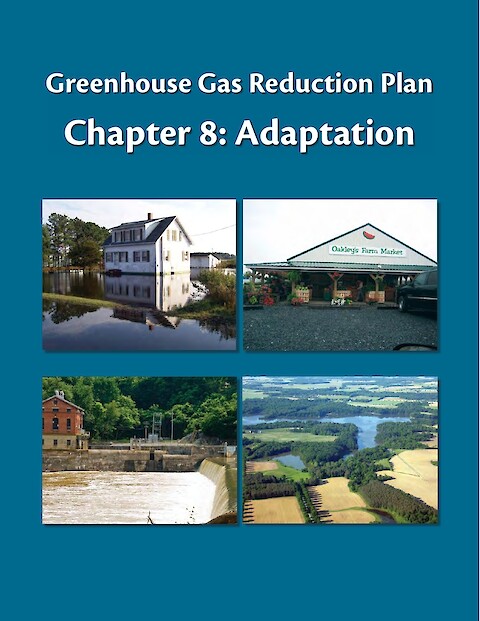
Greenhouse Gas Reduction Plan: Chapter 8 Adaptation

Caroline Donovan, Marcus Griswold ·

Climate change will affect Maryland in a variety of ways. More obvious impacts could include an increased risk for extreme events such as drought, storms, flooding, and forest fires; more heat-related stress; the spread of existing or new vector-born disease; and increased erosion and inundation of low-lying areas along the State’s shoreline and coast. Adaptation, together with mitigation, is necessary to address climate change.

Resiliency and water resources management: Water supply in a changing climate (Page 1)

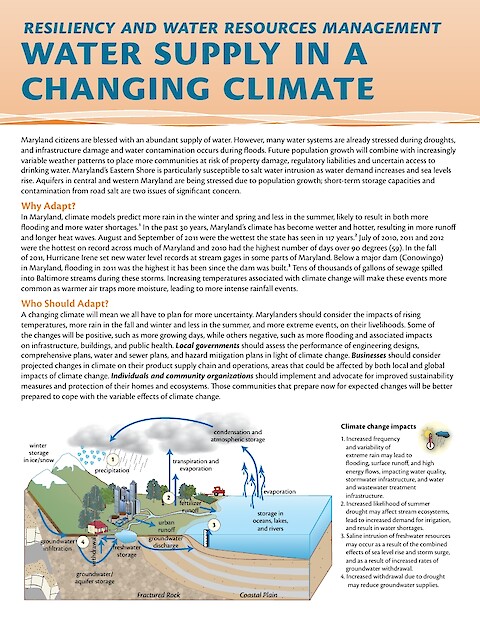
Resiliency and water resources management: Water supply in a changing climate

Marcus Griswold, Caroline Donovan ·

Maryland citizens are blessed with an abundant supply of water. However, many water systems are already stressed during droughts, and infrastructure damage and water contamination occurs during floods. Future population growth will combine with increasingly variable weather patterns to place more communities at risk of property damage, regulatory liabilities and uncertain access to drinking water.

Best Management Practices: Preserving clean water in a changing climate (Page 1)

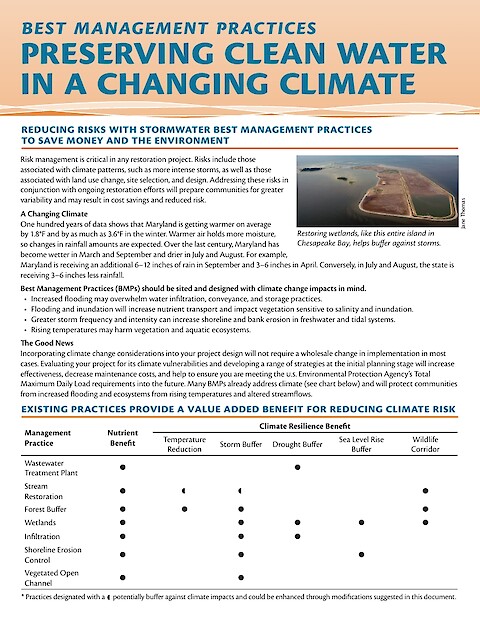
Best Management Practices: Preserving clean water in a changing climate

Marcus Griswold, Caroline Donovan ·

Risk management is critical in any restoration project. Risks include those associated with climate patterns, such as more intense storms, as well as those associated with land use change, site selection, and design. Addressing these risks in conjunction with ongoing restoration efforts will prepare communities for greater variability and may result in cost savings and reduced risk. Best Management Practices (BMPs) should be sited and designed with climate change impacts in mind.