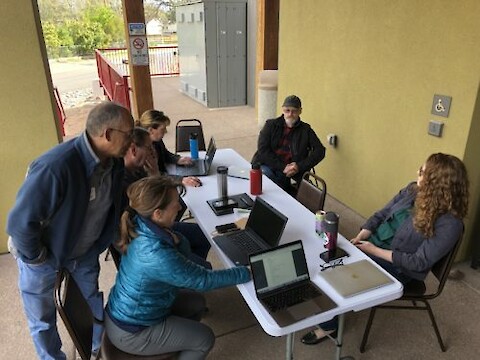
Participants at the first Coastal Resilience Symposium in Mérida, Yucatán represented numerous institutions and backgrounds from Mexico, Chile, Colombia, Portugal, and the United States. Credit:
Andrew Elmore and I traveled to Toledo, Ohio to facilitate a workshop focused on indicators and thresholds for the Western Lake Erie report card project. The workshop was held on 24-25 April 2019 in the Lake Erie Center, a beautiful facility run by the University of Toledo. Sandy Bihn, the Lake Erie Riverkeeper, was our sponsor and Tom Bridgeman, University of Toledo was our host. Prior to the workshop, Andrew and I drove around the Maumee River mouth to get a feel for the region.
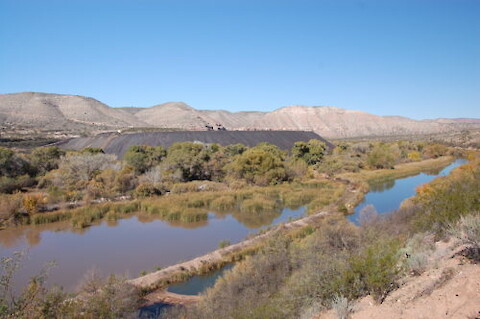
The Verde River flows through north-central Arizona and is a … primary water source for Phoenix. As it works its way down from its headwaters … in the Big and Little Chino Basins, the Verde provides excellent habitat for a … wide array of plants and animals. Water from the river also supports … small-scale agriculture, well-watered lawns, and accessible groundwater for … communities.
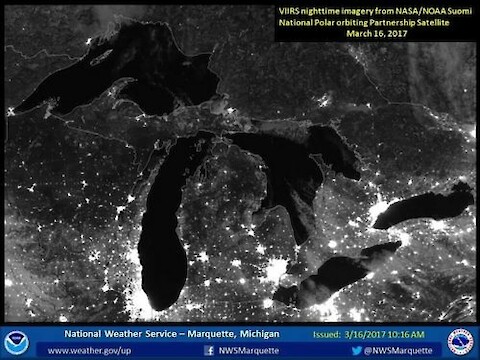
Lake Erie is one of five Great Lakes between the United States and Canada. The Great Lakes form the largest freshwater system on the planet, containing approximately 1/5 of the world's freshwater supply. Lake Erie is the southern most Great Lake located downstream of Lakes Superior, Michigan and Huron, but upstream of Lake Ontario and the St. Lawrence Seaway. The great lakes at night from above. Photo National Weather Services.
Let us start this blog by saying that whenever … we travel to India, we are met with the warmest of hospitality from our … colleagues at the National … Center for Sustainable Coastal Management (NCSCM). Dr Ramesh … Ramachandran, Dr Purvaja Ramachandran, Dr Ajit Pattnaik, and their wonderful team … always go above and beyond to ensure we have a wonderful and rich experience. So, thank you NCSCM!
Emily Nastase, Andrew Elmore, and I traveled to Cottonwood, Arizona in November 2018 to kick off the Verde River Watershed Report Card project. This project is supported by the Forest Service, with partners from the Friends of the Verde River and The Nature Conservancy. We started the trip with a full day in the field on November 12th, driving around the Verde Watershed and getting a feel for the region.
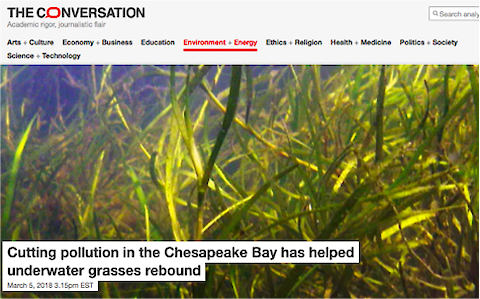
The Integration and Application Network (IAN) had an eventful and exciting year. We were able to report some really good news in the improvements in the health of Chesapeake Bay and Maryland Coastal Bays with our annual report cards. In addition, the publication of a scientific synthesis paper that IAN staff helped generate was able to reach a broad audience. This paper identified that the nutrient reductions into Chesapeake Bay were leading to ecosystem health improvements.
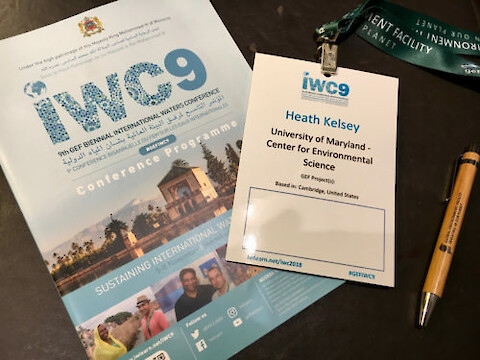
The Global Environment Facility (GEF) hosts a biennial International Waters Conference (IWC9 this year), which focuses on international water issues. Sarah Davidson and I were invited to the conference to talk about how ecosystem health report cards could support transboundary water assessments. This year the meeting was held in Marrakech, Morocco, from 5-8 November.
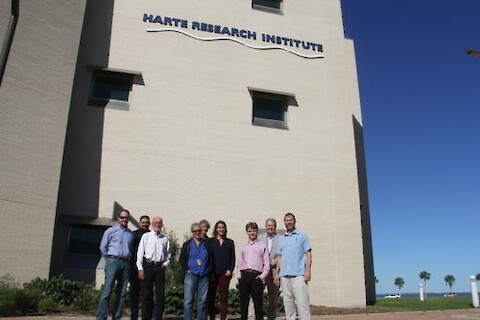
Jamie Currie and I had an exciting meeting with experts on Texas coastal water quality, birds, seagrass, oysters, and fisheries on November 1 and 2 to create the first Texas Coast Ecosystem Health Report Card. We met at the Harte Research Institute for Gulf of Mexico Studies in Corpus Christi, Texas, which was a great venue for the meeting.
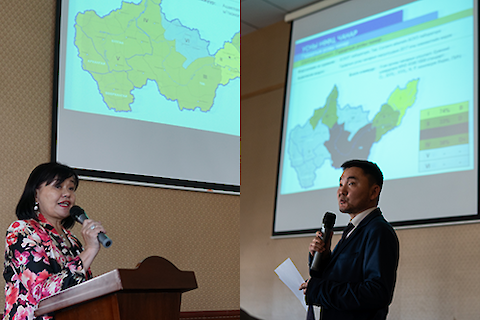
On October 28th, 2018 Simon Costanzo and I arrived in Ulaanbaatar, the capital city of Mongolia, for the beginning of a busy week of workshops and trainings. Healthy Rivers for All (a collaborative effort between the UMCES Integration and Application Network and the World Wildlife Fund) has been facilitating the creation of a river basin health report card for the Tuul River Basin, the major river running through the capital of Mongolia.